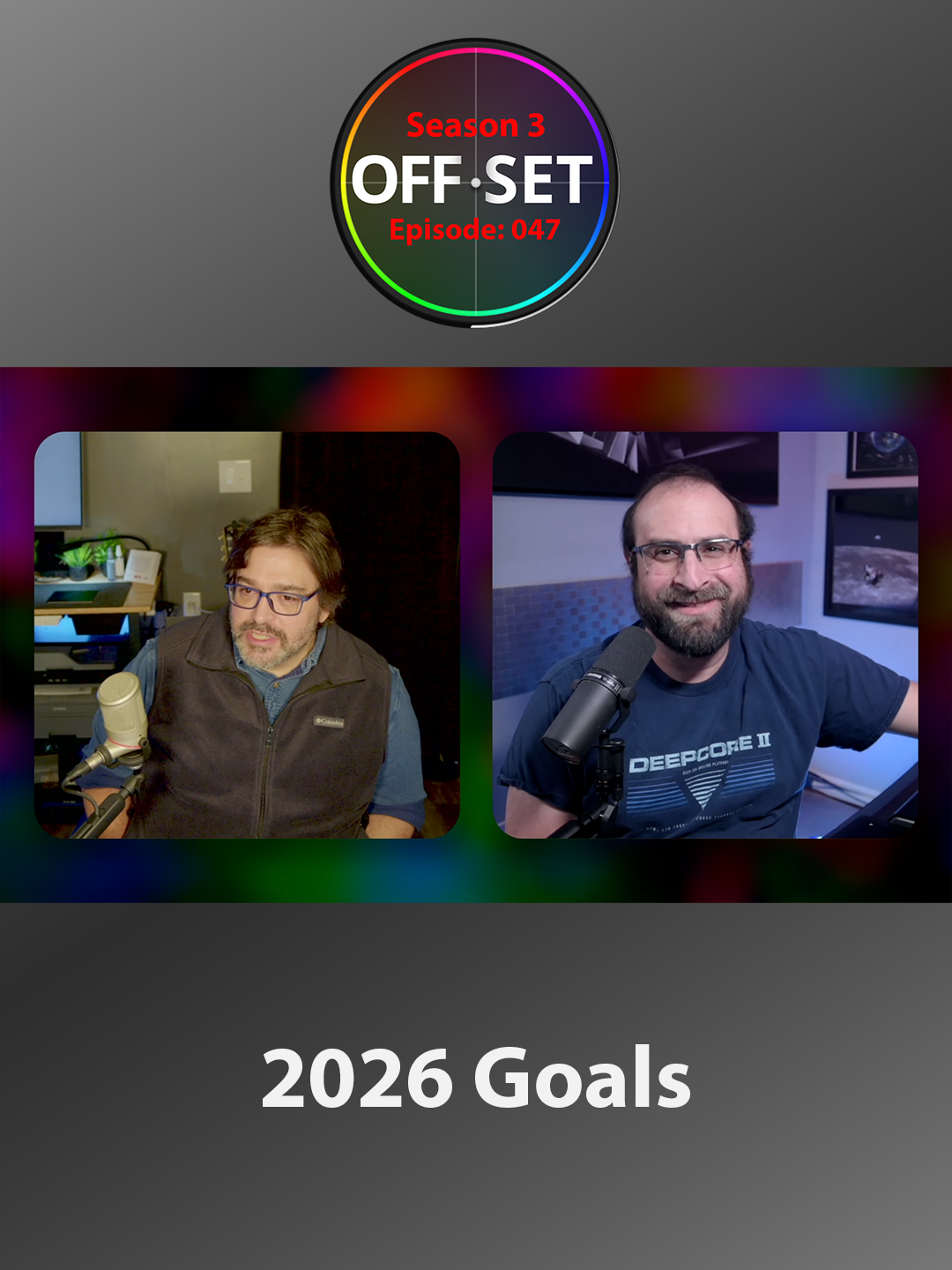
EP047: 2026 Goals
Welcome To Season 3 Of The Offset Podcast!
It’s our first episode of 2026 and the first episode of season 3! We have a lot planned for the show this year and we appreciate you, our audience, for being along for the ride.Over the next few months, we’ll be dropping some new features for the show along with some content that we’re really excited about – stay tuned!
In this installment of The Offset Podcast, we’re doing that cliché, but useful exercise of exploring our business, technical, and creative goals for 2026. Some of the specifics we’ll discuss in this episode include:
- How everyone can get better – but doing it is different than just talking about it
- Evaluating weak spots
- Improved planning – pivots, side hustles and weathering industry ups/downs
- Being more methodical about sales and marketing
- Better client outreach
- More efficient project organization
- Being more open to new tools and techniques
- Learning more from other colorists
- Defeating procrastination
- Working smarter, not harder
LIKE THE SHOW?
If you like The Offset Podcast, we’d love it if you could do us a big favor. It’d help a lot if you could like and rate the show on Apple Podcasts, Spotify, YouTube, or wherever you listen/watch the show.
Also if you liked this show consider support the podcast by buying us a cup of coffee. – https://buymeacoffee.com/theoffsetpodcast
Thanks as always to our amazing sponsor Flanders Scientific and our editor Stella
Thank you!
Robbie & Joey
Video
Transcript
00:00:00:08 - 00:00:14:01
Robbie
Hey everyone, welcome back to another episode of The Offset Podcast. And today we're talking about our goals for 2026. Stay tuned.
00:00:14:03 - 00:00:42:15
Robbie
Support for this episode comes from Flanders Scientific. You can visit them at the Innovation Zone at this year's HPA Tech Retreat. February 15th through 19th 2026, in Rancho Mirage, California. There you'll be able to see FSI reference monitors up close and talk monitoring and calibration workflows with the team. Learn more at FlandersScientific.com.
00:00:42:15 - 00:00:46:18
Robbie
Hey everybody, welcome back to another episode of The Offset Podcast. I'm your host, Robbie Carman, and with me as always, is Joey. D’Anna. Hey, Joey, how are you doing?
00:00:46:18 - 00:00:48:01
Joey
Hi, everyone.
00:00:48:03 - 00:01:05:06
Robbie
Joey, we've made it to season three. This is our first episode of the new year of 2026. What's season three? For those of you who are new to the show, we kind of treat, every year as, as a new season. And we're rolling in a season three. This is episode I. Gosh, 47, man.
00:01:05:06 - 00:01:24:03
Robbie
We're getting close to that magical 50 number, which will hit, which will hit here pretty soon. But welcome back. I hope everybody had a great holiday season. Got some time off with, and, you know, got to spend some quality time with friends and family, over the holidays. And you're sliding right into the new year.
00:01:24:05 - 00:01:44:02
Robbie
And, Joey, I thought, you know, probably, you know, the first episode of the year, it's a week or two after the calendar flipped over to 2026. Maybe we should spend some time talking about kind of that cliche that, you know, that people do around this time of year, just kind of talk about their, you know, resolutions, goals, whatever you want to call it, going into the New year.
00:01:44:02 - 00:02:01:06
Robbie
And, you know, I was like, I'm not sure about this idea, but the more that I thought about it, you know what? There is a lot of things that I'm personally I know you are too. And then together as a team, you know, we're kind of looking to improve on get Better at this year. And so we figured, hey, let's do an episode on that.
00:02:01:06 - 00:02:13:19
Robbie
We have some things to say. And just, you know, as a reminder for you guys, if you do have thoughts and things that you want to share about the show, we have a lot of ways to do that. You can interact with us on Instagram and Facebook. Just search for the offset podcast. You can leave comments there.
00:02:14:00 - 00:02:32:11
Robbie
Of course, you can, watch the show on YouTube so you can check out, video portions of the show there, and leave comments. We do our best to respond. And of course, we're on all major, podcasting platforms Spotify, Apple Podcasts, and so on. And you can also head over to the offset podcast.com where we have, additional show notes.
00:02:32:13 - 00:02:56:12
Robbie
That's our whole library of shows for easy to browse over there. You can play them directly on, the offset podcast without going out to another app or another, another, website as well. And as a quick reminder, at the very top of the page, when you visit the offset podcast scheme, there is a submission button. So if you do have an idea for a topic, question whether it's technical or creative, you can always hit that up as well.
00:02:56:14 - 00:03:20:19
Robbie
Now, one little last piece of housekeeping before we dive into today's episode. At the end of last year, we put out a, a viewer, you know, slash listener survey. That survey is still live. And actually, you can find it right here on, the screen. We got some awesome feedback from, from you guys in the audience about things that we could be doing better, things that we're doing well at, and ways to kind of, subtly tweak the show.
00:03:21:00 - 00:03:40:01
Robbie
And I think through 2026, you're going to see us starting to implement and roll out some of those things. We're not quite prepared to talk about all of them at the moment, but, just rest assured that your ideas, your thoughts, your input has definitely been well received on our end. In, we're going to try to implement as much of it as we possibly can.
00:03:40:03 - 00:03:54:07
Robbie
We're also excited this year to be bringing on some new sponsors. It's it's going to be a great year. I'm I'm stoked about it. We have lots of great new, new content to talk about. So you can head over and answer the survey, that you see on screen here. It takes about five, ten minutes.
00:03:54:09 - 00:04:23:09
Robbie
And every little bit will help us, and, will help improve the show. All right, man, so let's talk a little bit about goals. For the for the new year. You know, one of the things that I think about this is that, like, every year, you know, it, it's it's a it's funny, like, if you if you turn on the TV right around this time of year, have you ever noticed it's all like gym and weight loss commercials and like, you know, get healthy in 2026 and like, yeah, I mean, that's kind of like it's a cliche, right?
00:04:23:09 - 00:04:44:17
Robbie
Every right around this time of year is like, okay, fresh year. Gonna start off, you know, from from scratch with, you know, getting healthy, getting fitter, whatever that may mean to you. I'm just struck by this idea that, like, for a lot of us and around this time of year, it's a lot of talk. And that's kind of different than actually doing it, you know what I'm saying?
00:04:44:19 - 00:05:09:12
Joey
Yeah, yeah. And I think, you know, it's important especially because we're going to talk a lot about, you know, obviously everybody has their personal goals, but we're going to talk a lot about kind of our goals related to the business and what we do professionally, both creatively, technically and even logistically, with the business kind of navigating the whole ever changing post-production landscape.
00:05:09:12 - 00:05:15:14
Joey
Right. Because it's always changing. We are at a period in time where our industry.
00:05:15:20 - 00:05:15:21
Robbie
Is.
00:05:15:21 - 00:05:44:08
Joey
Dramatically, dramatically changing, so we can't really afford to kind of idly speculate about our goals. We need to actually kind of look at them analytically. And most importantly, I think, is we gotta focus on what our weak spots are, right? Because we've got a lot of strengths and we've we've talked a lot about this kind of being a, a jack of all trades versus a complete specialist.
00:05:44:10 - 00:06:03:23
Joey
We always want to get other little things that we think could help us along our journey in this business. And I think identifying where we're the weakest and focusing on that, as opposed to, you know what, I'm really good at roto work and tracking and online editing and stuff like that. I'm gonna get 10% better at that this year.
00:06:04:03 - 00:06:33:08
Joey
That's not really going to effectively have a have a major change or major improvement or help us navigate this changing industry any better. But focusing and finding those areas, really. Hey, I'm really weak at this one thing, and it's affecting how I do my business and how I operate my life. That's what I want to focus on. I think that's much more not only actionable because small changes can make a bigger difference, but also it's going to have much more measurable results.
00:06:33:09 - 00:06:39:12
Joey
Then, you know, I'm going to get 5% better at this really isolated skill.
00:06:39:14 - 00:06:46:05
Robbie
Yeah. And I mean, I think the things that like that you're already good at and you're going to improve upon or try to get better at or focus on, like that's kind of like a given, right? Like if you just.
00:06:46:05 - 00:06:48:06
Joey
Said that's like autopilot improvement, right?
00:06:48:07 - 00:07:10:13
Robbie
You discovered a new technique last year that you really got into and it was good for you and improve your workflow. Good. Keep on keeping on. Right. Like that's like that's great. But I also mentioned this because I think there's a tendency by, you know, pundits, people who do podcast shows, you know, write articles or whatever around this time of year to be like to put this out there just because it's kind of like going through the motions of like, hey, this is what I'm going to do in 2026.
00:07:10:15 - 00:07:19:15
Robbie
But I want to just be clear that, like, these are actually things that are like we're talking about to improve our business and like actually going to do to implement as real goals, that we're just sharing.
00:07:19:15 - 00:07:20:22
Joey
We'll try to anyway.
00:07:21:00 - 00:07:40:04
Robbie
Well, try to do anyway, but I'm going to really try hard. But being optimistic, I agree with you about the weak spot. And actually I want to just give a shout out to our pal Cullen Kelly about this because, if you haven't checked out the two episodes we did last fall with Cullen about, you know, ostensibly it was about education and color, but Colin's just like a deep dude, right?
00:07:40:04 - 00:08:05:12
Robbie
He has, like, some real things, and he kind of put, I think I think he put this into focus to it for us. Right. Like I asked him a question about like color science or something obscure about color science. And he's like, I don't know, man, is that your weak spot? And like, just the way that he said it was just a really hit home to me that like, you know, we do spend a lot of time for a lot of reasons, focusing on the things that we're good at, the things that are low hanging fruit and seldom really address some.
00:08:05:12 - 00:08:23:21
Robbie
And honest with ourselves about what a lot of those weak spots are. And we kind of just coast by thinking that they're auto magically going to improve somehow. And I think that Colin's right on about some of these things. So that said, Colin, thanks for for the nudge on this. Let's, let's dive right into it. Talk about some of the week things.
00:08:23:23 - 00:08:44:07
Robbie
For me, part of it, like a lot of these things are business related, not so much like, color related. I mean, I do as code related things that we'll get to. But the first thing for me is acknowledging and not being not operating with blinders on to what you said just a minute ago, kind of the idea of the industry is changing dramatically.
00:08:44:09 - 00:08:56:17
Robbie
And I think that, you know, I think we were for a couple of years, they're just coasting by me like, oh, man, you know, it's slow in LA or it's slow in this market. And we're doing great and it's fine. It's whatever.
00:08:56:19 - 00:09:00:16
Joey
And then lives are coming in, jobs are going out, status quo.
00:09:00:17 - 00:09:16:08
Robbie
Right. And then sort of like I think we were like on a little bit of a delayed timer, like, to be honest with you, a lot of the pain and agony that people were talking about, you know, two year, a year ago, two years ago, etc. in other markets wasn't really affecting us at all. Like we saw a lot of series work.
00:09:16:08 - 00:09:33:17
Robbie
So I had a lot of people were like, whatever. And it's like two years later it's like, oh, now we're seeing some of that, like, do I? And I want to be clear, it's not like we're not doom and gloom here. It's more of just like acknowledging the fact that, okay, maybe we put it off and kind of we're in a little bit of denial about the state of the change of the industry.
00:09:33:19 - 00:09:58:18
Robbie
Now. It's affecting us directly here in our market in the DC area. Like let's talk about that. So I think the first thing I'm trying to focus on this year is the idea of like better planning. And that means that means a couple things to me. It means better financial planning. It means better, logistical planning. But it also means to me, like factoring in, alternative revenue streams, pivots.
00:09:58:18 - 00:10:18:20
Robbie
If you will, side hustles, that kind of thing. And just kind of the things that we can be doing as a business, to weather the ups and downs a little bit. Right. Like, I mean, to a certain degree, this little podcast that we do is an example of that, but it also means a lot of things of like, okay, you know what?
00:10:18:21 - 00:10:41:22
Robbie
Like we're pretty good at conceptual workflow ideas. We're pretty good at coding, pretty good at all that kind of stuff. What could we maybe be doing in that space to, you know, do product creation? Workflow creation is any of that kind of thing? Can we monetize any of that kind of stuff? Could we be doing, you know, small group coaching, like there is a million different, things in that, kind of that container.
00:10:42:00 - 00:11:03:03
Robbie
And that's kind of the first thing I want to I want to focus on. So for years, just to be completely transparent with our audience, you know, like, this was my life, the idea of, like, pivots and side hustles, right? I was a professional working colorist. But throughout the years I've written 12 books, side hustle, writing books. I did a lot of education stuff with Lynda.com, LinkedIn learning.
00:11:03:05 - 00:11:18:06
Robbie
You know, I started with a couple of, you know, friends of mine. We started a big, you know, color education website, you know, and all sorts of things. And I was the past couple years, the weak spot. I've lost sight of that kind of stuff, I think partly out of just like, it's a lot of work.
00:11:18:06 - 00:11:41:06
Robbie
It's a lot of effort. And now it's like, now I'm like, man, I need those side hustles again. Not only to help the business weather the ups and downs, but also, personally, I've realized that taking a break from that kind of stuff and those side hustles and those other, those other things that I'm interested in, I just really kind of got complacent, you know, just not really challenging myself, not growing in general.
00:11:41:06 - 00:11:42:18
Robbie
Do you know what I mean?
00:11:42:20 - 00:12:06:04
Joey
Yeah. And I think, you know, we've talked about this just amongst ourselves a lot in that. Yeah. You know, the entrepreneurial mindset is something that you've always been drastically good at. You know, you can see an opportunity and kind of jump on it even if you're not 100% prepped on it. You know, you can kind of get started and get moving and build it as you go.
00:12:06:09 - 00:12:25:00
Joey
That's something that I've never really drastically done. So I'm on board with this too. I want to I want to try to explore those other opportunities and things we can do with our existing skill set. That might be out of my comfort zone a little bit. We've we've talked about software products. I've talked about software products for God.
00:12:25:00 - 00:12:43:13
Joey
The last 20 years of my career. I've written so many custom workflow tools, and every time this is for me or a small group of friends to solve a specific problem, I don't want to get into support. I don't want to get into sales. I don't want to. I don't want to sell software. I just want to make my own software for my own purposes.
00:12:43:15 - 00:13:10:04
Joey
I think I've been too dogmatic about that. And I think there's there's probably some software aspect that we could get into. And I don't mean this just to, oh, we're going to be the next plug in doing this to jump on the train. No, I feel like we could come up with some a lot of the internal tools we've built could probably be expanded to more general purpose use cases and actually really be an asset to the industry.
00:13:10:08 - 00:13:24:18
Joey
So exploring those ideas, I don't know which ones are what are the exact how or why yet, but just being more open to the idea of, hey, maybe we're going to do some more public facing products than just color grading 100%.
00:13:24:18 - 00:13:46:00
Robbie
And I think that, like what you just kind of alluded to, there is, I think, a problem that I have to a lesser degree, because I am, I, I'm admittedly I'm a dreamer and I, I'm like, ooh, idea. Like I dream about it. I mean, I was giggling to myself when you were, when you were kind of explaining that about us thinking about this, you know, server that I have sitting over here, that's like a perfect byproduct of what you just said.
00:13:46:00 - 00:14:06:04
Robbie
Like I'm like, oh, cool, I'm going to build this Uber complicated server with, you know, tens of thousands of dollars of equipment that I don't really understand, but it's just going to come together. And just for our audience out there, I literally have spent the past three weeks in pain and agony with like, you know, you know, unexplainable glitches and whatever.
00:14:06:04 - 00:14:22:23
Robbie
So it's like, yeah, that's certainly part of the process of addressing your weak spots and exploring some of the stuff is like building confidence. And I think that's one thing. It's I think it's great to hear that you say that, because I think that part of this happens to all of us to a certain degree, and it's different for everybody.
00:14:22:23 - 00:14:58:08
Robbie
But that is you come up with reasons, not not you, but one comes up with reasons to go, yeah, that's a bad idea, right? And if you spend some time reading books or articles from entrepreneurs who have really gotten to the top of the pile, ultimately then you know, one of the overriding themes is failure, right? It is the idea that I tried a hundred different times and 100 different things before I found the right one, but all the other ones I struck out on.
00:14:58:08 - 00:15:20:13
Robbie
And I think that if you realize that the most successful people have failed and they have failed a lot in their process, you know, for me, one of the things that really gets to me and I'll just be transparent with everybody is that like, all right, I'll be 47 next month, right? Like I'm getting closer to 50 and I like, honestly, I thought at 50, you know, get it getting closer to 50.
00:15:20:15 - 00:15:37:07
Robbie
I was just going to be like, you know, sitting on a beach somewhere relaxing like, this is whatever. And part of it is like I have a little bit of self-doubt. Like, I feel like I've underachieved for, you know, where I am in my career, my age. But then I've been reading books recently. You know, this entrepreneur didn't hit success until 52.
00:15:37:09 - 00:15:59:21
Robbie
This one didn't hit success until they were 49, whatever it may be. Right. And so, like all these excuses that we tell ourselves of, like, that's not a good idea, that won't work or this isn't the way I think that's an underlying part about this for me, about figuring out what the next side hustle or pivot is, is like, don't tell myself the stories that are going to stop me from like, you're right, it might ultimately fail.
00:16:00:00 - 00:16:10:06
Robbie
It might ultimately be a bad idea. It might. There might not be anything to it. But that shouldn't be a, a line in the sand for at least trying. That makes sense.
00:16:10:08 - 00:16:12:20
Joey
Yeah, that makes perfect sense.
00:16:12:22 - 00:16:17:07
Robbie
Yeah, man. So I'm curious, what do you got in your pile of your first thing here?
00:16:17:09 - 00:16:31:01
Joey
The first thing that I was really thinking a lot about basically over the holidays, because that's kind of when, you know, you kind of get out of your shell a little bit and actually talk to people in life, as opposed to being just day to day. In the.
00:16:31:06 - 00:16:32:04
Robbie
Middle.
00:16:32:06 - 00:16:57:11
Joey
Is I want to get better about client outreach and interacting with our clients. And I don't mean that in a general sense. I mean that in a very specific sense, because we have said on countless episodes and in countless places, everywhere we go, we always say, this is a people business, and your interaction with your clients and with your collaborators matters the most.
00:16:57:13 - 00:17:17:22
Joey
And that was so easy to walk the walk with that when we were all in offices and we were interacting with our clients face to face all the time, and we've kind of been able to sell. On the fact that we both have 20 year long relationships with lots and lots of clients that we've met in person. We know very well they send us jobs.
00:17:17:22 - 00:17:40:08
Joey
We do the jobs, were very comfortable interacting with them over kind of the the new world, post-Covid way of we're kind of going to do everything online. What about the clients that we've gained and acquired and are doing work for newly in the past couple of years, kind of Covid era and after? We have clients, multiple clients. So we've done lots and lots of work with that.
00:17:40:10 - 00:17:41:14
Robbie
Once spent personnel.
00:17:41:16 - 00:18:05:03
Joey
We discuss things, we get on the phone, we get on zoom meetings, we do emails very comfortable working with that are in our region that we've never met in person. That's it. Inexcusable bit of customer service on our part, but specifically my part that we need to remedy. Somehow we got to figure out kind of the really the right way to do it.
00:18:05:08 - 00:18:25:02
Joey
But, you know, this demarcation line between clients that I've had very good personal relationships with for the past 20 years and clients that I've met since Covid, the way I've interacted with them interpersonally is drastically different because a lot of these people, I just never haven't, never even met face to face. And that's got to change.
00:18:25:04 - 00:18:45:12
Robbie
Yeah, I agree, and I also think that you point to something, and this is not a word that I think is very common in our industry. But, my wife works in, in fundraising, and it's something that she talks about all the time. And as you look at big organizations who are happy with their customers, it's the it's the word stewardship, right?
00:18:45:14 - 00:19:03:02
Robbie
The idea of taking care of and acknowledging that customer base and this kind of parlays into one of the things I was going to talk about, which is the idea of being more methodical about sales and marketing. So let's combine the two, right? I think that there's part of it is the stewardship aspect, like how are you doing?
00:19:03:02 - 00:19:21:16
Robbie
What's going on? Can we go out to lunch? Can we catch up? Can we talk about this? Not necessarily. Like, hey, do you have work for me? That's not what you're talking about. You're talking about like, hey, you know, we've worked on some projects before, but we never really, like, talked about whatever, you know, your interests or things that you do or whatever, becoming more friendly with them, checking in with them.
00:19:21:18 - 00:19:45:01
Robbie
One great example I have of this, and if any of anybody else out there in the audience is, you know, a guitarist or a musician and you've purchased stuff from sweetwater.com before. Sweetwater is a huge, huge online music retailer. They do an unbelievable stewardship job. Here's why. Yeah, of course they remember your birthday. They remember your kid's birthday or whatever.
00:19:45:01 - 00:20:00:07
Robbie
They send candy out for those events, that kind of stuff. But they just are so good at being like, hey, man, like three months ago you bought this guitar from us, like, how's it going? You have any questions about it? You really liking the sound? Oh, if you like that sound, you might want to consider this. This kind of thing.
00:20:00:10 - 00:20:34:03
Robbie
So it cut. I think it's sales. It's, you know, sales and marketing, but it's presented in a way that is about relationship building. And like my wife and kids joke all the time because I talk about my Sweetwater sales engineer, like, he's a good buddy of mine. Right. And that's like, that's not me. That's because he's done such a good job over the years curating and stewarding the relationship that I think about my sales guy at a large online music real dealer retailer as being a friend of mine.
00:20:34:03 - 00:20:47:20
Robbie
Right. And that's kind of what I think you're talking about is like, how do we build relationships? So it's the trust is implicit. And that, I think, is largely through this idea of stewardship that you're talking about.
00:20:47:22 - 00:21:15:14
Joey
Yeah. And not to be disingenuous about it, I do actually really like our clients and would like to get to know them better. And having those personal relationships with your clients does give you a better judge as you interact with them. We've talked about how to deal with client notes. We've talked about how to have client review sessions, all of these things that face to face interaction that we're, you know, kind of resolving to, to improve upon this year.
00:21:15:19 - 00:21:34:04
Joey
That all goes into kind of that overall equation of how do you best interact with your clients for everybody's benefit. So I definitely want to just it's that, you know, we talked about weak spots. The fact that we have clients that that we've never met in person is silliness.
00:21:34:06 - 00:21:34:22
Robbie
I agree.
00:21:35:00 - 00:21:44:08
Joey
You know, the ones that are local that we've never met in person, that's that's that's utter silliness. That's a complete weak spot. It's not a difficult solve.
00:21:44:10 - 00:22:05:08
Robbie
Yeah. There's a there's and there's a technical part about this too, which is my, my next thing about being methodical about sales and marketing. You know, we've spent in the past couple of years, we spent a considerable amount of time building our tracking ecosystem for project tracking and that kind of thing. And to a certain degree, we've done all like a light job on kind of the CRM.
00:22:05:08 - 00:22:31:04
Robbie
The customer relationship management part about that we haven't really dove into like some full featured CRM platforms like, you might have if we might have mentioned that we use Monday.com, quite a bit for our project tracking and that kind of stuff, and that has some CRM features. But that's one of the things that I want to be doing too, is that like be more methodical in tracking about the sales and marketing, like, okay, when was the last time that you reached out to this person?
00:22:31:07 - 00:22:48:06
Robbie
What was the nature of what you talked about? Did they have any projects on the horizon? Ask about those projects, right. Because the more like, can I have found everybody's had that situation where you get a generic like sales email from somebody to be like, oh, if there's anything we can help you out with, just let us know.
00:22:48:06 - 00:23:03:22
Robbie
We're here to help. Like, but if you can write a customer and go, hey, how was Mikey's 10th birthday? You guys have a good time last week? Cool. You know, and, like, I mean, I'm just, you know, making things up, but, like, the more specific, the more personal you can be, the more accurate you can be in the information.
00:23:03:22 - 00:23:25:17
Robbie
And that's hard to remember as your customer base gets big, bigger. So one of the things that I really want to work on is fleshing out that CRM part of our tracking to really know more at a glance, more things about customers, where the the last time we touch base with them, what we touched base about, what they had in the pipeline, all of those kind of things.
00:23:25:17 - 00:23:41:00
Robbie
So we can get better at targeted stuff. And that's kind of the last part about this for me is being, you know, we go into every year going, hey, you know what we're going to do this year? We're going to send out, I don't know, quarterly emails. You know, we're going to do these happy hours or whatever it may be.
00:23:41:06 - 00:23:54:08
Robbie
And then like middle of middle of the year after the first quarter or whatever, you kind of lose track of it. And I just think that's partly because it's it's an easy thing to lose track of. But if we have a system in place that's going to, you know, kind of bark at us every once in a while.
00:23:54:10 - 00:24:12:21
Robbie
Hey, Rob, it's been four months since you last worked with this client. You might want to just reach out to them and say, hey, and if I can automate that, if I can get methodical about that process and I can use the tools that we have to help remind me to do these things, I think ultimately it pays dividends and it's not, you know, and a lot of those clients, it's going to be a long game, right?
00:24:12:21 - 00:24:32:18
Robbie
Like you might touch base with them every quarter and they go, I don't have anything right now. But like but you're putting yourself back to this top of the deck of cards with in their memory. Right? They go, oh yeah, you know what? They might not work with you at that, that given moment, but because your name just, you know, your company or you personally just came to the top of their email box, they might go, you know what?
00:24:32:18 - 00:24:48:10
Robbie
I have a colleague or I have a friend that's doing a film or doc I should recommend. And then Rob, I forgot about Rob and Joey in DC color doing their work or whatever. Like, you know what I'm saying? Like, so those kind of things, those soft touchstones you make with people might not pay dividends with the person you're actually reaching out to.
00:24:48:13 - 00:24:54:18
Robbie
But it's a network, right? It's a relationship business. It's a people business. You never know how that spider's out.
00:24:54:20 - 00:25:21:03
Joey
Exactly. And, you know, there's we also, you know, as we were doing some kind of end of the year marketing stuff, we, we found, oh, we've got some out of date email addresses for some people because guess what? They've gone on the new jobs. That's the exact time where you want to have a better interpersonal relationship with them, because then they can talk about their contacts at their new job, you know, and everybody's everybody kind of wins when that network expands.
00:25:21:03 - 00:25:22:12
Joey
I mean, do case, case in.
00:25:22:12 - 00:25:42:20
Robbie
Point, case in point, you had some former colleagues that you had known pretty well over, you know, over the course of a couple of years. And literally one of them found us and that snowball already into 2 or 3 jobs from that same new client. Because your old pal, is that this new opportunity? And now they're starting to pass work down to us?
00:25:42:22 - 00:25:48:10
Joey
Yeah. And it's great for them, too, because then they can do what we like to think is really premium looking work.
00:25:48:10 - 00:26:07:19
Robbie
Great, right? Exactly, exactly. Now let me ask let me ask you this. I want to get into some of, kind of more creative color post-production technical things because we we've alluded to a lot of the business goals. What about technical things? Was there anything on your list that you're like, hey, I could we could really get better at XYZ?
00:26:07:22 - 00:26:32:06
Joey
Technically, absolutely. And for me, the biggest thing that again, looking for my weak spots, the biggest weak spot I have on the technical workflow side, I think is project organization. And people are going to say like, wait a minute. I know you're always like, adamant about organizing everything. You're crazy. What are you talking about? You know, we've talked on the podcast and we've executed ourselves.
00:26:32:06 - 00:26:52:14
Joey
We have this very specific naming structures, folder structures for everything that goes on our masses and our storage, the way we archive things like you said, everything goes into Monday and is tracked, but that's all well and good. When the rubber hits the road and I actually start bringing stuff into resolve more times than not, that's what I.
00:26:52:14 - 00:27:24:15
Joey
Oh, I gotta get ready. I gotta get to work here. I'm just throwing crap in one big bin full of files. I've got like a miscellaneous and a miscellaneous two and a miscellaneous three folder. I've got, like, temp folders that make no sense. I've got 17 different sequences that are old and out of date. Like, I want to apply the organization that we've kind of forcibly applied to our storage and our non inside resolve workflow and actually make my resolve projects make some damn sense.
00:27:24:20 - 00:27:44:06
Joey
And it's one of those things that I've always kind of sometimes I start out really good right. Like especially on big series is where I know it's going to be like dividends to be very, very organized. I'll start off really organized, but then it starts to get hectic and I just start bringing stuff into the fixes folder. Everything's a fix, right?
00:27:44:06 - 00:27:59:12
Joey
Great. Or if I think it's going to be like, this is the worst, this is this is the worst time that this happens is, oh, we got a quick spot for someone, I'm going to drop spot and I'm going to make a timeline. I'm going to export it. Client's going to love it. We're all going to be happy.
00:27:59:14 - 00:28:18:05
Joey
Guess what? That one spot job turns into a two week long series of 50 spots and a long form social piece, and all this and all of that. And I started out thinking this was a quick, easy project. I don't need to be organized. That's the mistake. And that's what I got to stop doing, is. So I think it's going to be a quick, easy project.
00:28:18:07 - 00:28:35:21
Joey
Get the bins, organize, get the names organized and just take that five minutes or even like 30s when you're bringing in a last minute fix or a patch from the client or something to put it in the right then and name it nicely and make everything make sense.
00:28:35:23 - 00:28:37:10
Robbie
Because this, this.
00:28:37:11 - 00:28:45:14
Joey
You know me two days from now, that's a lot more stress than me now is going to be real happy that me now took the time.
00:28:45:15 - 00:29:02:23
Robbie
To music to my ears, and I do a little bit of the same. Sometimes I might be like a half a step better than you at the internal stuff, but like, it is always funny to me that you are so adamant about the outside of resolve, organization and file names and whatever. And then inside resolved. Sometimes I was like, what?
00:29:03:01 - 00:29:31:22
Robbie
I will say that I will say that, it's something that I think everybody can get better at on. Right. You know, name the standardized for naming sequences, bins, etc.. One thing that tell me the thing you said about patches and fixes. I do think one thing that I would suggest to everybody is it's a really easy system to do if you have that fixes folder or patches folder or whatever you call it, you know, like things that happen in the, you know, of course the project, every time you go to download something, just put it in a new dated folder for the day.
00:29:32:00 - 00:30:03:02
Robbie
Right. So like at least that way you're like, okay, I have A12. When did I get these from the client? When did it come from like that kind of stuff? There's a lot of small things to do there, but the thing that I along the same lines that I want to get better at in terms of, project organization right now, I feel like I have a very robust or we have a very robust, media infrastructure system moving from near line to, you know, I go online to near line to backup storage, eventually off to LTO labeling the auto tapes.
00:30:03:04 - 00:30:21:15
Robbie
You know, the one thing that always gets and it's always a pain in the ass in those, you know, a couple times a year you have to restore something and fix something is where is the project file, right. Where is the last? Like so one of the things that I want to get better to doing this year, for sure, is that when a project is done, it's wrapped.
00:30:21:15 - 00:30:47:02
Robbie
It's going through our, our our life cycle of data storage is figure out and more automated way to get that project file out of the resolved database. But the here's the big the other thing too is that somehow I want to be able to tag it with metadata that tells me some descriptive information about that project, other than the like the basic technical stuff, frame rate, frame rate or whatever I'm talking about.
00:30:47:02 - 00:31:21:23
Robbie
Like, okay, well, what version of this plugin was used? Right. What version of, you know, like real easy and what timeline in here was the final timeline that all outputs were made from? And I have some ideas in that regard how to keep track of that stuff. But like, that's one thing that I think we definitely can work on fleshing out a little bit more is how do we get better at the, the, the soft metadata about project files and making sure that the correct version of the project file makes it through the life site, the data lifecycle of that project when it's done, because I'm telling you, it's always a pain in the
00:31:21:23 - 00:31:29:14
Robbie
ass to go. What database with a site in? What was it? This one? That one? We need to get better at that for sure.
00:31:29:16 - 00:31:50:19
Joey
Support for this episode comes from Flanders Scientific and the SNP 270 and SNP 310. The accessible, lightweight and versatile monitors helping to bring HDR monitoring on set while also being very well suited to post-production work. Learn more at Flanders scientific.com.
00:31:50:21 - 00:32:04:04
Joey
Staying with the actual work. Yep. Resolve. Color grading. What what what other kind of color grading ecosystem goals do you have for this year? You know.
00:32:04:06 - 00:32:26:07
Robbie
I'm admittedly somebody who gets stuck in my ways and puts blinders on. And I've had the tendency to be like, that's just what all the kids are doing these days and kind of ignore it, right. And like, I think that that attitude has not served me well, like I feel. And as we talked about we talked about Cullen at the beginning of this, of this episode.
00:32:26:09 - 00:32:44:03
Robbie
You know, one of the things I and I've, I'm a member of Collins community and I look at these and I'm not call them kids, but to me they're kind of kids, you know, kids, you know, people are like 20 is, you know, new to the new to the scene. Their approach to color is just so different than mine.
00:32:44:03 - 00:33:06:17
Robbie
And I look at it, I think I've looked at it for the longest time as like overly complicated. And there's clearly parts of it that are like, dude, you're just making your life 400 times more complicated. But I'll give you a case in point. I was talking to, somebody, last week or the week before, and they had pulled up something that I had said in one of these communities where I, like I said something to paraphrase.
00:33:06:19 - 00:33:27:02
Robbie
I'm not the biggest fan of linear game for balancing. And they said they like, you know, months later or years later, they they I found this. Why is this? Why are you not a fan? And I was thinking long and hard about it, like, why am I not a fan of linear game? And all I could come up with was, oh, that's one of those newfangled things that all the people are talking about.
00:33:27:02 - 00:33:44:03
Robbie
And I just ignored it. I did not from like a real, like a real technical reason, but I just ignored it out of hand. And then I started thinking about all the things that are like that. The 3D warper like, haven't even touched it really since the first week it came out because I was like, whatever. That seems stupid.
00:33:44:04 - 00:34:03:03
Robbie
I'm just going to go back to using secondary curves for everything, right? Like and so I think I've been dismissive a lot of times of new tools and new workflows that I need to. And we've said this on our show, spend some time to experiment, figure out what you like and don't like, see how you can. And I I've I've ignored that part of the process.
00:34:03:03 - 00:34:22:11
Robbie
So in 2026, one of the things I'm not just not I'm not going to just integrate things just because, but I am going to spend more deliberate time looking at these things to see if they fit in the workflow and not dismissing them out of hand as, oh, that's just something the cool kids are doing and actually and actually try it out.
00:34:22:15 - 00:34:42:14
Robbie
And and actually this past weekend I revisited linear game and I'm like, you know what? I should totally add a node to my tree as another way. Like, you know, because we've had one of those situations like little gamma gains not working, offset might not be working or whatever, like, okay, it's just another way to attack the same problem, put it in the tree.
00:34:42:15 - 00:34:52:08
Robbie
It's already set up to work, you know, work that way and give it a shot. And I actually was like, oh, this is kind of cool. Like this work. I can see why this works. So I'm just going to be more open to those things, if that makes sense.
00:34:52:10 - 00:35:30:10
Joey
Yeah. And I think we kind of in the name of workflow efficiency, we get really good at streamlining, which does kind of stop us from trying new things. Case in point, you know, we've talked at length about how much we both love using a preset fixed node structure for every project, right? I still love that workflow, but you get into a point where you start to work around problems in that node structure, or in your old way of working from two years ago when you built this template that now you're doing the same workaround for every project, instead of integrating in something new that's better.
00:35:30:10 - 00:35:52:05
Joey
So late last year, actually, I did a complete deep dive, full rebuild of my node structure that was drastically different than how it's been in the past, and hopefully I can use that because now it's a little bit more open and changeable, if you will. Now we can use that to kind of try out new tools and integrate new tools.
00:35:52:07 - 00:36:23:17
Joey
I'm just saying, you know, it's one of those things where we got a balance between, okay, we got to get the job done and we got to get the job done quickly and efficiently and high quality. And we got to learn these new tools to figure out what types of projects, what types of work they help with. You know, we don't want to let efficiency be the enemy enemy of learning and trying new things, and that's the weak spot for, I think both of us, is we get into a rhythm to like getting the work done that we do dismiss newer techniques, newer tools, sometimes a little too quickly, and then it becomes the default.
00:36:23:17 - 00:36:29:23
Joey
Oh, I dismissed this last time. It's not even going to come up when I think of this next project, when it could be the perfect thing for that project.
00:36:30:01 - 00:36:50:00
Robbie
I 100% agree with that. And I think that it's also one of those things where, like, you know, I'm not saying that you just because something's cool and, you know, popular that you have to go to it. Like I'll give you an example. End of last year I did a similar kind of revisiting the tree, and I really tried to get the idea of, grading layers and resolve to be like, because I was like, oh, that seems cool.
00:36:50:04 - 00:37:15:11
Robbie
That would really work for me. And as I dove into it, I was like, okay, I gave this a try. This is not for me. Right? So it's not like there's no there's no commitment to a certain tool, like, but just to try it out and be open to it. And I think the difference to me is like there is a difference between like conceptually trying something out when you have some downtime and working on it and then trying something out in the context of a, of an actual job.
00:37:15:13 - 00:37:43:21
Robbie
And it's the latter that I think that we should spend more time doing. Like, did this work for a job? And figure it out there. Now I have one more last related thing that goes to that new techniques and tools thing. And then I'll let you wrap up with your last couple things here. I think that in general, the colorist world ecosystem is a little like people are protective about their flow and their approach.
00:37:43:23 - 00:38:02:03
Robbie
And I think that, you know, I throughout my career, I tried to buck that by being open about tools and techniques that, you know, sort of the dark arts. If you will, that people for years told me, hey, you teach somebody this, they're gonna they're going to steal your job or whatever. But I think that in general, I want to try to learn more from other colorists.
00:38:02:03 - 00:38:23:22
Robbie
I think that we spend a lot of time isolated by ourselves in dark rooms with the same kinds of clients or whatever. And I mean this I want to learn more from other clients, not just, technically, but I want to learn about room management clients in all aspects of what we do, because you'll be surprised that when you talk to somebody for a few minutes how the similarities pop up.
00:38:23:22 - 00:38:51:18
Robbie
But then looks like they might be some doing something that's very similar to what you're doing, but they have a slightly different view or a slightly different take on that. I'll give you, I'll give you a case in point. I was talking to, a close friend of ours that we're in a community with, and I was describing a problem that I was having with, with saturation shot to shot saturation and that the saturation was like, you know, kind of two electric, right?
00:38:51:18 - 00:39:08:10
Robbie
And he was like, got it. And we, we talked briefly about, you know, subtractive saturation and all that kind of stuff. And then he was like, you know, I find myself in these situations all the time reaching for color boosts. And I'm like, color boost. It goes to my first thing I said. I had to say.
00:39:08:11 - 00:39:09:12
Joey
I love color boost.
00:39:09:14 - 00:39:26:11
Robbie
I know, but I had dismissed Color Boost as like one of those things that like, whatever. I get what it does technically, but it's not for me. And then I was like, talking to him. I was like, oh yeah, color boost solves this exact problem. Like, it's like a vibrancy control like. And he was like, yeah, yeah, yeah.
00:39:26:11 - 00:39:49:20
Robbie
I mean, you know, and it's just like through that interaction with other colors and learning their approach, you can rediscover things. You can discover new tools. And so I do want to spend a lot more time in 2026 just in those casual conversations, asking more, how do you do this? Rather than saying to people, this is how I do it, learning more like asking those probing questions.
00:39:49:21 - 00:39:57:01
Robbie
How here's a situation, how do you do it? Because chances are it's something that's going to be new or slightly different to you, and it can benefit you for sure.
00:39:57:02 - 00:40:15:14
Joey
Yeah, absolutely. Now, it's not exactly resolve related, but I definitely think business related but also kind of life related. One of the big again back to back to the weak spots. This is I was think about this when I was when we were talking about this episode, I was sitting thinking like, okay, we're going to we're going to face our own weak spots.
00:40:15:14 - 00:40:38:13
Joey
What is what what are my big ones? This one's a big one. And it sounds weird because in general I'm not about it. But yeah, procrastination. I got to get better about procrastination and not doing it. But I mean by that is not for like big important stuff, right? Big important stuff. I jump on immediately, I work late, I start early, I get excited, like, I know this needs to get done.
00:40:38:13 - 00:41:07:01
Joey
I know this is a big deal. It's important. It becomes my immediate priority, lower priority. Things find a way of becoming tomorrow problems a little more often than they should. And then once it becomes a tomorrow problem, it becomes like, oh, I kind of forgot about this problem. I need a reminder about it. Problem. And then every so often that cascades into I forgot about something that started off small and now is big because I forgot about it for way too long.
00:41:07:04 - 00:41:09:03
Robbie
I think that's awesome. But you're thinking about this because.
00:41:09:07 - 00:41:38:09
Joey
It part of it goes back to kind of how my brain works, right? I do hyperfocus on things. And I especially if something is occupying most of my life, if we've got a major job happening and I know I need to be laser focused on it, I'm on that and I'm doing it. It's not getting procrastinated. But if I've got like a slower day and I've got like four little things that would make my life easier to get done, that's when I kick them down the road and I just have a slow day.
00:41:38:09 - 00:41:52:07
Joey
And so like, this is the time when I shouldn't be doing that right. This is the time. Things are pretty chill right now. Let's knock things off the to do list one by one. And what I want to do specifically to address this is I want to become better about keeping a. I haven't figured out how I'm going to do it.
00:41:52:07 - 00:42:13:05
Joey
Yeah, because it's a million tools. There's a million methods. I've never kept a up to date rolling to do list of like, literally just like, pay this bill, do this email, whatever. It all stays in my head. And that's when it starts to get once things get busy, the lower priority stuff gets kicked down the road and kicked down the road and kicked down the road.
00:42:13:10 - 00:42:36:02
Joey
I want to figure out a good to do organization method, whether that's an hour we've tried it on Monday and I don't think it worked really well in Monday. I was never loving that because it didn't fit into the rest of my life. Because, you know, these procrastination things, sometimes they are like life things that could interrupt a session later if I forgot about it, or sometimes just the opposite.
00:42:36:02 - 00:42:56:20
Joey
Sometimes it's I kick the work thing down the road and now I have a life thing come up and it's a conflict because it was. I kind of put it out of my mind while I was focusing on something else. So getting a good, unified work and life to do organizational system is something that I think would make my efficiency a thousand.
00:42:56:21 - 00:43:02:16
Joey
I'm not $1,000 a lot better. You know, it's it's definitely one of those major weak points.
00:43:02:18 - 00:43:24:15
Robbie
It's really actually satisfying to hear you say this, not because I am. Well, I'm not trying to say that like, yeah, Julie, finally welcome to this. But like also because I've, I've had some of the same realizations myself but have been a little embarrassed to acknowledge them because like I for years have prided myself on like that juggling like I can.
00:43:24:15 - 00:43:25:16
Robbie
I have it all in my.
00:43:25:16 - 00:43:35:00
Joey
Head and we're both really good at it. That's the problem. We're really good at it. Until the one time a month or every two months or whatever, that in France, obnoxious in the face.
00:43:35:02 - 00:43:55:22
Robbie
And it's funny because I have these discussions with my wife all the time, who is all about lists, and I want to be specific about something. She's not even just about list like, it has to be like a paper, like on a sheet of paper written down list. And she, like, puts it, you know, folds it up, carries it with her, puts it in her bag or whatever, like, whatever.
00:43:55:22 - 00:44:12:13
Robbie
But I think there's different systems. And I think one of the dangers of this kind of thinking is that you get more wrapped up in the system than actually acknowledging what the problem is. And like, you spend too much time auditioning. Oh, am I going to do it with this tool or this platform or this like that? That's missing the point.
00:44:12:13 - 00:44:38:06
Robbie
I think that as something that simple, like simplicity is often better. And, you know, for example, it might be something as using like sticky notes on the Mac desktop. Really, I don't know, it's something whatever. It doesn't really matter. But I am starting to realize that the people who are really good and efficient and productive do this better than other people who might be just as smart, might as just as good.
00:44:38:08 - 00:45:14:11
Robbie
But they're tracking things all the time about where things are. I'm a 100% agreement on this. I need to start making better lists. I need to start using calendaring. Much, much better to understand overflows. But I also need to get better at like I was sitting on the couch last night talking, talking to my spouse about, I don't know how it came up, but we were talking about the idea of like, Gantt charts and like, you know, those kind of like higher level kind of visualizations of calendaring and project management and I started being like, you know, some of these tools are exactly what I need.
00:45:14:11 - 00:45:35:04
Robbie
I need like something that's like, okay, well, like in the case of, like a Gantt chart, right? Like, okay, I need to see like this is the duration of the thing, but this is also how it overlaps with other things. Right. And like I need ways of better visualizing that. But more to the point is I just need better management because when it's on a list, I go, okay, done.
00:45:35:10 - 00:45:49:11
Robbie
And it reduces your mental overload. About having to keep up with all those things. And like, I don't know if you feel the same way, but when you don't write it down and you don't have a list about this, whatever the method is, that builds anxiety and in the figure.
00:45:49:13 - 00:45:59:09
Joey
And the weird thing is the feedback loop of as that back of your mind to do list gets bigger, the amount you want to put it off gets bigger too.
00:45:59:11 - 00:46:03:10
Robbie
Totally. And it just you.
00:46:03:12 - 00:46:11:12
Joey
So I'm looking at my my assistant desk over there. I got a speeding ticket I need to pay and a check I need to deposit that have been sitting there for a week.
00:46:11:14 - 00:46:27:06
Robbie
Right? Oh no, I will pay the bill to pay the speeding ticket because they'll get mad at you about that. But. Yeah, exactly. I mean, I think that it's not a very hard thing to do. Like, as you think about it, just, you know, pass up. And actually this is I to to prove the point that different things work for different people.
00:46:27:08 - 00:46:50:17
Robbie
I have actually started like, just in the past two weeks, started to do this, like in a digital sense with like, like an assistant, like whether that's Alexa or Google or whatever, right? Like add this. Hey, you know, hey, you know, whatever. I was digital assistant, add this to my task list. Right. And the beauty about that for me is that I'm not a real big writer down kind of writing down kind of list kind of person.
00:46:50:17 - 00:47:01:18
Robbie
But as I think of something, just a shout out this little box, hey, remember this for me and remind me in a week if I haven't done it. Whatever the system is, I'm on board with this man. It's good stuff.
00:47:01:20 - 00:47:29:01
Joey
Yeah. So let me wrap all of these things up in one final concept that I think, again, as we were kind of discussing this, we both kind of got on our list, which is overall working smarter, not harder, which is something we've talked about at great length, but to apply to the stuff we've talked about just today. Yeah, coming up with a good way of managing to dos coming up with for project organization.
00:47:29:01 - 00:47:52:15
Joey
One of my big things I want to and we've talked about this a little bit, but I want to integrate in Monday to that and the resolve API. I want to do some scripting to where we press a button in our project management, and it might import a resolve template I've already built that has the organization already built, because I think I feel like that's why when we organize folders, we do so good because that's already pre-built.
00:47:52:16 - 00:48:10:18
Joey
If the folder is already there, you're apt to use it and you're apt to put things in the right place. Whereas with a resolve project, we're just starting fresh, and if I'm in a rush, I'm just going to get disorganized. So I want to figure out a way to automate the resolve side. So it forces me to be organized from the start, even on the small projects.
00:48:10:18 - 00:48:43:00
Joey
Same thing with client outreach and some of the other stuff we've talked about. There's a million different ways I feel like we can integrate technology and integrate the workflows that we have, and kind of the the scripting and the automation and stuff like that, and make it so we are working smarter, not harder at these goals. But we got to be careful not to, just like you said, with the to do list, make it about the actual work, not the system, because I will get into a situation where I will build the most complicated system and it'll be like, this is awesome, look at how cool it is.
00:48:43:00 - 00:49:01:05
Joey
It's got all these nodes and all this code I wrote. And then we throw one like out of bound variable from a new project into it, and the whole thing comes collapsing down because it wasn't expecting that. It's got to be resilient enough that we use it regularly and that it fits with our projects. And it doesn't get in our way.
00:49:01:06 - 00:49:19:14
Robbie
And it's also more like when you go down those paths as you ultimately will, because everybody's guilty of that Overengineering thing sometimes is acknowledging that, oh, we we could actually strip a lot of this out because a lot of this is fluff and acknowledging that you went too far and you became a little bit of the slave to the system.
00:49:19:14 - 00:49:34:05
Robbie
Right? Like the notes are a great example. You know, I think it everywhere and it's voice activated and I get reminded, like, oh, you know, what would have worked just as well? A sticky note writing down like, these are the four things I have to do today. Like, I mean, you know what I'm saying? Like, so there's there's levels of that to how it works.
00:49:34:07 - 00:50:00:00
Robbie
And I'm in general agreement of this kind of stuff. And I also I think that I, I want to try to do things that have like work smarter. Yes. Not harder. Yes. But the smarter part to me is also acknowledging things that that we can insert. Maybe we don't have to. I in other words, what I'm trying to say, we don't have to create everything ourselves, right?
00:50:00:02 - 00:50:20:23
Robbie
There might be other tools out there that, hey, somebody did this. We can adopt this to what we do, because a lot of it, to be honest with you, between you and I and on our little business, we operate on a lot of pride in the sense that, like, it's not worth doing unless we do it the way that we want to do it, and it's custom and whatever.
00:50:21:01 - 00:50:40:21
Robbie
And that leads us to procrastination. We didn't do something that was relatively low hanging fruit, because we were so prideful in the fact that we have to create a custom, blah, blah, blah, blah, blah to do it, that we totally ignore that somebody sells a product for five bucks that we could have bought that does this exact same thing, you know, guilty, right?
00:50:40:21 - 00:51:00:22
Robbie
Exactly. So good stuff. Hey, so do us a favor. If you have some goals of your own for 2026, share them wherever you find this. Whether that be in YouTube, Instagram, Facebook or wherever. We'd love to hear what you got going on. With the year 2026, you can also head over to the offset podcast.com where you can check out our whole library of existing shows.
00:51:00:22 - 00:51:16:00
Robbie
There's also the submit button there. Also, if you wouldn't mind, our audience survey is still open. You can find that link right here on at the bottom of the screen. The audience survey is going to help us sort of guide the future of the offset podcast. For those of you who've already participated, thank you so much.
00:51:16:00 - 00:51:41:09
Robbie
It's been really, really good information. And then a final reminder, if you do like the show and you want to support us, you can head over, and buy us a cup of virtual coffee right here at this link. This is just another way of, supporting our audience or having our audience help support the show. And actually, one of the things that we're doing for 2026, not ready to really talk about it in depth yet, but, we are going to have some special features for those who support the show, in that way as well.
00:51:41:09 - 00:52:03:05
Robbie
So really good stuff. Joey, I'm excited about 20, 26. It's, you know, it's it's a time of, turmoil and craziness in the world and our industry and everything. And it's hard not to be stressed sometimes. But I think that if you go about breaking it down, being methodical about your thinking, looking at those weak spots, you know, it's going to be easier to ride that stuff out as well.
00:52:03:05 - 00:52:08:01
Robbie
Some good stuff. So for The Offset Podcast, I am Robbie Carman.
00:52:08:02 - 00:52:09:18
Joey
And I'm Joey D’Anna. Thanks for listening.

Robbie Carman
Robbie is the managing colorist and CEO of DC Color. A guitar aficionado who’s never met a piece of gear he didn’t like.
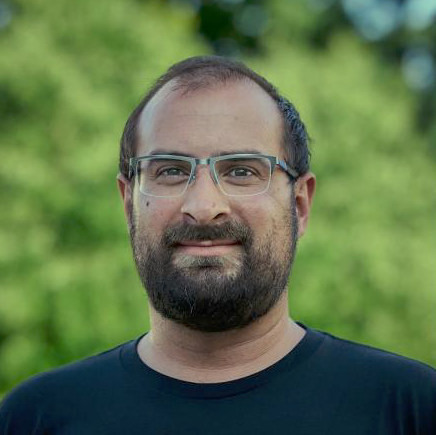
Joey D'Anna
Joey is lead colorist and CTO of DC Color. When he’s not in the color suite you’ll usually find him with a wrench in hand working on one of his classic cars or bikes
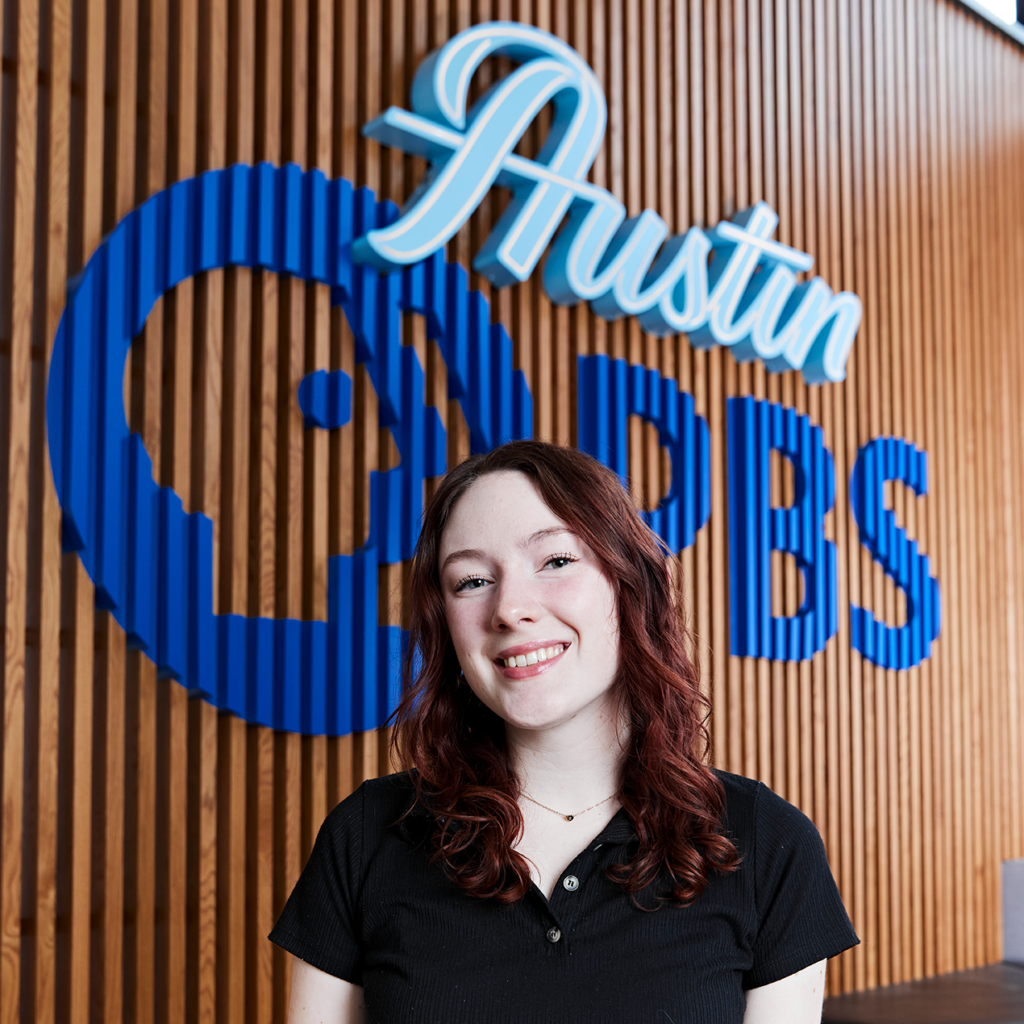
Stella Yrigoyen
Stella Yrigoyen is an Austin, TX-based video editor specializing in documentary filmmaking. With a B.S. in Radio-Television-Film from UT Austin and over 7 years of editing experience, Stella possesses an in-depth understanding of the post-production pipeline. In the past year, she worked on Austin PBS series like 'Taco Mafia' and 'Chasing the Tide,' served as a Production Assistant on 'Austin City Limits,' and contributed to various post-production roles on other creatively and technically demanding project