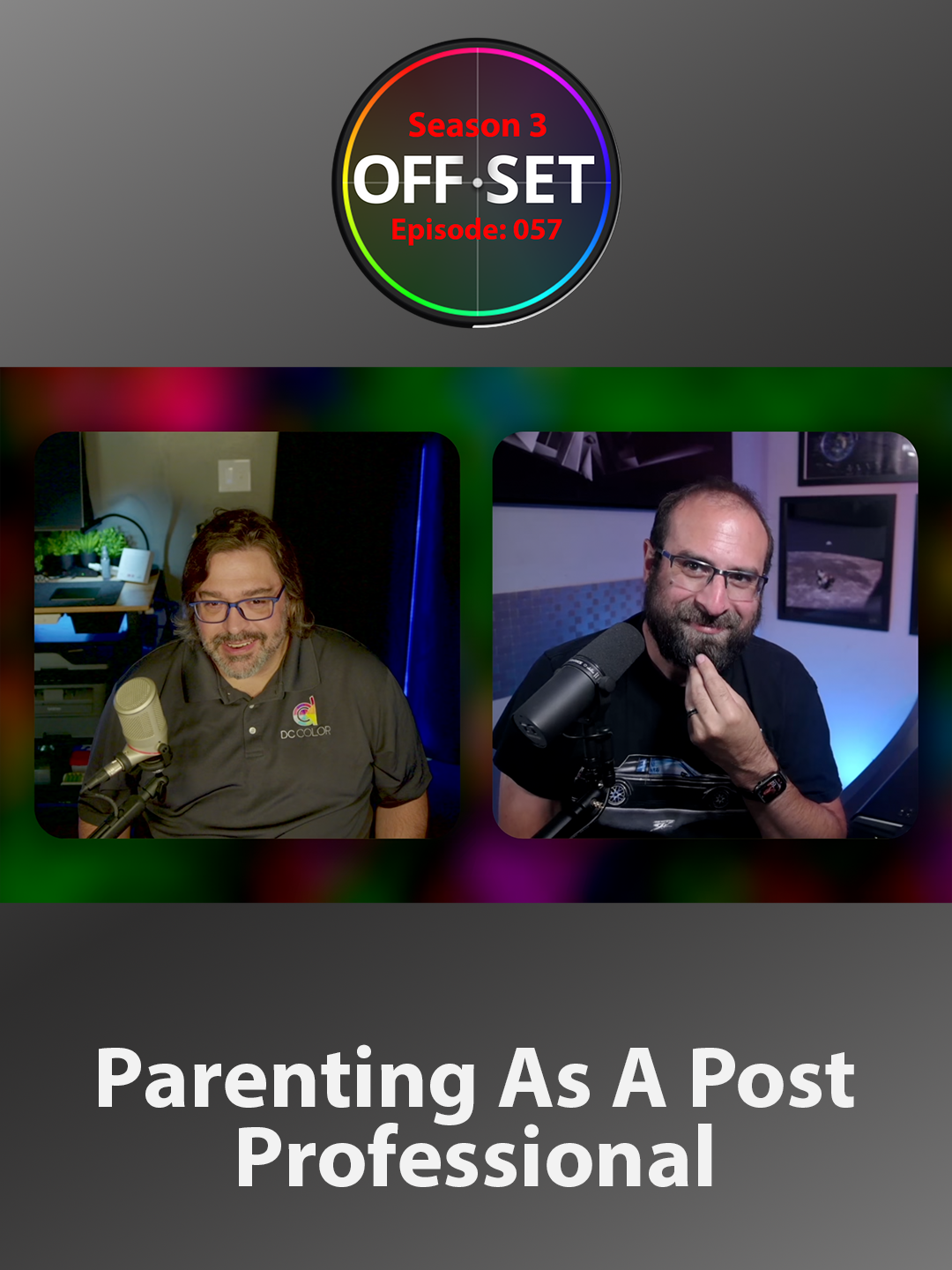
EP 057: Parenting As A Post Production Professional
Parenting As A Post Production Professional Has Some Unique Challenges
Recently we’ve been thinking a lot about how quickly time seems to go by and nothing demonstrates this more than how our kids have gone from being to toddlers to graduating high school and moving on to their next stage in life.
While there isn’t anything novel about this transition, it got us thinking about the unique challenges of being a parent who’s also a post production professional.
In this episode of The Offset Podcast we’re exploring this topic in detail.
Some specifics include:
- Time management & being present
- How the work around the work is a big parenting challenge
- Parenting when your partner isn’t in the post business
- Giving a peak behind the curtain to your family
- Is post a good carer path for kids?
- How knowledge won in post applies to other careers & industries
LIKE THE SHOW?
Check out www.offsetpodcast.com for our entire library of episodes + some of the additional assets mentioned in this episode that are available for download.
Be sure to like it and subscribe to the podcast wherever you found it and be sure to check out our growing library of episodes. If you like the podcast it’d mean the world to us if you’d consider supporting the show by buying us a cup of virtual coffee –https://buymeacoffee.com/theoffsetpodcast
See you in about two weeks for a new episode.
Video
Transcript
00:00:00:01 - 00:00:16:18
Robbie
Hey, everybody, welcome back to another episode of The Offset Podcast. And today we're taking a look at the unique and sometimes challenging experience of parenting as a post-production professional. Stay tuned.
00:00:16:20 - 00:00:36:17
Joey
Support for this episode comes from Flanders Scientific and the XMP 270 and XMP 310. The accessible, lightweight, and versatile monitors helping to bring HDR monitoring on set, while also being very well suited to post-production work. Learn more at FlandersScientific.com
00:00:36:19 - 00:00:45:05
Robbie
Hey everybody! Welcome back into another installment of The Offset Podcast. I'm one of your hosts, Robbie Carman. With me, as always, is Joey D’Anna. Hey, Joey, how are you?
00:00:45:07 - 00:00:47:02
Joey
Hey, everyone.
00:00:47:04 - 00:01:16:16
Robbie
So, Joey, I feel like this is a topic that we're going to discuss today, the idea of parenting or being a parent. As somebody who is a, you know, post-production professional that is long overdue in our hour long list of episodes here. And this is in particular coming to mind as this past weekend unbelievably celebrated the graduation of my my first, my firstborn, my daughter from high school.
00:01:16:17 - 00:01:38:21
Robbie
It's crazy that 18 years have gone by. And that just got us thinking a little bit about post-production, sort of, as you know, the unique challenges that exist as, you know, being an operator in this business and how it eats time and how it adds stresses and, you know, the financial parts of it. But then also, I think we wanted to talk a little bit about just sort of like, hey, you know, kids are growing up.
00:01:38:22 - 00:02:09:05
Robbie
Hey, it's time to start thinking about what you want to do in your life. Is post-production something that we should be steering our kids towards or talking about or encouraging? And so today, I think we want to dive into those those kind of broad areas and just kind of discuss it. I mean, there's not a right answer or wrong answer for any of it, but I think there's a lot of people like us who have kids that are getting older or they have young kids are experiencing the challenges of being a parent with the rigors and the demands of being in post.
00:02:09:08 - 00:02:27:03
Robbie
And that's not easy, to be honest with you. Having done it twice now. So we're going to take a look at that. But before we begin, as always, just a little bit of housekeeping. You can watch the offset podcast on YouTube. Just search for the offset podcast over on the YouTube and you will find us there. That's a video version of the podcast.
00:02:27:04 - 00:02:47:06
Robbie
You'll also find us on major streaming platforms like Spotify or Apple Podcast, or any place where you consume podcasts. Just again, search for the Office of Podcast and you can find our complete library over at the Offset podcast. Com and if you're on the old social media, you can follow us on Instagram and Facebook. Again, just search for the offset podcast.
00:02:47:09 - 00:03:15:18
Robbie
All right Joey, so let's talk a little bit about kind of the I think the first place we want to start is just sort of like the general challenges of being a parent when you are an operator in post-production. And I, I got to tell you, man, I think often about a period of both. So my just for transparency or my daughter, 18, just graduated from high school, my son's 12 going to be 13 this coming year going into seventh grade.
00:03:15:20 - 00:03:40:11
Robbie
So, you know, my kids are a little a couple of years older than your kids, but I think back all the time to when my kids were in that like two to like six seven range. And it just happened to line up with a period of the business that was unbelievably busy and a lot of challenges. And I was, you know, had an office that was 30 miles away from the house and all that kind of stuff.
00:03:40:11 - 00:04:08:15
Robbie
So let's dig into that part, because I think that there are a lot of challenges. And to me, it starts with the idea of how do you be present and manage your time for your family and for your kids in a way that you know, doesn't leave you sort of in shame or with regrets and and also at the same time, you know, allows enough time to do the work that you need to do while also being present for your family.
00:04:08:15 - 00:04:20:12
Robbie
And I know that you've experienced this challenge a lot as well. So why don't you kind of start like, you know, again, as we always do, sort of a 50,000ft view of this, and then we can whittle down into some of the, some of the particulars.
00:04:20:14 - 00:04:44:00
Joey
Yeah. I mean, like you said in the past, just the lifetime of our children, mine are, you know, I've got one who is, you know, same a tiny bit older than your youngest going into eighth grade next year. And then my older son is actually just going into his first year of high school next year, which is a ridiculous thing for me to even think about, right?
00:04:44:02 - 00:05:05:10
Joey
So in their just in their lifetime, what my job looks like and what my time management has looked like has completely been upended and changed. It used to be I would go to the office, I'd spend, you know, it would be our commute in, then eight hours of the office in an hour, commute home. So ten hours a day minimum.
00:05:05:10 - 00:05:31:19
Joey
I'm gone. Days that were busier get into, like, overtime, longer hours. I would just be home late. So. So there was a lot of disadvantage to kind of the old way of doing stuff in that we were just gone. Right. Yeah. Now that the office is kind of out of the picture and I'm working remotely, it's a whole new set of challenges because the job never leaves.
00:05:31:19 - 00:05:57:09
Joey
I can run downstairs and work on something at any time of the day, on any day, including weekends, and I do. But the net of that is the amount of time I spend working is probably about the same amount of time, but it's spread over like starts and stops dramatically, which is something that when when the kids were younger, I could have never even conceived of with the idea that I was going to be working from home.
00:05:57:10 - 00:06:15:03
Joey
Right? That that didn't even come into our mind. It was you go to the you go to the factory, you come home from the factory. And when you're when you're home from the factory, you might get on email, you might remote in to do a real quick fix or something. But there was never it's 9:00 at night. Client just sent a project.
00:06:15:03 - 00:06:48:00
Joey
Why don't I get it prepped for tomorrow? Tonight. So my day tomorrow is a little bit easier, right? So the biggest thing for me that I'm going to say is a positive of the big work, remote changes that we've seen in specifically the context of having kids is I can proactively manage my time dramatically better. I can at 3:00 when they get home from school, take an hour break and and hang out with them, or take them to go get a snack or something like that, and then come back to my office like nothing happened and keep working, right?
00:06:48:01 - 00:07:07:17
Joey
If I was actually at the office an hour away, that would never be an option. Yeah, right. And I can also take some of my downtime on the weekends to make my weekday days a little bit more flexible. So if the kids have something that I need to do during the week, I can kind of wiggle around it because I can work all the time.
00:07:07:19 - 00:07:16:07
Joey
The downside is, yes, the work is spread out over smaller chunks, but now it's like, I feel like I'm never not working.
00:07:16:09 - 00:07:35:13
Robbie
I agree, I think there's a lot to unpack there. I think that and I mentioned this in the opening of the show that I feel like I have. I have a lot of regret and a little bit of shame for like when my kids were really little, because it happens all the time where like, you know, my wife and my, my kids will be talking about something.
00:07:35:14 - 00:07:56:04
Robbie
They'll be like, oh, you remember when we went here or we did this or we did that? I'm like, no, I don't know. Oh yeah, you weren't there. And that phrase comes up a lot, especially I think in the past five, six, seven years, I've done a remarkably better job. We'll get into that in a second. But like, at least there was a period when the kids were really small.
00:07:56:04 - 00:08:18:09
Robbie
But it was like all my wife, like 100%. And like to this day, I'm still indebted and a little bit in or that, you know, she's basically like a single parent for a number of years while I was 30 miles away, stuck in an office doing television shows that in hindsight, really don't matter, but at the time seemed like these critical, you know, big, huge opportunities and things that I had to work on.
00:08:18:09 - 00:08:41:03
Robbie
And I think for me, part of the problem in that model was that I'm a chronic underestimate of time and I'm chronically I'm a completist. Right? I, I have really have trouble walking away from things when they're still in process. Right? Even like even if it's like a grade, like at the end of the day, like if you're graving like a 90 minute movie or whatever.
00:08:41:04 - 00:09:04:06
Robbie
Like, I still fight that problem. Like, did I do enough today to get like, you know, I always want to just keep going until it's done, right? And when, you know, early on in my kids lives, I think that was unfair to them because I was coming home at nine, ten, 11, sometimes midnight or later. Right. You know, after they had gone to sleep, missing out on some of those, you know, some of those things.
00:09:04:07 - 00:09:22:15
Robbie
And, you know, we managed. I'm not making it like, sound. I'm making it sound a little bit more ominous and like doom and gloom than it was. But it's definitely a regret of mine that I focus too much on the office and work at a formative time in my kids life, and I know that. And it's like, that's time.
00:09:22:15 - 00:09:45:22
Robbie
I can never really totally recover. And so, like to me, you know, one of the goals of this episode is just to sort of say people that like, no, you never can get that time back, really, really focus on it and prioritize it because it is important thing now to go to the home thing. I think you're you're right that it has brought a lot of advantages in sort of workflow.
00:09:45:23 - 00:10:03:18
Robbie
Hey, it's you know, it's late at night. I'm so I can still do my thing, you know, family is going to bed. I can still go back downstairs, get a show prep, do whatever I have to say, though, if I'm being really honest about the analysis of that, is that there's a difference between being home and being present, right?
00:10:03:19 - 00:10:24:05
Robbie
Yeah. And it's the being present part that I'm still working on because it's just as easy to go, you know, into my home studio as it is to disappear for ten hours to go to the office. Right. And like, I still feel like I do that a lot. I still go, you know, and hide out. And it's like, Where's dad?
00:10:24:06 - 00:10:25:11
Robbie
Oh, he's in the basement work.
00:10:25:12 - 00:10:53:08
Joey
That's my biggest, like, downfall. And probably my biggest regret is that, you know, yes, there's always if you're working, there's going to be parts of your kids lives that you miss, right? But also parenting is not easy, right? There's some times where it's really stressful. And in those instances when the kids are just kind of too much or, you know, where it's not all, all happiness and roses and candy and wonderful.
00:10:53:10 - 00:11:09:13
Joey
When you have the office at home, it's really easy to just default to, oh, no, sorry, I got to go get some work done. Which might be true, but if you're managing your time proactively, you can use the office being at home as kind of an escape when you shouldn't.
00:11:09:15 - 00:11:26:16
Robbie
That's true. But I will give you the flip side of this. And this is the way at least that I've been working towards and trying to frame it is that because I have this flexibility now of pretty much able to work at a time that I want, it does make it easier to block time in a different way than I was able to before.
00:11:26:17 - 00:11:45:21
Robbie
Right? So I kind of know that, like look, between 4:00 and like 8:00 in the afternoon, there's not a chance that I'm going to be able to focus and get the stuff done that I need to get done, because that's like and like instead of fighting that. Right. I've kind of just kind of like embraced that, be like, okay, cool.
00:11:45:22 - 00:12:07:20
Robbie
Kids came off, you know, my son got off the bus at four, daughter comes home after practice or whatever, like, and we'll hang out. He does her thing, we'll have dinner, we'll chat, watch TV, like, and that's been really good. But what it's done in hindsight for me is that it's really modified my workday where I have like the way that I tend to work is a more productive in the evenings.
00:12:07:20 - 00:12:14:04
Robbie
And so evenings have turned into like night, if that makes sense. Right? Like I'm sitting back down.
00:12:14:05 - 00:12:22:11
Joey
Stacking up right, like it gets it gets later and later and later until a couple months go down the road. You got to kind of reset it. And then I have.
00:12:22:13 - 00:12:46:07
Robbie
And I haven't reset it yet. This is the problem, right. So now I'm like, oh cool. Like I'll sit down at nine, 930 and just I'm going to do a couple things and then next thing you know, it's 1 a.m., it's 2 a.m. sometimes even later. And I'm still doing that. So like it's a tough thing because I feel like I've gotten better at that part of it, but also worse at that part of it at the same time.
00:12:46:08 - 00:13:04:02
Robbie
Right. That like, I am arguably improving the family part of it, which is important, but also arguably making my my situation worse because I'm pulling hours that I wouldn't have pulled at the same in the same way at the office, if that makes sense.
00:13:04:04 - 00:13:30:01
Joey
Yeah, and I'd say if there's a positive to all of this, aside from the working from home versus not working from home aspect, I feel like the industry as a whole has had a general shift towards better, more reasonable time management in the past, maybe ten years. Right? It used to be like we all thought that this was, you know, the be all, end all this was really, really important.
00:13:30:04 - 00:13:39:20
Joey
And there has been a lot of trends in the industry of people kind of pushing back on that finally and saying, hey, you know what? It's okay to take a break. You're working on a reality TV show. Yeah.
00:13:39:21 - 00:13:59:08
Robbie
This is not open heart surgery. Nobody's going to die if if the show is, you know, an hour or two late. I agree with that. And I think that there's that, that, that, that pressure that existed ten, 12 years ago or before of like, hey, it's all open heart surgery like you have to and and I think you're right, people have gone.
00:13:59:09 - 00:14:12:05
Joey
Because it was like, cool, right? I'm like, I'm super working 1,000,000,000 hours a day to get these shows out. And it's, you know, hip and cool to be like overworked. And that's not trendy anymore. Everybody like, no, dude, that's kind of dumb.
00:14:12:05 - 00:14:36:10
Robbie
Support for this episode comes from Conform.Tools. Conform.Tools allows you to translate timelines between Premiere and Resolve in other NLEs, while automatically solving common issues that normally need to be fixed by hand. Avoid time consuming trim and transfer issues, and securely send large media files to collaborators at a fraction of the size and in minutes instead of hours.
00:14:36:14 - 00:15:00:17
Robbie
With a growing toolbox of features let Conform.Tools, handle the tedious stuff so you can focus on the creative. Built by post professionals. Conform.Tools, helps editors, colorists and conform artists move faster and finish stronger. Learn more at Conform.Tools. well. And I also think that part of this this is and we've done episodes on this about working harder, not smarter or working smarter, not harder.
00:15:00:17 - 00:15:26:17
Robbie
Rather. And you know, I think that's inevitably true to right. Computers are faster, workflows are better, tools are more apt to do this. The other thing I was I was going to say about sort of the challenges of being a parent in post-production, too, is that, a lot of the attention time away from family is not actually spent on, like the work part of it is relatively straightforward and lockable.
00:15:26:18 - 00:15:45:18
Robbie
Right? The things that I think that really get to me as a parent or the stressors that get to me are a parent is like, you know, you're at a, you know, a kid's event, right? Like maybe it's a, you know, a piano recital or a sporting event or whatever. And you're sitting there, you know, with your phone, answering emails or, you know, hey, give me a second.
00:15:45:18 - 00:16:02:14
Robbie
I got to talk to this person. And like, it's that part that I think is more disruptive and more noticeable by family than the actual because like, people sort of a certain degree understand, like cool, like your job requires you to sit in front of a computer and do this work, do that work and then be done with it.
00:16:02:14 - 00:16:22:14
Robbie
And like the idea, especially as somebody who owns, you know, a couple small businesses, the idea that I'm always on and always working is a little bit at odds. And so like one of the things that I've been trying to do and I can't say successfully but is like, is is do things like use like my Do Not Disturb modes right in more effective way.
00:16:22:14 - 00:16:53:17
Robbie
Also I've, you know, in one of the things I've really been trying to do is like procrastinate on purpose, if that makes sense. So like getting getting emails doesn't have to mean the response happens immediately or like, hey, if there's something that's pressing, you know what? It's it might be pressing, but it's 11:00 at night. And so like I've the thing some of the things I've done to mitigate that pressure that I feel as an operator and as a parent is that I've gone, okay, well, this can wait.
00:16:53:18 - 00:17:11:21
Robbie
First of all. But then I'm also adding another layer to that. Things like scheduling emails, scheduling slack messages or whatever, like all of that kind of stuff. So where and it's kind of funny sometimes I actually screw this up with you. You're like, you know, you'll get a message from me at like 7 a.m. and you're like, what were you doing up at 7:00?
00:17:12:00 - 00:17:33:12
Robbie
I'm like, oh, I wasn't, I just, I thought of something the night before and I just scheduled that. But my point is, is that, like, you don't always have to be disruptive. There's ways to like, pile things off planet. And like one of the things that I've also been doing just on the email front is I, if I'm not ready to fully respond, is I will start a draft, right?
00:17:33:13 - 00:17:51:10
Robbie
So I'll hit reply and type like get back to so-and-so about x, y, z. And that's all I'll put in the draft. And so then in the next morning I look at my my inbox and it's like, okay, I got six drafts. Now let me finish them when I have time. So from like a mental mode point of view, I feel like I've addressed it right.
00:17:51:11 - 00:18:04:09
Robbie
I've taken some of that pressure off, but I haven't necessarily done the whole thing. So I think there's, you know, depending on how you feel, those pressures, I think there's different ways to mitigate, especially that the work around the work part.
00:18:04:11 - 00:18:25:23
Joey
Yeah, email is the worst because, you know, we come from a world where it's like, I think both of us probably feel when we get an email, we need to respond right now. And that's just not the case. And it's not what most people are expecting. But we've kind of made it our expectation that that's the thing and it really shouldn't be.
00:18:25:23 - 00:18:45:05
Joey
So I think what you're doing with scheduling or starting drafts is really, really good. One little tip, because I've done I do the same thing. I'll start a draft email and start replying. Quick little tip for those who want to do that. Whenever I do a draft that I know I'm not going to be like that, I'm going to come back to you later.
00:18:45:07 - 00:18:55:03
Joey
I go and I delete the recipient from the two field before it's accidentally hit send until I'm ready to. Hit by. That was.
00:18:55:05 - 00:18:56:15
Robbie
Bitten by that one.
00:18:56:17 - 00:19:22:21
Joey
I have the draft by hitting control enter instead of enter. Too many times. I will literally delete the recipient out of there so I can force myself to oh, I'm ready to send this. Let me put you back in and send it. The other thing that I saw, and I have 1 or 2 clients that actually do this, and I thought it was really clever, and I think it's really good that it's the client doing it, because I feel like as a vendor we couldn't do this right.
00:19:23:00 - 00:19:43:11
Joey
The world has not changed enough for us to put this in our emails. But I have some clients who in their email say, hey, if you get a, you know. My work hours schedule. Yeah, if you get an email at a weird time, unless I'm saying this is an emergency, don't consider an emergency. Get back when you feel like.
00:19:43:12 - 00:19:44:05
Robbie
Yeah, I've.
00:19:44:05 - 00:19:44:14
Joey
Actually thought.
00:19:44:14 - 00:19:44:21
Robbie
About.
00:19:44:22 - 00:19:50:06
Joey
Really good thing to, like, put out there in the world for people to think about. I don't know if I'm ready to do that as a vendor.
00:19:50:06 - 00:20:08:09
Robbie
I've actually thought about doing it like I think about doing that all the time, but I stop a little bit short for the same reasons. But that's that's definitely it sets a boundary. But like it's not a hard boundary. It's sort of like, hey, like I'm doing this. I'm not trying to be annoying by sending you emails at 1230 at night.
00:20:08:09 - 00:20:30:03
Robbie
I'm just this is when I'm on thinking about this. And I think as long as you qualify, that's that's totally fine. The other thing I switching gears slightly that I wanted to talk about a little bit is I think that I see a lot of stress that happens in families when somebody is in the post business or production business or whatever, and the other partner is not.
00:20:30:05 - 00:20:51:02
Robbie
And that level of communication that happens with your spouse or your partner or whatever about how to manage that thing. I think that there is a tendency by a lot of people to like, I'm going to shield my spouse from this craziness. And so it like I, you know, that's one part of it. The other way of doing it is like I'm over commuting with my, my spouse.
00:20:51:02 - 00:21:14:13
Robbie
And so it becomes like the you story all the time about the, you know, the perceived stresses like and I found myself over the years, I was lucky because my wife worked in post-production for a number of years. And so she she kind of thinks it's all stupid, but she gets it right. But like, you know, we've ebbed and flowed over the years about like, you know, hey, payroll is going to be a little late because I'm waiting on some checks or whatever.
00:21:14:13 - 00:21:31:04
Robbie
And like, you know, we've ebbed and flowed and there were some ways that I was communicating that were driving her crazy. Other things were, you know, like maybe it was too much information. So I think one of the things that you have to figure out about being a parent, two is how to be a partner with your partner in, in this process.
00:21:31:05 - 00:21:55:17
Robbie
Right? Because like, you do need that time to work on a show or get your tasks done or, or write the emails or whatever, but you can't do that at a total net loss to your partner. Like, cool, I'm just going to go to the office piece out like, that's not cool either, right? And so like figuring out how those timeframes work, like, hey, you know, Sweeney like, oh, I'm on I'm on this for the next two hours, three hours.
00:21:55:17 - 00:22:14:02
Robbie
But then I need you to take over so I can go do my thing or whatever, whatever level of communication you're comfortable with, you know? But I do see one of the big stumbling blocks is how those in post-production communicate with their spouse. And I think it really comes down into two categories. It's like walled off, not telling you, giving you any information.
00:22:14:03 - 00:22:19:23
Robbie
Right. Just living with the stress. And then the other side of it is too much communication.
00:22:20:02 - 00:22:32:08
Joey
And it's funny because I think I would bet that and it's weird in our industry, I would bet that 80% of people listening to this podcast, if they're married, married someone in the industry, which.
00:22:32:10 - 00:22:33:02
Robbie
You think you think.
00:22:33:02 - 00:22:54:08
Joey
It's very common. I think it's very high. I'd be curious, maybe not 80, maybe 70, but I feel like a lot of people that I've worked with in Up getting together and marrying people that they worked with, which is a commentary on the industry as a whole, I think, or maybe a commentary on the industry as it was ten years ago than today.
00:22:54:08 - 00:23:12:00
Joey
But I went the opposite way. My wife has nothing to do with postproduction, has never been in the business at all. So I'm probably more on the walled off side of like, yeah, I'm in this, this office down here making TV things happen, makes money. Well, I guess.
00:23:12:02 - 00:23:13:08
Robbie
Let me let me clarify something.
00:23:13:09 - 00:23:27:18
Joey
And there's disadvantages to that too, because sometimes I might say I might be like at something that's like really high stress. And to the outsider, that's not in the industry might think, well, that's the dumbest thing I've ever heard in my life. Why is that even bothering you?
00:23:27:22 - 00:23:53:15
Robbie
Well, so that kind of communication falls into a couple of different categories. I think it comes into like, you know, the creative technical side, I mean, whatever. Like that's not who you could talk about that. Like you might just get a, like a dumb look at you, like, what are you talking about? The things I see more are the especially for freelancers and small business operators, is the financial transparency and communication about that stuff.
00:23:53:16 - 00:24:16:19
Robbie
Right. I see that causing a lot of stress for people's marriages and partnerships and, and ultimately stress on their kids. Right. It's like, you know, it's like if you've had a slow month or like whatever, how to how to handle those kind of communications, I think cause a lot of stress in, in relationships. Right. And ultimately that stuff like when that kind of stress is, is rare in its head, it ripples, right?
00:24:16:20 - 00:24:25:06
Robbie
Like waiting on a check from a client somehow becomes you don't love your kids anymore or something like that, you know what I'm saying? And it's like.
00:24:25:08 - 00:24:49:12
Joey
Anything with time as well, because, like, it's hard. There's there's periods of busy where it's like you are, you know, head down working. You can't even you can't even get up for lunch, you can't even do anything. And then there's times where it's like, oh, I got two days where I'm like, I might get a couple shots done here, send a few emails and just chill.
00:24:49:13 - 00:25:05:04
Joey
Sure, I can go pick up the kids at whatever, and I could do this, I could do that. But then, like, so the the transition between when it's massively busy, I can't do anything to I'm really flexible, can sometimes be really opaque and hard to tell.
00:25:05:06 - 00:25:29:07
Robbie
Yeah. And I think that's that's why it makes communication about it even more important and sort of setting the expectations of what availability is like, what's realistic. And I think that I can only speak for myself in my partner, and that is that more times than not, it's not like the danger is not communicating about it. It's not that it's like a problem.
00:25:29:07 - 00:25:46:09
Robbie
It's more about, okay, we're a team. Let's figure out how to manage this. Right. You have a client call at 5:00. You know, my son needs to be at a school event at 530. Are you going to take him there? Right. And it's like one of those things where it's like, if I don't communicate that, I'm like, yeah, yeah, sure.
00:25:46:09 - 00:26:10:22
Robbie
It's no problem. Whatever. Not saying, hey, you know what? I need a backup plan because this call is probably going to run a little late. Like, can you take him and I'll pick him up, like, you know, whatever, whatever it may be. That kind of communication, I think, alleviates a lot of that stress. I think the other thing, too, that you kind of mentioned about your spouse not being in the industry, I think in some ways that's easier, but in some ways it's harder, right?
00:26:10:23 - 00:26:48:08
Robbie
Because it's like it really like unless you've lived the life a little bit, it's hard to know exactly what that pressure, that pressure is. And like one of the things that I've tried to do over the years is explain things in terms of like relatable time pockets, right? That it's just sort of like, you know, listen, if I stop right now, this is like you stopping whatever task it is in your job or whatever, like trying like not to make it a measuring contest, but to make an analogous sort of thing about your partner's work life so that they understand a little bit better.
00:26:48:08 - 00:27:04:22
Robbie
And I would say also the thing about that, and we'll segue into our next topic here about this, is that that also comes true with like your kids and your kid management. Right? Because like kids are not going to understand like, oh, well, you're just looking at a stupid screen and not paying attention to me, especially when they're little.
00:27:04:23 - 00:27:06:18
Robbie
Right? Like they really don't.
00:27:06:23 - 00:27:08:13
Joey
The hardest for me.
00:27:08:15 - 00:27:45:07
Robbie
Yeah. And because you need to focus and then you got this little bundle of energy going, hey, dad. Hey, dad. Hey, dad, look at this, look at that, look at this. Right? And you're like, Jesus, I just need to focus for an hour. Right? But having that like that, how that works is it's a delicate art form. And one of the things that I think that especially those who are working from home now or or have, you know, are the primary caregiver and you also need to work is it's about to me, it's about engagement with the kids and acknowledging what's going on in their lives and sort of trying to bring them in a
00:27:45:07 - 00:28:02:16
Robbie
little bit to what you're doing. Right. So like, all kids are just curious. They want to know what you're doing and how you're doing it. Why are you focused on it and not them? Right. And so I found like over the years telling my like, hey, you want to see something cool? Look, I can change the color of this person's nose or, you know, whatever.
00:28:02:16 - 00:28:21:23
Robbie
And they're like, oh, that's cool. Like, whatever. Even to the point where, like, I've been like, hey, take my laptop. Here are some, you know, here's the timeline and play with the timeline. And you can just do just like dad does. And actually that was like, especially with my son who's a little, like, loves to experiment. That was a great way to manage the.
00:28:22:00 - 00:28:40:05
Robbie
Hey, dads, hey dads, hey dad's hey dads by getting him involved a little bit, I mean, every kid is going to be different, but that's another thing I found to be a little sort of self-serving, but at the same time a little rewarding because they were learning a little bit more about computers. They were learning more about respect of property.
00:28:40:10 - 00:28:59:11
Robbie
I can't break dad's computer, right? I got to be careful with it. They were learning a little bit of the creative stuff and also learning some of the technical stuff. I mean, now, like my kids, like my son edits like ten YouTube videos a week, right? And like, color corrects them and adds motion graphics packages and all this kind of stuff, which is like, whoa, where'd you learn how to do that?
00:28:59:11 - 00:29:03:18
Robbie
And then my wife's always like, you taught him how to do this when he was like three. And I'm like, all right, I did. Yeah.
00:29:03:19 - 00:29:34:17
Joey
And that's kind of the next thing that I wanted to talk about is, is this industry something we want to bring our kids into, and is this a good opportunity for them to learn a skill? Do they have interest in joining us. And because, you know, that's that's a topic that I'm I think about a lot because that's how I got into, you know, my dad was a was a broadcast engineer for, you know, since the early dawn of electronic news gathering in the nation's capital.
00:29:34:18 - 00:30:06:10
Joey
Right. So he was involved and that ended up evolving from news to post-production in general to a big post-production facility. So my dad would bring me into TV studios, my dad would bring me into post facilities, edit rooms, studios. I saw all of it from a very, very young age, and I was enamored because you saw these big grass valley switches with lots of lights, knobs and things that you could pull, and it was awesome.
00:30:06:12 - 00:30:40:22
Joey
And it was like a foregone conclusion. You know, it's weird because I don't think my my other siblings took to it like I did, but from the second I was in a studio environment or a post-production environment, I knew what I was going to do, right? Like, I, I was immediately in there and I was around these big facilities from a young age, seeing the professionals do it at a high level, and I knew exactly what business I was going to be be in.
00:30:40:23 - 00:31:05:03
Joey
I don't so much see that as much with my kids, and I'm kind of sad about it. But also it's kind of like the business has changed so much now that I'm not sure I understand it enough to bring them into it or to, well, there's just a lot going on that I don't, you know, and so I haven't taught my kids how to edit YouTube videos very much or anything like that.
00:31:05:03 - 00:31:20:03
Joey
I'm kind of like almost hands off trying to figure out where their interests are going to go and see what happens. You know, I'm kind of taking the stance of let them figure things out. And I don't know, I don't know if that's right or not.
00:31:20:05 - 00:31:42:05
Robbie
No, it's a good point. I think I take the tack a lot of times of I want my because my kids are very creative and but that creativity doesn't necessarily necessarily mean that it's like you got to be in media and post-production like dear old dad, right? There's a lot of ways to be creative. You know, my son is very musical.
00:31:42:05 - 00:32:12:02
Robbie
My daughter is is is creative from like just like a process and thinking point of view. And like she gears much more towards engineering and like, you know, the process of things. And so, I mean, part of my, my thinking about this as a parent is, yeah, kids will naturally kind of find their way, but also like it is relatively rare that somebody at 12 or 13 figures out what they're going to do for the rest of their lives at 12 or 13, right?
00:32:12:03 - 00:32:44:05
Robbie
I mean, I'm in my late 40s and I'm like, what can I do next after this? Right. You know, so it's like, I don't think we have to force that. But I do hear what you're saying that sort of like it, especially to me, the one reason to talk my kids out of this business is solely a selfish financial reason, and that not that I'm going to spend a lot of money, but it's that it's really difficult to find a well-paying, well structured job in this industry in 2026.
00:32:44:06 - 00:33:02:10
Robbie
Right? I mean, I, I think back to 25 years ago, and I always make this like excuse that like, oh, well, I started my own business because I felt like I was the smartest guy, the totem pole. The reality of it, if I'm being honest, was that even 20 years ago, it was a hard industry to break into.
00:33:02:11 - 00:33:07:05
Robbie
You had to be, you know, an assistant editor or running the machine room for a long time.
00:33:07:06 - 00:33:22:00
Joey
You needed access. And that's something that for me, my my dad provided that access. Yeah. Now we're at a point in the industry where you still need access. You still need a starting point. I can't really provide any extra access than most people can know.
00:33:22:00 - 00:33:50:04
Robbie
And and also the gatekeepers are different, right? It's not that. It's not that that stuff has to happen in a room, you know, a facility with million dollar machines in the room anymore, right? Like, you can be a post studio sitting in your bedroom and with all the same functionality that we had 20 years ago. So it's it's a little bit of a hard sell to be like I think that's there's been a transition about post that it's become it's gone from a, you know, a job, an industry, something you go to.
00:33:50:04 - 00:34:12:07
Robbie
And that transition home has also made it a little bit more under the umbrella of, you know, creators, influencers, that kind of stuff. We're like talking to my kids about like making a movie. They're like, what? Like people make movies. They're not like done by like, you know, like, yeah, people make movies. And so I think that, you know, their the way that they consume media has a lot to do with it.
00:34:12:07 - 00:34:33:22
Robbie
I think the way that media is created, that they consume the short form things very campy, not a lot of structure. That's kind of just how they think about like, so why like that's not a job. That's just something I do on my, my phone in my free time to like, get likes and impress my friends. Right. It's not seen so much as that.
00:34:33:22 - 00:35:04:09
Robbie
But the other thing too, I think that I think as a parent, you owe it to your kids to be like a strong analysis of this, right? Like, my daughter is going to college. We're looked at this and she had a lot of interest, varying interests. And, you know, it's just sort of like I couldn't with a straight face be like, yeah, you should totally embrace the creative side and get into what, what I do or field, because the reality of it is she's not going to walk out of college getting, you know, 150 grand a year as an assistant editor.
00:35:04:12 - 00:35:36:01
Robbie
You know what? She might get that as an engineer. She might get that as, you know, doing some of the other interests that she has. And so it's like it's sort of this rub as a parent in this industry between being like, I love this for me and not forcing that on the kids. And I think that it's not it's not it's easier not to force it on it now in some ways than it was when we were growing up, because it was like there wasn't a lot of technical plus creative outlets then, and there's more technical plus creative outlets now.
00:35:36:02 - 00:35:55:22
Robbie
Like even, you know, I was talking to my, my daughter's friends about some of the things that are doing. And it's like, you know, these things that are like they're wildly creative, like they're talking about like of like event promotion and like event management kind of stuff where it's like, I'll do we're going to do like these pop up things with like, you know, hologram holograms and like you're like, what?
00:35:55:23 - 00:36:17:17
Robbie
Like there's there's just a lot of really, you know, things, different industries that have come together that I think provide a lot of outlets for these kids to still be creative, but also with an eye to being successful. And I want to clarify, because somebody going to say, well, you know, there's more more to life and working than, than making money.
00:36:17:19 - 00:36:33:07
Robbie
True. But the reality of it is that, like, you know, like it would be a little bit irresponsible for me to just say, you can't pay it. Don't don't ever worry about making money or be because, like, you have to live your life, you know, and it's, it's it's harder than ever.
00:36:33:12 - 00:37:03:09
Joey
Yeah. And that's kind of like, this is where I struggle with this entire question is, like I said, my background was a very specific set of events. You know, my dad was in the industry. He brought me in, exposed me to a bunch of really, really effective mentors. And I was on my way from an early age. Not to say that I didn't stumble quite a lot in the following 40 years or 30 years.
00:37:03:09 - 00:37:27:20
Joey
I did, but it was like preset almost. I look at my kids and I look at where the industry now is, and I don't see them following that chain of events in any even similar way, which puts me like kind of like I don't know what to do because I know how it worked for me. It would never work like that for them.
00:37:27:22 - 00:37:35:19
Joey
I'm kind of at a complete loss here, looking at the world like, what's next? Learn to be a welder or a plumber. Great.
00:37:35:23 - 00:37:39:04
Robbie
Yeah, and there's nothing wrong with it. I think.
00:37:39:10 - 00:37:41:13
Joey
Sometimes I wish I did do.
00:37:41:15 - 00:38:10:10
Robbie
Support for this episode comes from Flanders Scientific and Gaia Color Direct Connect Volumetric Autocal. Calibration of reference displays is critical in our industry, and there's no easier way to calibrate than by using Gaia Color, which is standard on DM, XMP, and XMP C series monitors. Gaia Color calibration allows supported probes to be plugged in directly to the monitor for fast, accurate, and automated calibration.
00:38:10:10 - 00:38:35:04
Robbie
With no computer or operator expertise required. You can learn more about this powerful system at Flanders Scientific.com I think the thing that I like to focus on is that there is take out post-production from the the mindset. I think that there's a lot to learn about being. I think about it more conceptually about a client facing service provider.
00:38:35:05 - 00:38:58:02
Robbie
Right. That client facing service provider can be a plumber. It could be a high crane operator. It could be an engineer at Google like I don't there's a like there's a lot that I think that we in post-production are actually more positioned to, to, to teach our kids that have less to do with control surfaces and buttons and computers and all the nerdy technical stuff.
00:38:58:03 - 00:39:00:05
Robbie
Right. And a lot more about.
00:39:00:07 - 00:39:13:15
Joey
Like that. I, I think that's really smart. I did not even when we were kind of outlining prepping this episode, I yeah, that thought never even occurred to me. And you're absolutely right.
00:39:13:19 - 00:39:27:18
Robbie
I mean, think about it like this, right? You hire a service to come in, you hire an electrician or a plumber or something like that to come out of your house. Right? You want them to have a certain level of customer service professionally, right? Hey, they told you that they were going to get you a quote for the job.
00:39:27:18 - 00:39:41:01
Robbie
Did they get you the quote on time? Was the prices communicated accurately and fairly and like everything you talked about, like all the things that we think about doing, they're really no different in those other industries. So like the one.
00:39:41:01 - 00:39:43:09
Joey
Thing that stuff, to be honest. Right. If I do.
00:39:43:10 - 00:39:43:13
Robbie
I.
00:39:43:13 - 00:39:44:12
Joey
Think, I hope.
00:39:44:13 - 00:40:03:05
Robbie
I write the one and that's one thing that I was like, okay, my kids, yeah, you're not not going to be making movies. They're not gonna be producers, whatever. But like, I think they can gronk a lot of those skills that I've earned over the past 25, 30 years and apply them hopefully to whatever avenue that they want to go in.
00:40:03:05 - 00:40:23:08
Robbie
And I think the one thing that I do also think that, you know, I think there's a lot of parents like me who have a little bit of guilt, a little bit of shame about working too hard and not being present over the years. And I think the one thing I think the one positive part about that, though, and I know this is true for your kids and it's true for my kids.
00:40:23:08 - 00:40:46:10
Robbie
And I think a lot of our listeners who have kids, this is true for them to the one thing, one good example I do think that post has for our children is the work ethic, you know, sort of focus. Right? And that is that like you tell somebody you're going to do something, you're going to do it to the best of your ability and finish it.
00:40:46:11 - 00:40:49:11
Robbie
Right. And I think that there's so much in our.
00:40:49:12 - 00:40:51:02
Joey
Even if it's not your favorite thing.
00:40:51:05 - 00:41:10:21
Robbie
Right. And I think there's so much in our culture these days that just goes, oh, it's uncomfortable. Oh it's stressful. Just quit and move on from your life. And I think, as you know, I am proud of the fact that I feel like I've taught my kids that, like, if you're going to do something, you're going to tell somebody, you're going to do it, you're going to finish it, and you're going to do it to the best of your ability.
00:41:10:21 - 00:41:18:23
Robbie
And I've seen my kids do that from sports and in academics and all sorts of stuff. And I think that's a that's a positive, you know, for sure.
00:41:19:00 - 00:41:39:23
Joey
I think that's honestly I was sitting here kind of struggling over, well, what am I going to teach my kids in terms of the professional world? Because I the industry is completely different than when I learned it, and I don't think any of my skills are relevant to their lives. The idea of how to be a good, you know, customer service provider, because at the end of the day, that's what we are.
00:41:40:00 - 00:41:53:23
Joey
We are nothing without our clients and without the work they bring us. And those, I think, are skills that apply to any industry you could go into. Oh, I never even made that connection. I think that's that's critical.
00:41:54:01 - 00:42:20:21
Robbie
And I'll take it a step further. I think there are things about the post-production process that are applicable to any, any real industry. Certainly the things that come to mind are teamwork, working with different people, with different skill sets and different focuses. Right. That might be internal or external with clients in the process. Right? I think it's dealing with a lot of should just, let's just say personalities, right?
00:42:21:01 - 00:42:40:00
Robbie
I think that, you know, our culture is set up to where it's like this expectation that like, hey, everybody is just going to be nice to you all the time. And the reality is that that's not how the real world works. And like, you got to keep, you know, as a service provider, like somebody who's mean to you or gruff to you or whatever, got to keep on that smile on and move on and make it right.
00:42:40:00 - 00:42:55:14
Robbie
And I think that that like, you know, it's to us it feels like a bat, like, oh God, I'm such a pushover. All I do is say yes to people. All I do is go the extra mile. But I think the example to our kids is that it's sort of like, yeah, no, like you gotta you got to work at this.
00:42:55:14 - 00:43:24:08
Robbie
It's not easy. It's not going to be handed to you. And I think I do have a lot of faith in, you know, where our kids are right now in this generation, solely because I think that they've just been through a lot in the short time that they've been around. Right? They've, they've they've gone through, you know, disruption to their lives with the pandemic and, you know, in school, from home, you know, watching their parents go through the same things, you know, all that kind of stuff.
00:43:24:08 - 00:43:57:20
Robbie
And I just think that, like, these kids are better prepared than we might think they might be. But that's also this might just not be the right industry for for a lot of them. But I think we can still gronk a lot of the the lessons learned from being post operators to our kids. One more thing I just want to add to this conversation is I think there's an idea that and I mentioned this earlier that like our kids are thinking about like the work that we do as part of like being an influencer or social media or whatever.
00:43:57:22 - 00:44:07:00
Robbie
I said that in a semi, like what I think could be interpreted as like a disparaging way, and I just want to walk that back for a second because.
00:44:07:02 - 00:44:09:11
Joey
I don't. That stuff's silly.
00:44:09:13 - 00:44:30:05
Robbie
But hold on a second. If you want success and, you know, stability for your kids, like it's that's just the way that people are consuming media. I mean, look at the, you know, the top YouTubers in the world. You know, they're making millions of dollars. You know, I'm not saying that's everybody. Of course that's that's the it's a very small number.
00:44:30:05 - 00:44:51:16
Robbie
But it is possible. And I think the other thing too, like I was watching some guitar videos the other day and my son was like, who? Who's that? Like, why is that guy talking about that product? I'm like, because he gets paid to and my son's like, what do you mean? It's like, yeah, well, like he's a big enough YouTuber that companies come to him and say, hey, rep our guitar strings or our our amps or whatever, right?
00:44:51:16 - 00:45:16:05
Robbie
And so, like one of the things I think that the sort of creator economy, the gig economy is doing for kids today, too, is showing them that they have some control over making their, their lives and their their career pathways. I think 20, 30, 40 years ago, you were right. Nobody had control. Everybody just went, you got a job, you changed jobs, you got another.
00:45:16:06 - 00:45:31:11
Robbie
You know, you moved on. And now I think it's much more easier than any time before for kids to take a little bit of a clue from what we've done and gone. No, I'm just going to do my own thing. And I know how to make money with these different you connecting the dots in different ways. And I'm totally, totally good with that.
00:45:31:12 - 00:45:58:15
Joey
Yeah. And that kind of brings me to the last thing I wanted to talk about when it comes to kids post-production and the industry is, you know, now that our kids are getting to kind of a much more media consuming age, their generation is, you know, tangibly starting to affect our work. You know, kind of we're I don't want to say at the the tail end of the career arc, but we're getting there in years.
00:45:58:15 - 00:46:18:21
Joey
And you know, what we consider to be good or bad or high quality or low quality doesn't necessarily apply to the world today. And we're seeing that change dramatically. We've talked about this in a lot of different episodes and a lot of different things. When we talk about things like frame rates, we talk about things like how HDR is being used.
00:46:18:21 - 00:46:40:03
Joey
We talk about how the video game industry has really changed the filmmaking industry in a lot of ways, and I just wanted to touch on that a little bit with kind of our kids and their the age of their at now, because the way they consume media, obviously very, very different than the way we might be producing a lot of media.
00:46:40:04 - 00:46:58:02
Joey
I feel like a lot of the stuff that I'm making and I'm working on is more for people our age and declining, and if we want to keep our business going, we need to look to the kids a little bit and figure out, okay, what parts of the media landscape do we as vendors need to be in that we're not?
00:46:58:03 - 00:47:16:10
Joey
Because doing documentaries for conventional cable television is not going to be sustainable, you know, so we can I think it's important to kind of look to the kids these days and figure out, hey, where are the markets that we, as you know, more senior vendors need to be putting ourselves into that we haven't been.
00:47:16:13 - 00:47:45:15
Robbie
And I think that cuts a couple of different ways. I think you're absolutely right that there's a lot to learn from, from this generation doing some cool things. But I think also it kind of goes with what I said earlier, that I think that media, media creation is just kind of inherent to what these kids do because they grew up in a social mediated world, a YouTube world, etc. and it's kind of just like, I mean, honestly, it's kind of just like expected that, like you're going to create something, right?
00:47:45:16 - 00:48:15:08
Robbie
Like this, almost like this built in onus to be like, you have to make creative stuff, right? And I mean, I see my kids from every super TikTok video that, you know, they're in the kitchen dancing or, or doing some skit or whatever. And it's just like, that is media creation, right? Whether they realize it or not, it's teaching them skills about framing, planning, writing, you know, all of the, you know, the camera movement, audio, all of those kind of things.
00:48:15:10 - 00:48:40:10
Robbie
And but the thing that's interesting to me about it is that, like they're doing that from like sort of social pressures, keeping up with the Joneses kind of thing, not really realizing that they're they're also learning, I think, some valuable skills. And I think us as parents and post-production can help hone those skills in a way that helps them do the thing that they want to accomplish, make the TikTok video or whatever.
00:48:40:10 - 00:49:02:09
Robbie
But also, as we've discussed, sort of port that knowledge into, you know, other ways of thinking, be like, hey, yeah, did you notice that this video went better when you wrote it down, storyboarded it, planned it out a little bit? That's just like any other job. If you think about it and plan it, you'll have more opportunities for success.
00:49:02:10 - 00:49:28:22
Robbie
Oh, okay. So like, you know, I think that there's a lot of like I and I firmly believe this. I for as much as I, you know, bemoan, you know, the past 30 years in a lot of ways of working in this industry, the one thing I wouldn't trade it for is that it has taught me more about personal personalities and people, and it's taught me a lot about how to identify a lot about process.
00:49:28:23 - 00:49:48:11
Robbie
Right. And I think that those are those are skills that whether you're a banker, whether you're, you know, a scientist, whether you know, a football player or whatever, those skills are portable into those different lines of work, too. So I do think that posts people have a lot to teach their kids, right? So yeah, it's a complicated thing.
00:49:48:11 - 00:50:10:09
Robbie
And I think the last thing I want to say on this subject is just that, you know, kids are remarkably resilient, and they find they find the things that they that they like and the things that help them and complete them. And I think our job is that as a post-production parent, let's just funny phrase, but let's just say it that way.
00:50:10:11 - 00:50:46:13
Robbie
And I think that we are uniquely positioned to analyze that path because we do it ourselves, right? One one day we like doing this title grading, the next day we like doing that style of grading. We understand where creativity meets the business part of it and schedules and all that kind of stuff. And so I think that we are we do have the ability to help our kids be guides for them in that kind of stuff, because we believe it or not, this is one industry where we've experienced a lot more things than the average office worker.
00:50:46:13 - 00:51:07:20
Robbie
But just because we're exposed to creative, business, legal, you know, all of that stuff. And I think it really, it really, really helps. And is there one answer to all this stuff? No, of course not. But I think the thing that you said earlier that I would just leave people with, from my point of view is that like, you got to do the best you can, right?
00:51:07:21 - 00:51:26:00
Robbie
And I think that like, you know, just thinking about this and having these kind of discussions or just thinking about this stuff, you're already leg up on a lot of people because a lot of people are like, I don't give it whatever. Like it will be fine and they don't think about the process. And I think that hopefully, you know, having our short discussion here today has maybe help people with that.
00:51:26:02 - 00:51:53:17
Joey
Yeah. Honestly, I think, you know, going into this one, I was like, I feel like I was I'm less optimistic than most people. I'm kind of more gloom and doom and, you know, a old man yelling at the clouds, the kids these days with their TikToks and blah, blah, blah, blah, grumpy. I think you're right in a lot of ways that I wasn't thinking about in terms of the knowledge that we have is applicable, not in just our industry and the direction it's going.
00:51:53:18 - 00:51:57:15
Joey
And I think that's that's going to be really useful moving forward.
00:51:57:21 - 00:52:26:08
Robbie
Yeah. And you know, and I just to go back up to the top of this conversation when it comes to the stresses of being a parent and how to do it while also still having a successful career. It's hard. It's but it is manageable. And I think that understanding, as we talked about at the top of the show, understanding the where the balance points are, understanding communication with your family and your partner, like that kind of stuff, like it goes a long way to avoiding a lot of that stresses.
00:52:26:08 - 00:52:52:11
Robbie
And I think that, you know, I think like anything else, when we talk about the stuff, it makes it easier and less. It doesn't seem as as insurmountable as it does when we just don't talk about it. Right. So I think that like, that is one thing that I think our industry has shifted to in a very positive way in the past decade is you kind of you kind of said that it's like you're analogy was like, oh, well, everything's not life or death anymore.
00:52:52:11 - 00:53:12:09
Robbie
I would I would also say that, like the discussions about this stuff are much more open than they used to be, right? The idea of just getting, you know, crapped on by some client all the time. Like, now people are like, yeah, I want to share that, that awful experience with you and let's discuss it because, like, there's something there's something to learn if we relate to each other.
00:53:12:10 - 00:53:30:16
Robbie
And I think a decade ago, 15 years ago, whatever, like that was, that just didn't really happen that much. People just sort of yeah, whatever you're in post, like suck it up. And now I think that we have made that shift for the positive, which is good. So good stuff, man. Well, if you have any suggestions or things that we might have missed in this discussion, please let us know.
00:53:30:17 - 00:53:49:06
Robbie
You can always do that by leaving a comment on one of our YouTube videos. You can also comment if you are a member of Spotify or Apple podcast. Those platforms have the ability to have comments, or you can jump over to the offset podcast. And at the very top of the Offset Podcast comm page, there is a link to send us a message.
00:53:49:06 - 00:54:06:19
Robbie
You can submit a show idea, or just give us some some feedback on this episode or any of our other episodes. We always love to hear from from our audience. As a reminder, if you want to support the show, you can do that by heading over to this link right here to buy us a cup of virtual coffee.
00:54:06:22 - 00:54:28:00
Robbie
Anything you can do is greatly appreciated. Every dollar goes into supporting the show and then don't forget you can find us on social media, on Instagram and Facebook. Just search for the offset podcast. All right. Good discussion as always, man. We'll be back in two weeks for another fun and exciting one, I'm sure. Until then, for The Offset Podcast, I'm Robbie Carman.
00:54:28:02 - 00:54:30:01
Joey
And I'm Joey D’Anna. Thanks for listening.

Robbie Carman
Robbie is the managing colorist and Founder of DC Color. A guitar aficionado who’s never met a piece of gear he didn’t like.
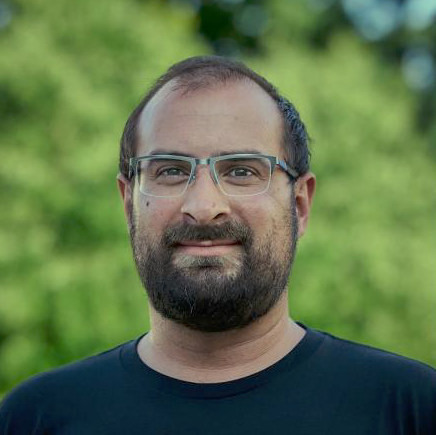
Joey D'Anna
Joey is an in demand colorist and technologist. When he’s not in the color suite you’ll usually find him with a wrench in hand working on one of his classic cars or bikes