EP059: Quality Control (QC)
Understanding Quality Control
In this installment of The Offset Podcast we’re discussing quality control or QC for short.
If you’ve worked in production & post for long enough, you’ve probably encountered QC challenges and QC reports. While passing QC can sometimes be challenging – understanding what it is, how it works, and how (at least most of the time) that its not personal attack can go a long way to treating QC as just like any part of a project pipeline.
Some of the specifics we’ll explore in this episode include:
- When & where does QC happen?
- Understanding QC specs & why they’re sometimes challenging
- The importance of communication in the QC process
- What are the goals of QC
- How is QC performed?
- Internal QC & client trust
- QC severity flags & understanding ‘inherent to source’
LIKE THE SHOW?
Check out www.offsetpodcast.com for our entire library of episodes + some of the additional assets mentioned in this episode that are available for download.
Be sure to like it and subscribe to the podcast wherever you found it and be sure to check out our growing library of episodes. If you like the podcast it’d mean the world to us if you’d consider supporting the show by buying us a cup of virtual coffee –https://buymeacoffee.com/theoffsetpodcast
See you in about two weeks for a new episode.
Video
Transcript
01:00:00:05 - 01:00:13:09
Robbie
Hey everybody, welcome back to another episode of The Offset Podcast. And today we're taking a look at QC or Quality Control. Stay tuned.
01:00:13:11 - 01:00:45:21
Robbie
Support for this episode comes from Flanders Scientific and Gaia Color Direct Connect Volumetric Auto Cal. Calibration of reference displays is critical in our industry, and there's no easier way to calibrate than by using Gaia Color, which is standard on DM, XMP, and XMP. C series monitors. Gai Color calibration allows supported probes to be plugged in directly to the monitor for fast, accurate, and automated calibration with no computer or operator expertise required.
01:00:45:23 - 01:01:00:10
Robbie
You can learn more about this powerful system at Flanders Scientific.com. Hey everybody! Welcome back to another episode of The Offset Podcast. I'm one of your hosts, Robbie Carman, and with me, as always, is my partner in crime, Joey. D’Anna. Hey, Joey, how are you?
01:01:00:13 - 01:01:01:19
Joey
Hey, everyone.
01:01:01:21 - 01:01:26:00
Robbie
Well, Joey, I can't believe in almost 60 episodes we haven't touched this subject because QC or quality control is something that if you have worked in post-production long enough, it's going to come from some somewhere. You're going to be surprised about it. You're going to have moments of anger and frustration, and then you have to fix a whole bunch of stuff.
01:01:26:00 - 01:01:47:07
Robbie
So I want to I figured this would be a good, good episode to touch on this because it is something that comes up a lot, and it's one of those things that, you know, it can be frustrating if you don't know what there's what's being asked for. It can be frustrating if you don't know how you're supposed to respond, what you're supposed to do, what's worth fixing, what's not worth fixing.
01:01:47:07 - 01:02:04:04
Robbie
And in general, I think I just want to talk a little bit about QC as like a process for finishing, you know, projects destined for film and TV and stuff, because QC can be a pain in the butt. And if you're having it before, it can be a little bit of a surprise and a little bit of a frustration.
01:02:04:04 - 01:02:12:01
Robbie
So yeah, I just want to dive into that and see what's what. I'm sure you've had QC problems over your career, right. And how to address them. Like like.
01:02:12:02 - 01:02:13:12
Joey
Not one not really talking about.
01:02:13:16 - 01:02:27:10
Robbie
Right. You're perfect. It's perfect. So I guess before we dive in, let's just define this just a little bit more because QC I think can kind of mean a few different things. In your opinion what does QC mean. So QC.
01:02:27:10 - 01:02:58:18
Joey
Is kind of the verification as the abbreviation says quality control process. But the important thing is that happens at various stages right. Yeah. You know mostly what we talk about is the kind of final QC of the project's finished deliverable because we're at the end of the pipeline, but QC happens. At least it should happen ideally at every stage of the process, from acquisition to editorial to color to final finishing and deliverable.
01:02:58:19 - 01:03:24:06
Joey
Right. Every one of those stages should have a set of predetermined requirements. And that's the really most important thing about QC is that you need to know what standard to which you, as a vendor or you as an artist, need to meet. If that's not clearly defined, the whole process breaks down. So even if starting on set, if nobody defined what format you're shooting on, how we're doing slates, how we're timing things, how we're rolling, do we run?
01:03:24:08 - 01:03:46:06
Joey
Do we run multiple takes per reel, or do we do a new reel per take, especially if you have multiple cameras? Do we have timecode on this one time code on that one? Do we have a multicam setup where we have a cam cutting between takes and cam continuously rolling between takes? If those kind of details are not established for every stage, you can't do QC because what are you comparing against.
01:03:46:06 - 01:04:15:07
Joey
And then by the time it gets to the next stage, let's take that on set example. The editor will pull it in and be like, why is your multicam set up a complete disaster? Was nobody paying attention? So then from the editor to them doing their edit, getting their timeline in order to the next stage, going to audio mix, going to graphics, going to finishing, if they don't have a set workflow where, okay, the colorist is getting this, the audio mixer is getting this, and that's all planned for in advance.
01:04:15:07 - 01:04:59:10
Joey
If they're just kind of winging it, well guess what the audio mixer you're like, well, I can't take this AF because of the way you organized it. Or the colorist might be like, well, you're coming from avid. You exported a sequence without flattened multicam clips, my whole timelines blank, right? And then of course, with us it's things like gamut, color space, metadata, flash frames, video quality, stuff like that, you know, but every stage of the process should have ideally, of course, with any workflow, there's some wiggle room and flexibility, but ideally every stage from pre-production to production to editorial to finishing should have clearly defined specs and scope and then validated at the stage where
01:04:59:10 - 01:05:02:18
Joey
you go from one stage to the next.
01:05:02:20 - 01:05:20:20
Robbie
Yes, I'm just going to say yes. There's a lot to unpack there. So before we before we dive into all of that, just as a reminder, you can follow the offset podcast on Instagram and Facebook to search for the offset podcast. You can also watch the video version of the show on YouTube. Just search for the offset podcast over on YouTube.
01:05:20:20 - 01:05:39:18
Robbie
And of course, we're on all major podcasting platforms like Spotify, Apple Podcasts, and you can always head over to the offset podcast. Com to see our complete library, get additional show notes, show notes. But most importantly, over there on Offset podcast, you can submit questions, ideas, or any feedback for us to pay attention to. Yeah man. So I agree with all that.
01:05:39:18 - 01:06:06:02
Robbie
Lots of you went through it all real quick of a high level overview, which I love, but let's just break it down a little bit more. I want to start on set because in general, I think that QC type problems have a way of snowballing. Right? And I think that, you know, when somebody doesn't care on set, that tends to ripple down through the rest of the pipeline to where ultimately it's a problem that somebody maybe much later in the pipeline goes, why did this happen?
01:06:06:02 - 01:06:29:11
Robbie
And nobody knows, right. Nobody checked yet. And I think your your overarching point of a set of standards, a set of goals, a set of things to look out for in that process, like, I don't think it's necessary necessarily to be like 100% dogmatic because you're right, things change. Situations are fluid on set, especially right. But like having goals in mind.
01:06:29:11 - 01:06:53:07
Robbie
And to me, the most important QC part. And you mentioned a couple of things like when a camera stopping and rolling, when a card swap outs doing, but like ultimately all of that kind of stuff on set comes down to data integrity. Right. And I think that there has to be defined methods on set that a dit a camera person in on set producer is paying attention to.
01:06:53:08 - 01:07:16:00
Robbie
And that is okay. What happens when we hit record? We film a scene, we take that card, memory card out. What happens from there? Right. And that documenting that step of how things get backed up, how things okay. Here are dailies that we made versus the camera originals. Here's a drive that we made versus an LTO tape on set.
01:07:16:01 - 01:07:20:00
Robbie
Whatever it may be. That stuff needs to be defined. Right.
01:07:20:00 - 01:07:56:20
Joey
And things like, you know, check some validation to make sure your copy from the card is clean and backed up before you wipe the card. But also things like making sure directory structure stay intact. You know, I find it's not a big problem anymore, but early in the days of things like Sony and Cam, where you have this folder structure, people will be like, oh cool, here's all your well, nothing links to anything because we don't have all the associated files with those things or everything is kind of, you know, anarchy because we don't have the full folder structure.
01:07:56:21 - 01:08:01:22
Joey
Those are the kind of problems that are completely unnecessary and can be easily avoided.
01:08:01:23 - 01:08:28:01
Robbie
Yeah. And I think also another thing that is important is I think that it's just as important as documenting the process is documenting the potential mistakes that were made. Right. So, you know, and that can be that can be super highly camera level feedback. Right. Like, oh, we got these lens flares that you're seeing are in fact intentional because our DP was going after them or.
01:08:28:03 - 01:08:46:06
Robbie
No, this is this is intentionally exposed a stop or two under for X reason whatever. Like that. Like it's you'd be surprised how much of that data gets siloed really quickly. And like by the time it gets to a colorist or a finishing editor or whatever, they're like, what do you like? I didn't I never heard that before.
01:08:46:07 - 01:09:06:13
Robbie
Right. And so I think the more that you can document that kind of stuff, the better the good and the bad. When it gets to editorial. I think there's some in particular QC steps in editorial that should be always considered, because here's the here's the deal. You're on set, you're moving setups, you're running fast. There's moving gear. You know all that kind of stuff.
01:09:06:17 - 01:09:26:18
Robbie
You know, not a lot of time is spent reviewing the full amount of content, right? When you get to that initial editorial stage of logging footage and recording stuff, that's a great place to go. Oh, well, this was a little fubar. This was a little wacky, right? And making notes of those things, recording the potential problems. Oh, you know what?
01:09:26:19 - 01:09:48:13
Robbie
Like you didn't run, you know, whatever sync timecode on this particular camera. Like we're going to have to deal with, like, whatever it may be, right? Documenting those problems, figuring out how to fix for those problems, if possible, because that's the earliest stage before people are going to start getting into the creative part about it. And if they're constantly making mistakes, they're they're going to ripple through the rest of the pipeline, too.
01:09:48:15 - 01:10:14:14
Joey
Yeah, absolutely. And, you know, like you said on set. It's all about data integrity. Yeah. In editorial it's still about data integrity, but it's more about metadata integrity right on set. You want to make sure the full image capture is actually captured and saved and backed up and everything else. And that's your QC focus. Editorially, you might be doing an offline edit or you might be editing online at high res, but it doesn't really matter.
01:10:14:15 - 01:10:27:04
Joey
Proxies not proxies. All of that varies based on your workflow. But what matters is you're not losing metadata, right? Because that's where the next phase is are going to need.
01:10:27:07 - 01:10:47:08
Robbie
Well, you'd be surprised how many times. I mean, I'm sure our audience has heard this before in their own work too, right? Like somebody like, you know, a colorist or finisher is expecting to go back to Camera Originals or something, like, what are you talking about? Camera originals. Like we transcoding everything to ProRes proxy. That's fine. Right? And like, what did you do with what did you do with the originals?
01:10:47:10 - 01:10:49:00
Robbie
Oh we needed those right.
01:10:49:01 - 01:10:53:15
Joey
Like and then you open up the timeline and everything is real. Number 001.
01:10:53:17 - 01:10:55:03
Robbie
Right. With timecode starting.
01:10:55:07 - 01:11:14:17
Joey
Because they didn't transcode. So this is like if you're, you know, if you're editing with proxies or trans codes, you've got to make sure those real numbers and those file names and those time codes all come across, or you get into some situations where, you know, one workflow example that happens all the time. We over cranked, we shot it 120 frames a second.
01:11:14:17 - 01:11:27:15
Joey
We're going to transcode those down to 23.98. Edit from that I go back to the Camera Originals. They're 120. None of my timecode lines up. These are all things that can be worked around, but they should be thought about in advance.
01:11:27:17 - 01:11:44:20
Robbie
Yeah, and I would I would throw a couple more things in there. And that's that. Step two is sort of coming up with, because at this point in time, there's a lot of metadata that can be added as we discussed. But there's also things that, just from an editorial flow point of view, are useful. And they fall into the camp of QC.
01:11:44:21 - 01:12:05:02
Robbie
Right. Standardized metadata tagging with like keywords and stuff. This is something that I'm continuously amazed by how editorial even works. Sometimes when like somebody calls it a car, somebody else tags it vehicle, somebody else tags it truck. Right. And they like, well, I can't find the shot. Right. Like so things like simple things like coming up with a.
01:12:05:02 - 01:12:07:19
Joey
Shared like 1971 Ford.
01:12:08:00 - 01:12:31:05
Robbie
Right. With, with a dual carburetor, whatever. Exactly. You know, coming up with standard naming, standard metadata tagging, standard vocabulary, all of that kind of stuff doesn't seem like a really important QC step, but it is, right. Like if you have editors constantly looking for things and not being able to find it, in my opinion that's a little bit of a QC setup.
01:12:31:05 - 01:12:55:12
Robbie
Planning fail because they should be able to quickly go, yeah, I'm searching for something. Let me find it by this keyword or whatever. Right. Those kind of things. That metadata is more pervasive than ever with things like transcriptions and AI plugins and all that kind of stuff. Like, we're getting more of that. And if everybody's doing it slightly differently and not having discussed it as a team, it can be a real recipe for disaster.
01:12:55:13 - 01:13:22:12
Joey
Yeah. And you know, you mentioned AI in transcription. That's where QC in the editorial process is monstrously important because, yeah, AI based image classification or transcripts transcribing or sorting all these things are great tools that make editorial faster. You got to QC all of that internally to make sure it's not putting you down a road where you don't want to be or it's not missing something.
01:13:22:12 - 01:13:35:14
Joey
And, you know, the one take you need isn't classified, right. So you never get to it in the editorial stage. You know, you seeing automatic processes is just as important as seeing human processes, if not more totally.
01:13:35:15 - 01:13:55:14
Robbie
And so when things get to sort of us the finishing side mixer, sound designers, colorist, etc., you know, at that point in time, we're kind of our feet are in sort of two different worlds. Right. So part of us is worried QC, worrying about some of the things that we already mentioned, like original camera metadata, getting access to that stuff, etc..
01:13:55:17 - 01:14:28:12
Robbie
But then we're now starting to worry about signal, right, and quality of signal and that kind of stuff. I'm talking about things like bit depth, video range, sample rate, channel configuration, you know, all of, you know, SDR, HDR, whatever, right? All of that kind of stuff. And if there are mistakes made in that, like if a project is supposed to be, I don't know, destined for HDR and trans codes were done where it's like eight bit, you know, eight bit, 420 ProRes proxy.
01:14:28:12 - 01:14:49:09
Robbie
And that's all we got. Well guess what, we got less options now to finish this in HDR than we did going back to the camera. So that kind of stuff can flow. But also I think I tend to think that a lot of editorial teams kind of punt stuff like that a little bit to the finishing team, to the engineer types, because they want to tell a story.
01:14:49:09 - 01:15:13:20
Robbie
I get it right. But like, you have to realize that the steps before can cause problems for people downstream. So if you're on an editorial team and you're just punting these technical problems, it's eventually going to become Joey's problem or my problem. Or if you're listening to this. Right. The other thing I think that's interesting about QC from the finishing side of point, is that we actually I said we have our feet in both worlds.
01:15:13:20 - 01:15:38:03
Robbie
It's actually in three steps. Right. Because now it's like, okay we're dealing with that a handoffs. We're dealing with signal stuff that affects our job as finishers. But then we have this third part that's like, okay, well now we have to play by QC rules of the distributor and where it's going. Right. So every network, every you know, theater festival, etc. is going to have different standards and QC and all that kind of stuff.
01:15:38:03 - 01:16:00:00
Robbie
Right. And here's the thing. The big thing about that is that some of those QC standards are really detailed and like OCD level, some of them are really ambiguous, hard to follow. Somebody didn't do their homework on that. So talk about that a little bit because we've seen it. We've seen a little bit of it. All right. People are like I mean dogmatic about their process and their standards.
01:16:00:00 - 01:16:07:19
Robbie
And then people were just like, I don't know, just give us a ProRes file, which can be just as bad, just as challenging.
01:16:07:20 - 01:16:36:07
Joey
Yeah. Honestly, I prefer specificity by default, but not to the point of pedantic ness. Right? And what I mean by that is there are, you know, certain sets of valid configurations that should work for anything that should be fine, right? So being super specific about those things, it depends on the workflow. You know, sometimes these things have to get pipelined through different transcoding things stuff like that.
01:16:36:07 - 01:17:06:03
Joey
So I would rather know in advance if the spec is very specific and it doesn't have let me back up a little bit. I like the spec to be incredibly specific and valid, because this is something that happens more often than you'd think is you have a very specific spec that was initially written okay. And then as lessons are learned, as things are delivered, the producers start to say like, oh, actually, we don't really mean that part of the spec.
01:17:06:03 - 01:17:28:16
Joey
So you can ignore that. That never gets reintroduced into the spec. That's the kind of stuff that can be kind of a nightmare for us, because the spec might actually be asking for something that's not technically possible, like an audio configuration that doesn't exist, or a set of metadata tags that doesn't exist or need some special software to make or something like that.
01:17:28:17 - 01:17:56:04
Joey
You know, that kind of stuff usually is worked around quietly, and then the specs aren't fixed well. So that's when specificity bites you in the bites you. Support for this episode comes from Flanders Scientific and the XMP 270 and XMP 310. The accessible, lightweight and versatile monitors helping to bring HDR monitoring on set while also being very well suited to post-production work.
01:17:56:05 - 01:17:59:19
Joey
Learn more at Flanders Scientific.com
01:17:59:21 - 01:18:22:19
Robbie
Well, that brings up the question, though, that I think is an important one. So we talked about on set a little finish and we're getting into talking about delivery and network stuff is who is doing this documentation and upkeep. Right. And I think that there is a tendency by pretty much everybody, and no matter where you are the pipeline to think that somebody else is just going to do that work, right.
01:18:22:20 - 01:18:55:04
Robbie
Like somebody will document this, right? And I think that sometimes, like there's also the idea from creatives to think about QC as a purely technical signal, like, you know, codecs, containers, sample rate kind of thing. And that's not necessarily true, because I think a lot of this stuff is starting to, you know, a lot of QC standards obviously have impact on creative work stuff as simple as safe zones for bugs and texts and, you know, so that's going to affect editorial and finishing.
01:18:55:04 - 01:19:16:20
Robbie
Where does that stuff go. Right. It's also going to affect things like, you know, aspect ratios that are used, frame rates that are used like so like there are technical standards that affect both the creative and the technical side, but also who's doing that work. And I think the excuse by creatives that like, I don't know, some engineer will figure that out is not a good attitude to have.
01:19:16:20 - 01:19:26:21
Robbie
I think that if you're going to be I think if you're going to be proficient in whatever part of the pipeline you're in, you have to understand specs and not just pass it off as like, that's an engineer's problem.
01:19:26:22 - 01:19:52:18
Joey
Yeah. And on the communication side, what we see way more often than we should is somebody dug up the last time they sent an email related to QC, sends it to a vendor, says this is our spec and the spec is like ProRes stereo, no details. So then you have to email back and be like, no, no, no, I'm sure you guys have something more specific.
01:19:52:18 - 01:20:13:03
Joey
Can you get us that? So then they search their email again. They find something else that might be completely out of date, and they send it to you and they don't know if it's current. They just know that from their perspective. I just sent the spec right. And it comes down to the same question I ask for any workflow or any question is how much is a boat?
01:20:13:03 - 01:20:34:18
Joey
It depends, you know, so what is the spec is not always the spec. And this is where our critical thinking needs to come into play. This is where we take a look at that and say, hey to the client, the producer, the engineer, whoever we're talking to. Let me just get a quick gut check. Is this the current spec?
01:20:34:19 - 01:20:54:10
Joey
Is there any addendum for things like HDR? Is there anything specific for how we upload it? Is there? Hey, I looked at the spec and this part isn't really, well, well worded. How would you like me to do it? It's much better to kind of communicate that in advance, even if you're, you know, I have a good guess.
01:20:54:10 - 01:21:01:07
Joey
But, you know, I'd rather deliver once than deliver four times and get each little thing, especially in each delivery.
01:21:01:08 - 01:21:18:15
Robbie
And that's actually a really important thing, right? Because we haven't gotten to this part yet. But we can jump ahead a little bit and that is that, you know, QC is time and money, right. You go through the steps of delivering, especially on the well throughout the whole pipeline, but especially on the back end of the pipeline where you're delivering to a network or whatever.
01:21:18:16 - 01:21:31:16
Robbie
You know, oftentimes if you have to deliver something that's on a deadline, okay, we're going to have this by Friday. They QC it. And if there are mistakes guess what. You got to go budget the time to go back. Fix those mistakes. You know fix those problems. Resubmit.
01:21:31:17 - 01:21:35:03
Joey
Even if the mistakes aren't real we got to investigate them right.
01:21:35:04 - 01:21:56:07
Robbie
So I think the more that that can kind of be done, as you said, clear and concise ahead of time. I got one the other day that I just giggled at because I was like, okay, who the hell wrote this? It was, we require H2 six for ProRes files. And I was like, that's interesting. I've never heard of an H264 pro file, you know?
01:21:56:08 - 01:22:14:15
Robbie
And they were like, they were like, oh no, no, no, sorry. We meant ProRes. Like in a move container. I'm like, okay, that makes sense. But like so like I think that if there's something that's not clear, I think we tend to be on what we do as finishers. We're always people pleasing, want to hold clients hand or whatever.
01:22:14:16 - 01:22:34:08
Robbie
It's okay to push back on some of these things that don't make sense or a little complicated, and some of it to getting to the next part of this after you're sort of like your, you know, finishing QC signal stuff, whatever, you're ready to deliver something. Some of these network and distributor QC processes, you'd think that they would more or less kind of be the same.
01:22:34:14 - 01:22:55:13
Robbie
That's not ever been my experience. Like especially on the bigger side of things, you get into really pedantic, really complicated stuff and a lot of it just seems stupid. File naming is the one that drives me crazy all the time and like, oh, you're using our old naming standard. Okay, well, where do I get the new naming synod?
01:22:55:17 - 01:23:11:09
Robbie
The best experiences that I've ever had when it comes to the the process of QC and is when especially on the delivery side, is when networks have standardized documentation that regularly gets updated. Go to whatever you know.
01:23:11:15 - 01:23:13:02
Joey
Yeah. Have it hosted.
01:23:13:03 - 01:23:34:04
Robbie
Right, NBC.com, QC or whatever. There's a portal for it or whatever. Right. Even like even to the fact that like some of the bigger networks that we deliver to like Warner Brothers Discovery, for example, they have like a whole online portal when we you submit a file, it's doing some basic checks. So like that stuff that could get you in trouble down the line, like, oh, we see that you submitted a file with the wrong name.
01:23:34:06 - 01:23:53:09
Robbie
You know what? We're not going to even accept it. Fix it first, fix the name, then resubmit it. Right. And there's automation that's gaining speed on this. I think the real ambiguous ones are when it's just a word document written by somebody that's just like, as you said, is just sending it on. And there's no clear and concise update.
01:23:53:09 - 01:24:17:18
Robbie
Somebody who really understands it. We've had an experience I thought was really good, maybe in the past, I don't know when that was. Maybe a year or two ago we were delivering some stuff for Peacock, which is like NBC universal kind of thing, and it was great because they had a we had a meeting with, we're delivering a big film, like a two hour doc had a meeting with a dedicated QC and delivery team they gave us.
01:24:17:18 - 01:24:40:12
Robbie
We walked through the spec. What does this mean? What does that mean? How important is that? Is that important? Like answering questions live in there making notes. And so when it came time to deliver, we weren't necessarily having to bother our clients who were just middle people, you know, middlemen in general. We could go right to a QC contact at the network and go, hey, I noticed this weird thing about metadata.
01:24:40:13 - 01:24:47:16
Robbie
Can you explain a little bit more? And they got right back to us. So like there's, there's, there's, there's degrees of this I guess is what I'm trying to say.
01:24:47:19 - 01:25:19:15
Joey
Yeah. And that communication aspect I think is the most important part of all of this because there is a both from the client side, the vendor side and the deliverable side. There is a bit of ego surrounding QC for everyone involved that needs to be consciously eliminated. And what I mean by that is this. If I send a deliverable and I get back QC notes, the instant instinct is I couldn't have screwed that up.
01:25:19:15 - 01:25:42:05
Joey
It's my fault. Or who am I going to blame? What is this? What is that? No no no no no no one. Mistakes happen. Two technical things happen, especially if you're going through multi-stage where you need to assign metadata or things like that, or you have multiple deliverables. Sometimes things can get flipped around. Human error happens. Human error happens on the QC side as well.
01:25:42:05 - 01:26:06:23
Joey
We had a situation where we were delivering a whole bunch of promos for a huge campaign, and the QC House had changed their version of some software, so stuff that was completely valid by the networks workflow. Both the network was surprised and we were surprised was coming back as failing. And you know, it could have devolved into a finger pointing.
01:26:06:23 - 01:26:26:17
Joey
You screwed up. You screwed up. Who screwed up thing? I just got on the phone with a QC company and said, hey, let's troubleshoot. This is what I'm seeing. What are you seeing? And we ended up in about a five minute conversation checking some version numbers. Found they were different and they were like, oh, I think we've got our problem.
01:26:26:17 - 01:26:52:18
Joey
Let me recheck it in the other version. Everything's great. These are happy. Wonderful. Now my job as the colorist delivering these isn't to say, see, I told you so. My files were right. Y'all are dumb. It was too elegantly, you know, kind of shuttle the client through that process. It'd be like, let me just talk to them. If it's something on our end, we'll figure it out.
01:26:52:19 - 01:27:01:07
Joey
We'll fix it. If it's something on their end, we'll figure it out. We'll help them fix it. But it's never an ego or a you screwed up or.
01:27:01:09 - 01:27:01:14
Robbie
Kind of.
01:27:01:15 - 01:27:30:16
Joey
Thing enough. Or it can get adversarial very quickly as a knee jerk reaction. And I just want to say for everybody involved in this process, from the client to the QC house, to the editor, to the audio mixer, to us in color and finishing, just take a step back and think, is it worth getting upset about? You know, of course, if somebody is trying intentionally to do something bad that rarely happens, but just make your default assumption of no malice.
01:27:30:17 - 01:27:41:06
Joey
We're going to try to work through the problems together, and I think you'll find the entire process gets a lot smoother and a lot happier for everyone involved.
01:27:41:07 - 01:28:07:06
Robbie
Yeah, I agree with that. To place a slight contrarian about that, I do think that it's harder for clients to understand that than than the people in the trenches. Right? You know, you as a colorist, talking to a QC guy. Yeah. Stuff happens. Like we'll make clients sometimes take these QC issues as like, this person didn't know what they were doing.
01:28:07:07 - 01:28:09:22
Robbie
Right. And it a in a road trust.
01:28:09:22 - 01:28:21:01
Joey
And that's why if you can limit the reply all chains and be more specific with your communication. Granted with with some workflows that's not possible. But if it is possible, do it.
01:28:21:03 - 01:28:42:20
Robbie
Yeah. And but I think to a greater point like it's that as a creative in the pipeline, one of your jobs is, as I said before, is to understand these specs, understand the goals of QC, and try to eliminate these potential. Like if you're, you know, I do things all the time that I'm not asked to do that are not part of my job.
01:28:42:23 - 01:29:03:18
Robbie
Like I'll give you a perfect example. I'm coloring a documentary, right? My job is to color the documentary. My job is not. Oh, is this text, you know, ten pixels outside of out of title safe, right? But you know what I do? I throw up some title safe lines on the screen, and I just go through all those lower thirds.
01:29:03:18 - 01:29:23:15
Robbie
And if I can make a nudge ten pixels to the right or whatever, so it's not a QC issue later, then I'm just going to do that. Saves me a hassle, saves the editor, the motion graphic artist who did that. It's a hassle. And depending on what it is, I might mention it to the client. Be like, hey, just FYI, all of these titles were a little out of title safe, but I fixed it.
01:29:23:16 - 01:29:51:18
Robbie
No big deal like that kind of thing, because I'm aware of the spec and I know what it is. Can really like pay dividends and buy you a lot of trust in respect because it's like, oh, this person is on the lookout for this stuff. They saved our bacon. It wasn't an issue with the network or whatever. And so that's that's what my point would be is like it's not that it has to become adversarial, like you screwed it up or whatever, but like it's like one of those things like, you know, public safety, things like see something, say something.
01:29:51:19 - 01:29:53:00
Robbie
Right. And like.
01:29:53:02 - 01:29:55:13
Joey
Absolutely, especially were the last set of eyes on it.
01:29:55:14 - 01:30:16:21
Robbie
Right? And the more that everybody can see something, say something in the pipeline that minimizes those mistakes at the end. All right. So you mentioned this adversarial thing, which I think is really important. It's a good segue to talk about sort of what are the goals of QC. Right. Because I think that this kind of gets conflated in a couple of different areas sometimes.
01:30:16:22 - 01:30:54:01
Robbie
Right. And I think ultimately the goal of the QC process is to ensure that delivered materials adhere to the technical timing and in otherwise distribution goals of that particular outlet, right, so that from a technical point of view, all of those things should make sense. Gamut, you know, peak levels, audio configurations even, but even down to things like ad breaks in the timing and the clock and like, okay, did you put bars in not supposed to have bars and tone on this one?
01:30:54:01 - 01:31:17:17
Robbie
Or hey, this one is supposed to be interlaced. This one's supposed to be progressive. All that technical stuff that seems to be pretty straightforward. And I think that's oftentimes the bulk of the a lot of the notes that I see is sort of like, hey, your ad break was one frame short or, hey, you know, a lot of like things like timing and clock and configuration, I guess, is what I would say, how I would say that management.
01:31:17:18 - 01:31:49:18
Robbie
Right. Like your audio track order was wrong, like this is supposed to be a mono track and you made it a stereo track, that kind of that kind of configuration thing where I think it gets a little complicated between technical and configuration problems. And you mentioned this earlier, but I think it's worth saying, again, there is a little bit of a power trip that goes on with some people in the QC process, and I feel like they tend to sometimes step out of their boundary, sometimes in a good way, sometimes in a bad way.
01:31:49:18 - 01:32:09:04
Robbie
And that's when they start making creative comments, right? This doesn't look very good or this doesn't sound very good, whatever. And it's like, really, did you just spend six months with a client in this sweet, you know, working on this show? No, please shut up. That right. But like I.
01:32:09:06 - 01:32:37:04
Joey
Tell you, related to that, I've told you this before, but the worst, most ridiculous quote spec I've ever seen came from a document at a cable network. This cable network figured out through empirical testing what we all knew from day one, which is that any reasonable human viewer at a reasonable screen size and viewing distance combination cannot tell the difference between 4K and HD.
01:32:37:06 - 01:32:59:15
Joey
This is a fact we know biologically, because of the size of the cone and rod cells in our eyes. Okay, they had invested a lot of money into marketing 4K, and then they realized nobody could tell the difference. They had a they had a spec sheet that said, and again, this goes back to what we were talking about all the way back to production.
01:32:59:15 - 01:33:22:07
Joey
That said, we want you to make sure everything is 60 frames a second and stop down as far on the lens as you can, so you never get shallow depth of field. You get as much sharpness as possible to make it look. And I quote more for K, that is when QC and tech specs can go completely and.
01:33:22:07 - 01:33:23:08
Robbie
Literally.
01:33:23:10 - 01:33:40:11
Joey
Every single production vendor that saw that just called their contact and said, we're not doing that right. And then of course, our contact was like, yeah, of course we're not doing that. We're doing it at 24 frames a second and do all the shallows at the field you want. You have a dispensation. So again, the specs are out of sync.
01:33:40:11 - 01:33:49:03
Joey
So that is exactly where what you're talking about. When the specs and the QC dives into the creative. That shouldn't happen.
01:33:49:05 - 01:34:02:05
Robbie
I mean I've had it to the point where I've gotten QC notes before and be like like storyline points. And I'm like, like this is not your job. Like you're not you're not you're not in like it's like.
01:34:02:08 - 01:34:25:18
Joey
You know, devil's advocate here. Like you said, see something, say something. Let's say someone says the wrong line and no one noticed it. If somebody process just flagged something, not fail, something just flagged, say, hey, that line. Is that the biggest the greatest thing for creative things in QC, I think is verify that this is intentional, right. Yeah.
01:34:25:23 - 01:34:33:13
Joey
But I also think client and say, oh whoa I didn't notice that before. Great. Let's fix it. Or the client can say, nope, it's great. We're good.
01:34:33:15 - 01:34:55:00
Robbie
That you're absolutely right about that. We'll get back to that flag fail thing in a second. But I also think it's important that the creative team, the content producers, if they are on the lookout for certain things, to make the QC department aware of that. Right. So, for example, the one that pops up in our world all the time, doing a lot of television work is for international distribution.
01:34:55:01 - 01:35:16:20
Robbie
Well, maybe have something like different units. Right. So here in the United States it will be in Imperial, right. Like pounds or whatever. Right. And then it's like, okay, it's got to be kilos over here. Right? And like it's the job in my mind of the showrunner, of the producer, etc. to go to QC. Hey, when you QC back these all of the audio and measurement units for this version of the show are supposed to be metric.
01:35:16:20 - 01:35:42:02
Robbie
And for this version of the show like okay, that doesn't really like I'm talking about more about stuff like, you know, I feel I feel like you could have brightened up the left side of her face, right? Like, no, like that's not your job right now. Along along the same lines between like configuration projects, product problems, one of the the technical some of the technical things that I think about that get flagged in QC all the time are things like metadata issues, packaging problems.
01:35:42:03 - 01:36:06:17
Robbie
Right. Like those kind of things. I think those are fully apropos for the QC people to talk about. But let me say this, that I think that there's a there's a question that comes up all the time that I hear people say of like, what does it really matter? Right? And I think you need to take a step back about QC from a distributor networks point of view, it's less about saying, like the one that always comes to mind is RGB gamut errors, right?
01:36:06:18 - 01:36:30:23
Robbie
Remember when we used to get flagged for RGB gamut errors all the time, right. And there was like this idea that like, you were going to somehow blow up somebody's TV, right? With like the three pixels that are out of gamut in the left hand corner of the screen for three, three milliseconds. Right. It's it's never been about like, damage to somebody TV or, I mean, in the early days, maybe it was.
01:36:31:00 - 01:36:31:16
Joey
In the early days.
01:36:31:17 - 01:36:53:23
Robbie
Yeah. Yeah, over modulation or whatever. But I'm just saying, like modern QC has never been about that. It's more been about standardization that everybody plays by these rules. So therefore the product that you get is more consistent show to show series, a series, movie to movie. And so I think that's like part of like the personal attack thing that people feel is that like, well, this is my project.
01:36:53:23 - 01:37:05:02
Robbie
It's different than that project. And that's true. But the goal from a QC perspective is just to make sure that everybody is playing within the same, you know, the same on the same field, if you will, in terms of.
01:37:05:02 - 01:37:37:03
Joey
The stand in streaming world and an HD world that becomes a thousand times more important because let's talk about a couple things we related to HDR and Dolby Vision. What you're looking at on your reference monitor is not always going to be what the end user sees. Now we have downstream tone mapping involved. Every downstream tone mapping algorithm is operating under the under the optimistic assumption that the master was done to a specific spec.
01:37:37:03 - 01:38:01:11
Joey
So if you have gamut errors, for example, and all your signaling doesn't indicate the gamut correctly, it might look really good on your reference monitor. It gets to a streaming platform. On an iPad, it would look absolutely wrong. So the other side of that coin is the pipelining that these networks and these streamers have to go through after the master is done.
01:38:01:11 - 01:38:32:00
Joey
Because when something goes on a streaming platform for one property, they make probably 1500 trans codes, right? I have a seven 2010 megabit, I have a 1080 SDR, 25 megabit stereo, and then five one. And so basically every possible combination of their app can serve to a device based on the devices capabilities and the connection they have a done transcode for.
01:38:32:01 - 01:39:04:13
Joey
And all of that back end process is automated. So you could have and we ran into this, you know, on a on a pretty big project where we were delivering IMF packages. In theory, the IMF package should be if it's a standards compliant IMF, great, you can take it, pipeline it from there. Wonderful. That's the ideal world. The world we were in was the client hadn't fully implemented IMF, so they were taking the internal files, pipelining them in a proprietary way they had developed.
01:39:04:13 - 01:39:27:05
Joey
And all of their specs were built around that. So we ended up, you know, it was an aspect ratio problem that I had where there were some letterbox saying they needed the aspect ratio tagged in a very specific way that our IMF were not. And I can all day long say, well, it's a standards compliant IMF. You said you need an IMF.
01:39:27:05 - 01:40:01:18
Joey
But the reality was they needed the metadata in a very specific way so they could pipeline the J2 k file down the road because what we had given them, if they had just pipelined it, no questions asked, would have stretched incorrectly on certain trans codes. So in streaming world where the final product is not necessarily what we are looking at, every single detail being exactly what they expect, both from the tone mapping, color space, all that metadata side, but also the pipelining side is absolutely essential.
01:40:01:18 - 01:40:21:16
Joey
So you might get a note back from QC where you're like, well, no, I know it's okay that that that file is all right. It might be an all right file, but it might not work in their pipeline. And you don't know the thousands of lines of code that their pipeline is running at the back end. You got to get it to what they want.
01:40:21:18 - 01:40:49:05
Robbie
Yeah. It's funny, I've thought in the past, I thought to myself, often in the past 10 or 15 years, we've we've really transitioned from like traditional baseband video problems, right? Like levels, gamut, stuff like that really transitioned to just a metadata problem for most QC. Right. Like nobody's nobody's really caring so much about those two pixels that are out of gamut gamut for, you know, a nanosecond anymore.
01:40:49:05 - 01:41:10:11
Robbie
But they are caring about, oh, you know what, your HDR, HDR10, static metadata, hey, nobody uses it, but it's not right on this file. We need it. Correct. Or your Dolby Vision metadata or your Atmos metadata or whatever it may be. And that stuff. You're right to point out the pipelines, because I think that's where a lot of content creators, because that's not their world.
01:41:10:11 - 01:41:16:19
Robbie
They don't really understand why the ask is the ask because they're like, what the hell is it do?
01:41:16:22 - 01:41:20:13
Joey
I don't understand how fragile some of those pipelines are, right?
01:41:20:14 - 01:41:39:17
Robbie
And 100% like one of the, you know, one of the things that I so I've been I've been working on self-aggrandizing little bit, but I've been working on a, on a metadata editor piece of software. Right. And as I've done as I've dug into building that tool, I've kind of thought to myself a lot of times, like, why does this even matter?
01:41:39:18 - 01:42:01:00
Robbie
Right? Like, why do I have to do it this way? And then it's sort of like, if you think about it, it's like, okay, in that pipeline that gigantic network is using. Yeah, it might not matter for one tool, but Sep 13 it matters for that tool. Right. And so what you think of as a content creator as just like pain in the ass, like why are they making me do this?
01:42:01:03 - 01:42:04:18
Robbie
Really doesn't have anything to do with your initial delivery.
01:42:04:19 - 01:42:09:13
Joey
Somewhere on AWS. And FFM run just failed, right?
01:42:09:14 - 01:42:40:00
Robbie
Exactly. And so it's like that, that it doesn't seem to affect anything, but it might affect those pipelines. Support for this episode comes from Conform.Tools. Conform.Tools allows you to translate timelines between Premiere and Resolve and other NLEs, while automatically solving common issues that normally need to be fixed by hand. Avoid time consuming trim and transfer issues, and securely send large media files to collaborators at a fraction of the size and in minutes instead of hours.
01:42:40:03 - 01:43:07:17
Robbie
With a growing toolbox of features, let Conform.Tools handle the tedious stuff so you can focus on the creative. Built by post professionals - Conform.Tools, helps editors, colorists, and conform artists move faster and finish stronger. Learn more at Conform.Tools. Now let's turn our attention to what the how QC is actually done by these people. Right. So I think I think that's an important part of understanding it.
01:43:07:17 - 01:43:36:10
Robbie
So the first part of this and if you have like us, you know, grew up in the 90s, early 2000 when the age of decks and linear suites and all that kind of stuff, there was often at the place I worked at for a long time, we called it the penalty box, and that was like an entry level job where you had to go work in the penalty box, and what you were doing was just playback on tapes with a set of scopes in front of you measuring at that time things like, you know, what do they call that one, a screen door.
01:43:36:10 - 01:44:00:00
Robbie
And like all those kind of, you know, technical signal things, right? That's still happens. Believe it or not, there are people who sit around with a set of scopes in front of them looking at the file queue, seeing that. Right. But first and foremost, what often happens more and more these days is automated QC. And I know you have a lot of experience with that and broad, broad strokes.
01:44:00:04 - 01:44:11:10
Robbie
Where does human versus automated kind of meet as one before the other? Do they flip flop and what is what is automated QC trying to do.
01:44:11:12 - 01:44:36:16
Joey
Yeah in most cases it's not the same for every delivery and every client. But in most cases the automated QC is trying to get through all of the easily identifiable stuff before we have to pay someone an hour to watch an hour show, right. So it's got to be wrecked. 2020 okay, a robot can check if it's wrecked 2020.
01:44:36:22 - 01:44:46:18
Joey
A robot can play the file down and see if there's potential audio dropouts. A robot can play the file down and analyze for duplicated.
01:44:46:18 - 01:44:47:14
Robbie
Frames or whatever.
01:44:47:15 - 01:45:15:02
Joey
Duplicated frames or frame cadences or interlacing problems or any of these little technical things. And there's really advanced, you know, I'm kind of minimizing it a little bit. A lot of the automatic QC software these days is really, really advanced in the problems that can identify and look for. The only trick is nine times out of ten, that automated QC report will have like 100 things listed and it'll still be a pass.
01:45:15:02 - 01:45:38:05
Joey
And those hundred things listed are usually things like, you know, oh, this could be an audio dropout. No, it was a pause between people talking. You know, they are there's they're very prone to false positives and most kind of presets that these networks do avoid that. Right. So they'll they'll give you the whole list. They won't fail you for anything that isn't egregious.
01:45:38:05 - 01:45:45:07
Joey
Most robotic QC only fails if it's something that's absolutely smoking gun and.
01:45:45:07 - 01:45:54:20
Robbie
It's supposed it's supposed to supposed to. I use that in air quotes. Catch as you say, catch the big things like okay, your audio config is completely wrong.
01:45:55:01 - 01:45:57:07
Joey
Oh tracks right.
01:45:57:07 - 01:46:14:14
Robbie
Your timecode starts at the wrong starting timecode or, you know, that kind of stuff. And it seems to me that I get it for that reason. Right. Like that makes sense as a first line defense to where instead of your instead, before you're paying somebody to look at it. Watch out it make an opinion on it. You're doing that and that software.
01:46:14:14 - 01:46:34:03
Robbie
By the way I agree with you, man. It's gotten really sophisticated. I mean, just to mention a couple of the tools Q scan comes to mind. Tele stream has one called Vid Checker. There's a veneer pulsar. There's there's a couple other ones out there. And they all more or less do the same thing. You as the the network or distributor.
01:46:34:03 - 01:47:07:21
Robbie
You set up the rules and the things that you want the QC software to pay attention to and look for. And by the way, these can be other things like blinking, title, safe action, safe stuff, like there's a lot of things you can do. The metadata, I mean, one that burned me the other day and we were helping a buddy of ours with this is the idea of container versus essence level metadata, which was which was slightly new one to me, that you could have your container report one thing and the actual frames in the file report a different thing.
01:47:07:21 - 01:47:26:17
Robbie
And if, hey, in this particular case they weren't matching, hey that's a QC fail right? So you get that human factor in after this automatic QC. What what are the humans doing. Are they verifying that the automatic stuff was correct and it matters. Or are they doing something a little bit more beyond that?
01:47:26:19 - 01:47:54:00
Joey
It's both. Like I said, the automatic stuff will usually pass with a whole bunch of false positives. The human side ideally, again, not the same for all deliveries and all networks, but the human side should, in an ideal world, watch the entire content from beginning to end. Make sure there's no egregious video issues. Spot check all of those areas that might be a false positive might not.
01:47:54:00 - 01:48:19:16
Joey
That still passed the automatic QC, but you still want to look at. And then they make a judgment call as to if it's going to go in the final QC report. And they kind of watch through the whole thing. Check all those spots, check all the specs. Again if like you talked about there's timing issues, they will go in and double check the in and out segments of everything because the automatic system might not see a fade correctly.
01:48:19:16 - 01:48:40:05
Joey
Or you might have an act break that comes out of black later than the audio for creative reasons, right? That's something a good QC person could easily immediately say, okay, the automatic said your break time is wrong. No, the audio comes in. I see creatively why they did that. It's a creative choice. We don't need to put that on the report.
01:48:40:06 - 01:48:49:13
Joey
Right. So where the automation ends is where the human should begin. And hopefully the automation can be a help to the human.
01:48:49:15 - 01:49:14:13
Robbie
Yeah yeah I agree. So in either the in both processes generally speaking a report of some sort is generated and delivered back to the client. Right. Like if things just pass you might, you might just get, hey, you know, an email and say hey you pass QC, everything's, everything's hunky dory and move on with your life. If you don't pass for whatever reason, most QC and they come in different flavors, configurations or whatever.
01:49:14:13 - 01:49:33:21
Robbie
Some of them are pages and pages and pages and pages. Some of them are or summary reports. But generally speaking, in my experience, what they do is they generally rank the severity of the problem in terms of pass fail. You know, kind of it's usually like a stoplight, right? Green, yellow, red kind of kind of thing. Right? Where the red is stuff like, nope.
01:49:33:22 - 01:49:57:21
Robbie
This is a clear failure. This doesn't meet our spec for whatever reason. The stuff that's green is like, yeah, we flagged this, but okay, cool. We're cool with letting it fly through. I'll give you several examples that in a second. And then yellow is something like we need to talk to somebody about this. Right. And oftentimes I find the yellow stuff to be the most frustrating because that is where you get into the land.
01:49:57:22 - 01:50:25:05
Robbie
And we're going to bring up a new phrase here native to source, original, inherent source, inherent to source. I think that's what I was looking for. Inherent to source. Tell us, Joey, what the hell inherent to source means and why is it become sort of the in the adversarial content creator QC relationship? Why has inherent to source become a bad word?
01:50:25:07 - 01:50:27:07
Joey
No, it's a great word. It's the word I use for all.
01:50:27:07 - 01:50:29:14
Joey
Of them.
01:50:29:16 - 01:50:57:08
Joey
We do a lot of documentary work, which means, okay, this clip is from a film transfer that was done in 1945 on a video camera telling city, and then, you know, copied with a wire recorder and, you know, whatever somebody recorded on VHS for rebroadcast. And that's the only version that survives. And the QC note is slightly out of focus.
01:50:57:10 - 01:51:01:08
Robbie
Rate or dropped frames or whatever. Yeah, exactly.
01:51:01:09 - 01:51:25:15
Joey
It is inherent to the source, the best source we have made, the best possible effort to get the best source for this, this image. We either don't have the money to get a new film scan done or we don't. The other, you know, a better source. It just doesn't exist. We've done our dual. The client has done their due diligence to try to figure out what the best source is.
01:51:25:16 - 01:51:28:05
Joey
We have to live with this right now.
01:51:28:07 - 01:51:56:20
Robbie
Can I say, can I say something about that? That's really kind of a tangent, but it's really makes me giggle these days, is that so many content creators are aware of what QC departments are trying to do. And as I said earlier, they proactively try to fix problems so it's not a problem. Right. So in the day, the day and age that we live in with AI, everything right, people are using like AI restoration tools or whatever to like generate new frames from bad frames or to sharpen this up or whatever.
01:51:56:21 - 01:52:03:17
Robbie
I've seen so many QC notes now about that kind of fix. Right where the.
01:52:03:21 - 01:52:06:01
Joey
Row has seven fingers, right?
01:52:06:01 - 01:52:28:05
Robbie
If you had just left in the original content and said inherent a source, it wouldn't have been a QC problem to begin with. Right. And said a lot of times that you can you can do yourself more harm than good by trying to sometimes fix things. And I want to be careful about this, try to fix things that are not well defined or approved as a fix.
01:52:28:06 - 01:52:48:17
Robbie
Right. So it might be that the network comes back and fly flags your soft archival material. Right? And you might say, hey, look, we have a way of fixing this, but we need you, the network, to be a judge of whether this is acceptable or not. Before we go fix all 87 instances of this. Right.
01:52:48:18 - 01:52:54:10
Joey
And it becomes a creative question, how much fake sharpening do you want to add? That's up to the client, you know.
01:52:54:10 - 01:53:12:03
Robbie
Yep yep yep. And so I think that's one of the things that when you get a report back like that, you should stop in your tracks and go, okay, what are they really saying here? Is this something that we did intentionally? Is this something that we did thinking we were fixing a problem, but it actually caused problems and like just be prepared for those situations.
01:53:12:04 - 01:53:26:14
Robbie
Okay, cool. I can show you this pre, you know, upgrades fix or whatever. Which one do you prefer and get some parameters about that because I have seen that kind of thing last weeks if not months. The most.
01:53:26:14 - 01:53:46:02
Joey
Important thing in my opinion, when you get a QC report is you got to triage it, right. You got to, like you said, red, green, red, yellow. I say red, green, blue. That wouldn't make sense. Red yellow green right. You got to look at those reds immediately. Immediately have a plan to address them and present that to the client.
01:53:46:03 - 01:54:06:01
Joey
Like okay. Yep we got the metadata wrong. We'll fix that immediately. Great. Okay. You want to that is the first and foremost thing that you want to communicate to the client. We've got it. It will be solved. We don't want any ambiguity there. Green stuff. We can kind of just, you know, spot check it. We like it. We already watch this down.
01:54:06:01 - 01:54:21:00
Joey
We're already good with it. Great. The yellow stuff is when we kind of kind of look at it and say, I need to talk to a client about this. I need to talk to the QC person about this. I need to double check my timeline in these five spots to see if I forgot to turn on my noise reduction or something like that, right.
01:54:21:00 - 01:54:33:07
Joey
But triage it. So it's like, solve these red things quickly, communicate about the red things quickly, then figure out the yellow things. And then lastly figure out the green things.
01:54:33:08 - 01:54:58:12
Robbie
And there's a bit of nuance there too. I think that there are discussions that need to happen. Like, I kind of think of this as like three or maybe 3 or 4 levels. There's conversations that happen with everybody involved the network distributor, your client, your team. Then there are discussions that happen just between you and the client. And then third, there's discussions that happen just with you internally and your team.
01:54:58:13 - 01:55:00:12
Robbie
Right. One of the one of.
01:55:00:12 - 01:55:03:09
Joey
Them, sometimes you internally in your team is just you and yourself.
01:55:03:11 - 01:55:04:23
Robbie
Right? Right. But I.
01:55:05:05 - 01:55:06:08
Joey
Know an important step.
01:55:06:08 - 01:55:32:06
Robbie
I bring it up because I think that sometimes, and I'm pointing the finger at myself on this one, that the goal of transparency and communication sometimes is a mistake. If, you know, if if you made a mistake and you realize it was your a mistake, making the network and the client all aware that like, oh man, I really screwed this one up bad.
01:55:32:09 - 01:55:48:23
Robbie
Doesn't do a lot for confidence, right? So you're better off in situations like that of going, well, that's a mistake. Let me fix it and just not just fix it. There's no such thing as a perfect delivery, right? Like there's going to be something that somebody is always going to be happy with, right? I'm not happy with it right now.
01:55:48:23 - 01:56:13:21
Robbie
Let me ask you let me ask you this because there's a situation that comes up where you can't necessarily fix something, right. Who's decision is it and how do you proceed when there is something like that film scan that can't be scanned or whatever? Like, I don't think that that onus of making that call is on the operator, the colorist, the editor, the you know, whoever.
01:56:13:22 - 01:56:17:15
Robbie
Right. Like, that's got to be somebody a little higher up the food chain. Do you agree?
01:56:17:17 - 01:56:41:17
Joey
Absolutely. Because that becomes where the technical and the creative kind of butt heads essentially is, is this low quality piece of video so essential to the story that that the client needs to make the case to the network or the streamer that we need to have it in there? Is the alternative okay. It's going to cost $100,000 to get this footage scanned.
01:56:41:17 - 01:57:14:04
Joey
Is it worth that? Do we have the budget for that? That becomes kind of a, you know, a three headed monster of is it so essential to the story? Is it worth the if the if the if the fix is just cost, is it worth the cost? None of those things are our kind of world. The best thing we can do in that situation is advised based on what we know and where our zone is, which is the image quality.
01:57:14:04 - 01:57:31:10
Joey
And the technical side say, okay, if your options are, get rid of it or rescan it. The rescan will get you, in theory, this much better quality, right? Or.
01:57:31:12 - 01:57:58:09
Joey
If it was easy to cut around and there was an easy fix to get rid of it, you could propose. Hey, here's a optional easy fix to get rid of this shot that you could make an editorial and everybody would be happy. But it's up to you, right? We can present the details of possible solutions and advantages of disadvantages, but I feel like that's where our role in that kind of thing ends.
01:57:58:14 - 01:58:00:06
Robbie
And I agree.
01:58:00:06 - 01:58:29:01
Robbie
And I also think that, like, it shouldn't really ever come to it should never that like a lot of those big issues should never really come as a surprise and wait until final QC. Right. Like I'm thinking of like recently I did a project where there was a lot of 70s and 80s four by three material, and the network had this thing about like, you cannot have any pillar box content, it all needs to be full raster.
01:58:29:01 - 01:58:58:07
Robbie
So how do you okay, cool. You take a 720 by 486, you know, file and you push into it for 0%. Then the QC comments would be this is soft, this is pixelated, whatever. And so what happened was our client, that showrunner, that EP interface with their counterpart at the network. They discussed the problem and ultimately there was a solution made where it's like, okay, this kind of stuff can remain four by three for this duration, right?
01:58:58:07 - 01:59:15:23
Robbie
And if it's a longer clip, we need to do this kind of treatment on it. And that will that will satisfy our problem. So by the time like that was all decided during the editorial process, during the story, like, you know, the rough cut process, it was never a surprise because it was handled as an issue up front.
01:59:15:23 - 01:59:35:04
Robbie
And I think there was a lot of things that kind of get confused, that blurry line of content technical that could be solved much earlier in the process, but unfortunately become QC problems. And that to me that's a mistake. That's a mistake of the creative process. When you get to that point where, like, we didn't know our four by three footage couldn't be pillar box.
01:59:35:05 - 01:59:36:01
Robbie
Come on.
01:59:36:02 - 01:59:37:11
Joey
Like every stage.
01:59:37:11 - 01:59:44:13
Joey
of the process like we've talked about should have ideally an established set of expectations.
01:59:44:13 - 02:00:06:21
Robbie
As we said from the beginning, exactly 100%. Now, let me ask you one more question. We'll wrap this guy up. Is so the the content kind of questions, like I said, I have a little bit of a love hate with them because I don't think it's necessary. The job of QC to do like a network or a distributor QC, however, I want to walk back.
02:00:06:21 - 02:00:32:02
Robbie
One thing about this, because I do think that there is a certain attitude that people in the creative pipeline, editors, colorist, etc. like that's just something that happens externally from I'm going to make the point of, especially where we are as colorists and as finishers and sort of the small end of the funnel, your job should be and you do this all the time.
02:00:32:04 - 02:00:55:13
Robbie
You talk about to me all the time. There is a certain level of internal QC that needs to happen to save face, to save a project, to save money. Before you ever get to the distribution side. QC and that's a big problem where I see a lot of finishers passing the buck and it's.
02:00:55:13 - 02:00:56:03
Robbie
Like.
02:00:56:06 - 02:01:03:05
Robbie
No, you owe it to your clients to do that. And I think it's just as simple as a watch now, right?
02:01:03:06 - 02:01:04:21
Joey
Always
02:01:04:23 - 02:01:24:16
Robbie
And a couple like just big gut checks. Is the clock right. Is the time code right. Are the ad breaks right are the is the audio configuration right. Is the file for like I'm not talking about like you have to spend 50 grand on dedicated QC software. I'm talking about the gut check. Simple things that you can do.
02:01:24:17 - 02:01:26:19
Robbie
You'd be surprised how much.
02:01:26:19 - 02:01:28:04
Joey
You call it. The idiot check.
02:01:28:07 - 02:01:41:13
Robbie
The idiot check how it always surprises me. I caught a friend of mine the other day who rendered something from resolve, and then just uploaded it to the network, and I was like, oh my God, what are you doing?
02:01:41:13 - 02:01:42:20
Joey
And they will never do that.
02:01:42:21 - 02:02:02:00
Robbie
They're like, what what what what what? And I'm like, you just sent that file without looking at it. Be like, well, I looked at it and resolve. Yeah, but you didn't look at the file, right. And sure enough, like the third time that they did that, they had set like an endpoint on their timeline. So now the file was like 20 minutes short.
02:02:02:00 - 02:02:14:14
Robbie
And I'm like, you would have just delivered that file, right? And it would have been a mistake and it would have been embarrassing. So you're right, the idiot gut check kind of stuff like you as especially where we sit in the pipeline, it has.
02:02:14:14 - 02:02:15:12
Joey
To be.
02:02:15:14 - 02:02:25:17
Robbie
As it is. It has that. It has to happen every single time. There's no excuse for not checking the big gotchas, right?
02:02:25:18 - 02:02:27:06
Joey
Yes. Due diligence.
02:02:27:07 - 02:02:42:08
Robbie
Right. Nobody's going to fault you for the two pixels that are out of gamut for a millisecond in the corner of a screen, right? But if you just rendered out a stereo file when it's a 12 track deliverable, yeah, that's on you. Right. And that could have been that could have been prevented.
02:02:42:10 - 02:03:10:05
Joey
Yeah, absolutely. And it just comes to taking, you know, taking pride into your work. You know every so often it's tough. You know, we get a lot of jobs that are just kind of in out. It's commerce. It's not art. But at the end of the day, no matter what, no matter what the job is, if you took the job on, you should finish it with competence and with the full process of you being confident in what you've delivered.
02:03:10:05 - 02:03:15:17
Joey
And that means watching it down and doing your due diligence every time.
02:03:15:19 - 02:03:36:22
Robbie
Awesome. Very fun discussion. If you have any horror stories or things to add to the conversation about QC, feel free to drop us a comment if you're watching this on YouTube or on Spotify or Apple Podcasts. Of course, you can follow the show on all those platforms. You can also follow us on Instagram and Facebook. Just search for The Offset Podcast and you can always head over to offsetpodcast.com
02:03:37:00 - 02:03:54:14
Robbie
to watch our full library and get additional show notes. Also, if you wouldn't mind. We'd really appreciate if you could consider some supporting the show by visiting this link right here on screen to go buy us a couple virtual coffee. Every. Every dollar contributed there, helps to make new episodes and helps further The Offset Podcast. So we really appreciate that.
02:03:54:14 - 02:04:13:00
Robbie
And then just as a last little goal of ours, we're getting close to a thousand followers on Instagram. If you have a friend or a colleague that could benefit from watching The Offset Podcast, please send a link their way. And if they're on social media, have them follow us that way, because the more followers, the more the algorithm works better for us and all that jazz.
02:04:13:00 - 02:04:24:03
Robbie
So we really appreciate that. So Joey, fun conversation as always. I love/hate QC, but it's an important topic to talk about. So for next time I am Robbie Carman.
02:04:24:06 - 02:04:26:15
Joey
And I am Joey D’Anna. Thanks for listening.

Robbie Carman
Robbie is the managing colorist and Founder of DC Color. A guitar aficionado who’s never met a piece of gear he didn’t like.
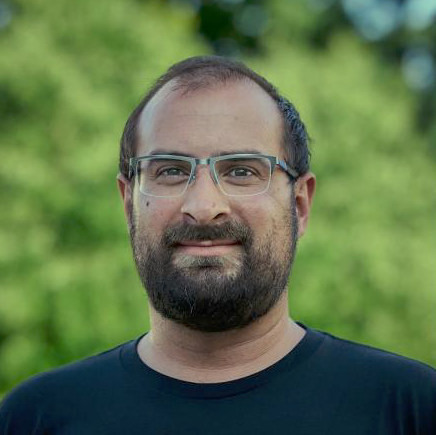
Joey D'Anna
Joey is an in demand colorist and technologist. When he’s not in the color suite you’ll usually find him with a wrench in hand working on one of his classic cars or bikes