EP053: NAB 2026 Preview
The Gathering In The Desert Is Here Again!
It’s that time of year again – NAB time!
That annual gathering in the desert that in many way acts a launching point not just new products but industry trends and standards.
In this installment of The Offset Podcast, we’re discussing NAB 2026, what we hope to see, but also what we’re a little worried about (AI Slop). Specific topics we’ll explore in this show include:
- The proliferation of IP video & significantly faster networking
- Storage: innovations or vaporware due to memory shortages
- The continued move to QD OLED and network features for monitors
- Software: bug and workflow improvements maybe more important then shiny features
- Plugins and the end of the film emulation craze
- AI everywhere
If you’re attending NAB – be sure to bring comfortable shoes, drink plenty of water, and take care of your voice in the loud convention halls and parties! Also there’s still time to get tickets for the Colorist Mixer – check out www.coloristmixer.com for more info. A mentioned in the episode, Joey will be attending the show, if you see him please be sure to say hi
LIKE THE SHOW?
Check out www.offsetpodcast.com for our entire library of episodes + some of the additional assets mentioned in this episode that are available for download.
Be sure to like it and subscribe to the podcast wherever you found it and be sure to check out our growing library of episodes. If you like the podcast it’d mean the world to us if you’d consider supporting the show by buying us a cup of virtual coffee -https://buymeacoffee.com/theoffsetpodcast
See you in about two weeks for a new episode.
Video
Links
Transcript
00:00:00:04 - 00:00:11:18
Robbie
Hey everybody, welcome back to another episode of The Offset Podcast. And it's that time of year again, NAB time. Stay tuned.
00:00:11:20 - 00:00:29:11
Joey
If you're heading to NAB 2026 in Las Vegas, stop by Booth N1827 and see FSIs latest reference monitors up close. The team will be there all week talking color, calibration, and monitoring workflows for production, post and broadcast.
00:00:29:13 - 00:00:37:11
Robbie
Welcome back everybody to another installment of The Offset Podcast. I'm one of your hosts, Robbie Carman. With me as always, is Joey D’Anna. Hey, Joey. How are you, man?
00:00:37:13 - 00:00:38:22
Joey
Hey, everyone.
00:00:39:00 - 00:01:04:04
Robbie
Well, Joey, here we are in Episode 53. And as we record this, it is just a few days, just a little less than a week away from the start of the annual National Association of Broadcasters annual conference in wonderful, wild Las Vegas. The good old show, known, for its shorthand as just NAB is right around the corner, and we're really excited about it.
00:01:04:04 - 00:01:25:10
Robbie
This is sort of like the, it's kind of like the the pivot point that the industry, in a lot of ways, like kind of revolves around with new gear, software announcements. And in fact, already, this week we've already had some big announcements. Our sponsor, Flanders Scientific. Just as we're recording this today, came out and said, hey, we've been acquired by Atomos.
00:01:25:12 - 00:01:43:03
Robbie
And that is big news. So congrats to our friends and the team at Flanders Scientific. We've known those guys, obviously, forever. And this is, I think a great thing for them, in general, and I think we'll, you know, next few months and year or whatever, we'll play it out. But I think, it gives them a lot of flexibility.
00:01:43:04 - 00:02:06:09
Robbie
For those of you wondering about this, I just want to express, after talking to Bram at FSI, nothing's really going to change for, us, the end users and our experience with Flanders. Same great technology, same great engineering skills, same great customer service, same great products. Just this this, this acquisition just gives a FSI, a little added reach, some more engineering resources and such.
00:02:06:09 - 00:02:08:08
Robbie
So I think it's going to be good in general for sure.
00:02:08:10 - 00:02:32:10
Joey
Yeah. I mean, obviously that's that's huge news for us and for all colorists. And I think getting some of the, the, the bigger company resources, for a smaller company like Flanders Scientific is going to help them bring the technology forward, bring the industry forward a little bit, because they've always been on the cutting edge with their early adoption of display technologies.
00:02:32:10 - 00:02:43:02
Joey
The latest in HDR displays now with quantum dot OLEDs, you know, so getting some more resources behind them could really help drive innovation industry. Right. So I'm excited to see where it goes.
00:02:43:04 - 00:03:01:16
Robbie
Yeah. So again big congrats to to the entire Flanders team. So I think that's just the first of probably many big, announcements this week. And, you know, I know you're going to be out of any. Unfortunately, I can't make it this year. I got stuck on, here on a project, but, it's, you know, always an exciting place to be.
00:03:01:16 - 00:03:18:13
Robbie
Lots of, besides the big announcements and stuff that we'll talk about in this episode, as we've talked about in years past, anybody is a great social, thing for those, you know, if you haven't seen colleagues and peers from around the world, because it's so well attended. But before we dive into all that, just a little bit of housekeeping.
00:03:18:13 - 00:03:37:15
Robbie
Of course, like usual, you can find the podcast on YouTube where you can watch our entire, library of shows, the video versions. We're also available on Spotify, Apple Podcasts, all major, podcast platforms. You can also head over to Offset podcast.com for all of our, our complete library of shows, including some extra show notes there.
00:03:37:21 - 00:03:53:21
Robbie
And if you're on Instagram or Facebook, just search for the offset podcast and you can follow us there. All right, Joe, so let's start right at the beginning. You've walked on the show for day one. What are you looking for? What are you excited about? Where do you think things are going to go here?
00:03:53:23 - 00:04:06:22
Joey
Well, I want to kind of take a different tact on this with this episode because the big thing I know we're all going to be talking about is black magic, specifically DaVinci resolve. Right? Yeah.
00:04:06:22 - 00:04:09:20
Robbie
What resolve? Resolve next. Right. Let's call that. Yeah.
00:04:10:00 - 00:04:40:13
Joey
It's always, always big headlines. The resolve team is always pushing really, really big updates. Interesting new features, lots of exciting stuff. I'm sure when Black magic makes their announcement, it will be the most talked about thing in our circle. Of all the things I want to talk about, all the other stuff going on at NAB that's relevant to us, that isn't resolve related.
00:04:40:13 - 00:05:01:16
Joey
After after the show, we'll come back and I'm sure we will have much to say about everything resolved. But, you know, it may be it's not just resolve, there's so much else there. And I kind of want to get, you know, just some ideas of the things I'm looking for, the things we're looking for, for for our business, for our industry.
00:05:01:18 - 00:05:22:04
Joey
And, you know, some of the stuff that I would love to see and kind of where that's sitting in the ecosystem now and, you know, that means changes in hardware, changes in software. And we can't get away with not talking about changes in AI and technology.
00:05:22:04 - 00:05:45:14
Robbie
Well, so if I, if I, if I so, if I was still well I don't still but if I was a betting man, I would say that you probably can't go more than 2 to 3ft at the show without being slapped in the face with something about AI, right? I think that's going to be, it's just going to dominate things for sure.
00:05:45:16 - 00:06:09:01
Joey
Absolutely. And we're going to talk about kind of what we want to see versus what we think we're probably going to see. But yeah, first off, let's talk about hardware, because NAB is always a great place for hardware because, you know, seeing something on a web page is very different than sitting in front of it, touching it, using it, examining it, especially with things like control panels and monitors.
00:06:09:06 - 00:06:33:12
Joey
But one of the big things I want to see at NAB this year is storage technology. Right? And we've talked a lot about different approaches to analysis or shared storage or even cloud storage and workflows associated with them. One of the biggest problems that we've run into over the past few years is not just storage, but long term archive.
00:06:33:17 - 00:06:58:09
Joey
I feel like there's not a good post-production long term archive solution out there. We use LTO tape and it's great, but it's expensive. It's hard to maintain as the LTO generations kind of get upgraded over the years. It's hard to keep track of tape libraries. It's technical, it's not ideal. But yeah, you know, hard drives on a shelf is never going to work.
00:06:58:14 - 00:07:32:00
Joey
And cloud archiving hasn't really worked because that's always a increasing cost, right? The cost never goes down. The more you add, the bigger it gets. So I would love to see some of the storage technology companies out there take maybe a different approach to long term archiving for post-production, because remember, back up and archiving are different things and most of the I.T world is focused on backup and disaster recovery, whereas we're focused on I have a whole project from five years ago that I need to restore for a client and get back and work on.
00:07:32:06 - 00:07:38:11
Joey
That's not a typical IT workflow, and the typical IT based hardware companies aren't really focused on it.
00:07:38:13 - 00:07:59:20
Robbie
Yeah. So I think that's all really interesting. And I agree with, all your points really. I mean, I think that one of the things in this in the hardware storage space kind of like just generally around this, that I think it's going to be a big issue is that I think all the players in this just generically call it the storage market, right.
00:07:59:20 - 00:08:35:16
Robbie
Because that could include everything from NAS and San to direct access drives, etc.. I think all the marketing is going to be claiming about speed improvements. You know, flash this, flash that, SSD, this, SSD that. But it's going to be difficult because of where the current industry is with memory chips, right? I think that there's going to be a lot of products that will end up in this space, particularly, and with storage that could have the potential to turn into vaporware because of access to the actual storage, mediums themselves.
00:08:35:17 - 00:08:58:19
Robbie
The flash storage, etc. because, as we all know, and if you don't know, there is a gigantic storage of memory around the world right now in the supply chain, mostly due to, a bajillion AI data centers. You know that up. There's a lot of funny memes out there. You know, people who are like, you know, last year they bought, you know, a two terabyte NVMe stick for, let's say, 300 bucks or whatever.
00:08:58:22 - 00:09:02:11
Robbie
And now it's like $3,500 for that same stick. So yeah.
00:09:02:16 - 00:09:04:20
Joey
Ram is the new Bitcoin.
00:09:04:21 - 00:09:23:19
Robbie
Yeah I mean I saw a picture somebody posted a picture the other day of it was like micro center or something. And Ram was like $5,900 for like 64 gigs of Ram or something like that. Right. So I think that's going to be a little interesting to see how that plays out, kind of that intersection of where marketing hits reality, you know, in terms of in terms of storage stuff.
00:09:23:21 - 00:09:55:00
Robbie
But I agree about the archive LTO portion of it. I think that the industry is ripe for innovation in that in that place, I am excited to a certain degree about, going back to your comment about LTO, about LTO ten and its adoption for a couple reasons. One really big, really, really big tapes, but also LTO ten, is going to more widely support ten gig Ethernet, connectivity for those drives.
00:09:55:02 - 00:10:17:09
Robbie
I have not delved into it a lot because honestly, that stuff's really expensive right now, and I'm good with my current LTO setup. But I do think that that, to your earlier point about some of the hardware complexity surrounding LTO, that, hey, getting away from SAS and just an Ethernet cable into your network. You know, the promise of that is is great.
00:10:17:11 - 00:10:35:18
Joey
Yeah. And that's something that we're going to start seeing, I think hardware wise in our industry is the move to Ethernet for all kinds of things that Ethernet didn't used to do. Right. We're seeing it with using I scuzzy for LTO ten, you know, simple ten gig Ethernet, ten gig Ethernet used to be kind of the high performance option.
00:10:35:18 - 00:10:58:01
Joey
Now it's becoming the default. Everything needs ten gig as a minimum, and we're going to start to see the penetration of 25 gig, 50 gig, and even a higher Ethernet for storage. So that's exciting. But also we're going to start seeing Ethernet be used as more of a, you know, a whole infrastructure baseline. We're already seeing it on the broadcast end, right, with IP video.
00:10:58:02 - 00:11:17:09
Joey
You know, Black Magic has entire IP video switching, routing, infrastructure. Okay. So I think we're going to start seeing things like SDI get decreased in usage and IP based video technologies over Ethernet get more and more common 100%.
00:11:17:10 - 00:11:21:11
Robbie
The so the simply what you're referring to the 2110 kind of I.
00:11:21:13 - 00:11:23:17
Joey
Couldn't remember the number. Yeah.
00:11:23:19 - 00:11:53:17
Robbie
2110 sort of standard for IP video. I mean, obviously in big news and broadcast situations, it is it's revolutionary for, for routing for, IBM Watson that even more like just like space efficiency in OB trucks and stuff like that, where you're not having to do, you know, flashbacks, you know, 20 years ago you had these huge bundles of, you know, composite component, SDI, s or whatever, and being able to do everything over.
00:11:53:19 - 00:12:12:01
Robbie
Yeah. I one shielded you know cat you know, six a or you know, cat eight or whatever may be cable is great. So I'm, I'm with you on that. I think that Ethernet is going to make a bigger, splash. And I think the IPV, I think, I think the IP stuff was initially seen, you know, rightly so.
00:12:12:01 - 00:12:31:17
Robbie
Let's get it into market on the broadcast side. Let's get it. You know, where, you know, real engineer types can bang on this, work out the kinks. I think the consumer sort of pro side of it like, you know, like people like us, the companies are a little hesitant to get in there because I think there's a lot of like there's no configuration really with an STI table.
00:12:31:17 - 00:12:32:09
Robbie
Right. It's like.
00:12:32:14 - 00:12:33:18
Joey
Okay, plug and go.
00:12:33:20 - 00:12:53:09
Robbie
Yeah. You match your generations of SDI or whatever. You plug it in and it works. It doesn't work where with IP stuff. I think there's a little more onus on the user for. Yeah, you got a configuration, you got to set up your, you know, your subnet mask or whatever, like whatever. I think companies will probably work on easing that kind of that transition.
00:12:53:11 - 00:13:23:15
Robbie
You know, fears I think of a lot of people, but it is a little bit more complicated, but not any more complicated, really, than, you know, if you can set up a, you know, a manual IP address or Dhcp or whatever on your home network, not all that more complicated. And actually, just this week, Blackmagic announced that their their 100 gig, 2110 product is finally free shipping that they announced last year, which allows you I think I have to don't quote me on this, but I think it's 4 or 5, maybe even six separate, independent uncompressed streams over that.
00:13:23:17 - 00:13:46:16
Robbie
And that brings me to another point. You kind of hinted on this about networking. Ten gig is starting to feel like one gig to me. You know, for a lot of reasons. I think that, you know, me, I've made, this transition a couple months ago to faster, than ten gig because I, like, you know, like, so he said I, you know, I feel the need the need for speed.
00:13:46:16 - 00:14:14:17
Robbie
Right? And, that's me in a nutshell. I've converted over everything to 25 gig, which is a significant step up from ten gig, but push comes to shove, I would love to have broader support for 100 gig. Maybe even 200 gig. Some of these data center level, technologies that are out there that might be asking too much at this point, but, I would love to see faster networking be more pervasive than just ten.
00:14:14:17 - 00:14:15:01
Robbie
Gig on the.
00:14:15:01 - 00:14:32:04
Joey
Practical level, I just want to see higher availability of low cost 25 gig Nixon switches. Right? That's that's really been what's the downfall of. And it was the same thing with ten gig, right when we first started ten gig storage. All of our network was one gig. Then we had like the small ten gig switch just for storage.
00:14:32:04 - 00:14:51:12
Joey
Right? And eventually we moved to all of our networks. Ten gig. We're going to start seeing that with 25 gig, if not this year, in the next couple of years, where 25 gig managed switches for our storage for everything else are going to be cheaper and more accessible for the non enterprise user and owner like US hundred percent.
00:14:51:14 - 00:14:53:00
Robbie
Yeah.
00:14:53:02 - 00:15:10:23
Joey
The biggest thing hardware wise I think they be every year for our world is always monitors. Right. And we already said yeah big news in the monitor world with scientific and atomos. But what are we looking at in terms of kind of monitor technology for the next year?
00:15:11:01 - 00:15:43:10
Robbie
It's a great question. I think that we're going to see already it's started, but the pervasiveness of Qd-oled, I think is undeniable where that's going, because it's, as we've discussed in other up in past episodes about this, you know, this is kind of the first technology that is widely available on the pro side of things and widely available on the consumer end of things, which is fantastic for pipelines where, you know, we're not having to deal with, metamorphism and all the other issues associated with different, display technology.
00:15:43:10 - 00:16:03:23
Robbie
I think that's going to be continue to get better and better and better. I am looking for more of the IP stuff that we just mentioned making its way to monitors. You know, having, an audio background and loving things like, you know, like Dante, for example, and I, an audio based writer, like, I kind of just want that for video now.
00:16:03:23 - 00:16:05:05
Robbie
It's just like wired. Yeah. I mean.
00:16:05:05 - 00:16:29:04
Joey
We've been we've been playing around with live streaming solutions for client monitoring, like, how do we get SDI from our main resolve to our scopes, to our monitor, also to like OBS so we can stream it to the client, it becomes kind of a trainwreck with baseband SDI, whereas with IP you could be kind of like, oh, broadcast my resolve to all five of these IP capabilities and we're done.
00:16:29:06 - 00:16:46:19
Robbie
Yeah. And of course there's already a player in that space that's popular as an indie, you know, created by new tech. NDI is has gained considerable steam in the past few years for this kind of thing. But it has it has some issues, you know, that, that, some TI 2110 is, is trying to address.
00:16:46:19 - 00:17:04:15
Robbie
So but just in general, I would even if it's an optional thing. Right. Like, sure give me a monitor still with SDI on it. But I would love if my infrastructure has it just to plug in an Ethernet cable and go. One cable gives me video and control of the monitor. That would be. That'd be great.
00:17:04:16 - 00:17:29:03
Joey
The other big news and monitors that I can't wait to actually see in person is again, we keep coming back to Flanders Scientific because they really are the leaders in this space. But their new Gaia color, auto cal visual verification where you can get a calibration report on your XP monitor of it's self calibration so you can have that one extra level of confidence and two, ability to troubleshoot.
00:17:29:03 - 00:17:37:04
Joey
If you run into issues. I think that's going to be such a value add for those monitors that it I can't wait to see it.
00:17:37:06 - 00:17:56:07
Robbie
Yeah, I mean I think so there's you know, there's people like us that will invest in the reference gear and the reference, you know, the higher end software like, portrait displays Calman or color space or those kind of things because we're doing a lot of calibrations for non, you know, non-pro kind of monitors. Right. You know, TVs etc..
00:17:56:09 - 00:18:14:15
Robbie
But that's always been a frustration of mine. Right. It's like, okay, I got a review session today and I want to be able to calibrate and check it out, make sure everything's good. It means breaking out the, you know, the whole kit, the laptop, the software, configuring the IPS for everything, like, and when, when, auto calc first.
00:18:14:18 - 00:18:31:03
Robbie
Because, you know, we're using the Flanders displays when it first came out, I was like, this is a godsend because I can just plug in one meter my colorimeter via USB into the back of the monitor. You know, I can, you know, put it in the middle of the screen and say go. And in 20 minutes it calibrates every gamut.
00:18:31:03 - 00:19:01:07
Robbie
An ETF that I have on the monitor. To really, really, really good precision. That was great. But then I was still breaking out the laptop and the software because I wanted to run then like a color checker or something like that on it afterwards to go, okay, you did the calibration. How good was it? So yeah, man, having that built in, and the way that it works, just if you haven't seen it yet, is that with the IPR, IP, utility that, the Flanders has that, you know, you can use to control the monitor.
00:19:01:07 - 00:19:18:22
Robbie
You can also pull down that report after it's done. So if you need to just you want to save it, send it to a client or whatever for that validation. You can I think that's really great. I think the industry in general is going that way with onboard calibration capabilities. Whether that means relatively cheap color emitters, that kind of stuff.
00:19:18:22 - 00:19:55:16
Robbie
Yeah, I think that's only a good thing that more and more people are focused on calibration. There's levels to it, obviously, and accuracy, you know, variance. But I'm excited for the general push into that for sure. Support for this episode comes from Conform.Tools. Conform.Tools allows you to translate timelines between Premiere and Resolve and other NLEs, while automatically solving common issues that normally need to be fixed by hand. Avoid time consuming trim and transfer issues, and securely send large media files to collaborators at a fraction of the size and in minutes instead of hours.
00:19:55:18 - 00:20:13:10
Robbie
With a growing toolbox of features, let Conform.Tools handle the tedious stuff so you can focus on the creative. Built by post professionals. Conform.Tools helps editors, colorists and conform artists move faster and finish stronger. Learn more at Conform.Tools.
00:20:13:12 - 00:20:40:23
Joey
Let's talk about software because like I said, our our personal primary focus is usually going to be DaVinci resolve. But we touch a lot of other software in the day to day. And for me, my my biggest hope, in the entire post-production software ecosystem, if you will, is a pie in the sky goal of kind of why can't we all just get along and interchange files and formats?
00:20:40:23 - 00:21:21:00
Joey
And I know it's more complicated than just allowing it, but my hope is that we start to see better, deeper and more ubiquitous open timeline IO support. Because Open Timeline IO is a modern, absolutely deep, complex, you know, detailed timeline interchange format that can handle all of the modern things that we need to have on a timeline right now, when we need to send a timeline between applications, we are stuck between do we use AAF, which various vendors have reverse engineered through avid and then hope for the best?
00:21:21:02 - 00:21:40:11
Joey
Or do we use XML, which is either the Final Cut ten spec that not many software companies really even use? Or is it more likely the Final Cut seven spec that premiere uses and some other software uses where you're really you're exporting Final cut seven format XML many years ago.
00:21:40:11 - 00:21:41:10
Robbie
20 years ago. Right.
00:21:41:12 - 00:22:05:02
Joey
Yeah. And you know, we've seen so many useful tools come out. Our friends at Conform Tools have done an amazing job making these interchanges work. And I don't think a broader adoption of open timeline IO is ever going to replace tools like that where they're handling things like better implementation of sizing and, speed warps and stabilization and stuff like that.
00:22:05:04 - 00:22:29:06
Joey
None of those things are ever going to 100% translate app to app, because the internal way the apps deal with them is always going to be different. But I want to give everybody a better shot at success, including intermediate tools like Conforme tools. They support open timeline, IO and it works great. Premiere beta supports open timeline IO and they're still kind of adding in support and resolve natively supports open timeline IO.
00:22:29:06 - 00:22:50:04
Joey
So I'm kind of envisioning a world where, okay, maybe my graphic designers are using AfterEffects. They could maybe take an open timeline IO of sources, or I have a render farm of something for encoding clips, open timeline IO. I want to see open timeline IO in as many places as possible as fast as possible.
00:22:50:06 - 00:23:09:19
Robbie
I can't agree more, and I think for the way that I kind of envision it and this is, you know, the the consumer in me talking about this, not the programmer engineer side of my brain. And that is I think it would work great for a simple, simple handoffs. Right. No problems at all to standardize on that. You know, cut's only real whatever.
00:23:09:19 - 00:23:30:04
Robbie
Like I think where I kind of see it too. And you kind of mentioned this as like, it's not going to be a replacement for these other tools or whatever, and different tools think differently. It would seem to me that eventually we can work out a system where you do that first level interchange with, open timeline IO, right, and get it from one place to another, and then there's some sort of system of like promotion.
00:23:30:04 - 00:23:57:20
Robbie
And what I mean by that is that like, okay, we've done this is how open time IO handles a speed warp. We know, like this is just the standard of that. But we can do that better if you promote this clip to now use, say resolve like, you know what I'm saying. Like some sort of get it there first and then analyze the timeline for things that we can do on, you know, whatever side it is a little bit better proprietary, whatever.
00:23:58:01 - 00:24:14:15
Robbie
Promote this clip or you know what I'm maybe using maybe that's wrong term, but, you know, convert this clip to using our algorithm and then you have the best of both worlds, right. You can go cool this. No problem with this. I'll just leave it at the way that open time. I, timeline io does it. Or when you get to your destination.
00:24:14:17 - 00:24:18:20
Robbie
Yeah. This could be better. Let's do this algorithm to get it to do the thing.
00:24:18:22 - 00:24:45:16
Joey
Yeah. Prime example of this. If you want to see kind of the way this can go. Right. Or wrong, is let's say you do a keyframe speed warp in premiere, send it via XML to resolve. All your keyframes are going to be there, but nothing's going to actually match frame by frame, right? Whereas if you do the same thing with an AAF from avid, it's really, really good at matching that speed change exactly to the frame.
00:24:45:18 - 00:25:10:18
Joey
But the way it has to do it is in the resolve end, literally creating a keyframe for every single frame of that dynamic speed change instead of recreating the curve. So there's a great kind of middle ground where we could all speak the same language to get the information in. But like you said, additional tools could go in and add additional value, like reinterpreting it to be native in.
00:25:10:20 - 00:25:27:03
Robbie
Yeah, that's not that native is a good now native is the word I was looking for. Yeah. That's exactly what I'm saying. Like an an optional thing. Like if you get 90% of the timeline through open timeline, I o looking just great. Cool. Big win right. But then have the ability to then go, yeah, this is not quite working.
00:25:27:03 - 00:25:47:19
Robbie
I can convert or promote to the native way that the app thinks about this. That would be killer. And I think that from my perspective, part of this and you see this in other parts of our industry too, like it's just it's a momentum thing, right? The more that people like start adopting it, the more the momentum builds on it.
00:25:47:19 - 00:26:05:00
Robbie
And then it just kind of becomes, oh, why didn't we do this earlier? This is just a standard way of doing it. And I get it like these companies have spent millions and millions of dollars R&D dollars to do it the way that they do it. They don't want to just like dismiss that work. But I think like kind of what we both outlined here is a great way to kind of handle it right where you can go.
00:26:05:00 - 00:26:22:07
Robbie
No no no no no no no. We're going to buy into the the open nature of this and get it. We're going to play play ball with everybody in this ecosystem. But we're still going to give our users the upsell of, hey, if this is not working, convert to our way of doing it. Once you get it here and things will be a little better.
00:26:22:07 - 00:26:24:14
Robbie
I think that's the best of both worlds, to be honest with.
00:26:24:15 - 00:26:43:17
Joey
Yeah, I think most companies in the industry now are kind of leaving the 90s, early 2000 era of the walled garden where we want you in our software. Nowhere else, and we are the king of everything. And that's how we stay in business, right? That's how we get our we get our customers is that we are the one solution right?
00:26:43:17 - 00:27:14:11
Joey
Yep. I think a lot of companies are embracing open standards for many reasons. And I think it's great. And the more of it we can see, the better. Whether that is open timeline AI or whether that's ACS, whether that's open affects the more open standards we can get out there to make things interact. I think the better the industry is going to be, and it's better for the software companies because especially when you get into situations where you're might be trying to move from a, you know, one off model to a subscription model, like a lot of companies are doing.
00:27:14:15 - 00:27:25:04
Joey
Granted, I, I personally don't like that, but I'm sorry, if you're going to do a subscription model, you better support open standards and you better stay up to date with them because otherwise, what am I paying you for?
00:27:25:06 - 00:27:45:06
Robbie
I can't agree more. So, you know, the past couple of years, one of the things that I think has been pervasive is this general push towards the idea of like, film is new again, right? And everything should be like film emulation and like, I'm not trying to, poopoo all of that efforts because I like a lot of it.
00:27:45:06 - 00:28:07:19
Robbie
I love. Right. But I'm like, I have, I have film emulation fatigue is what I guess is the best way of of saying it. Right. Like, it just seems like every day somebody is like, oh, no, this is my approach. I mean, like we are even talking about this over the past weekend or two, like you're working on a, on a RTL that like had some of this going on and I was like, really?
00:28:07:19 - 00:28:28:15
Robbie
Joey or another DC RTL to do a film emulation, right? Like, and I get it. I think that the from the esthetic point of view, I love those looks a lot of times, and it seems like, from a trend point of view, a lot of the content we see has that kind of emulation. So people are trying to iterate on it and develop it and get it better.
00:28:28:20 - 00:29:01:14
Robbie
But man, like, I really don't want to walk or, you know, or here because I'm not going to be there. I don't really want to hear from anybody. Like oh 47 new film emulation. Plug ins, like, cool. Like, what are we going to do that's really that much better than where we're at now? I don't, I don't know, and I, I'm interested in your take on it, but like I, that's really like one of those things where I hope, I hope the plug in space can innovate a little bit more than just the next iterative version of a film emulation plug in.
00:29:01:16 - 00:29:26:21
Joey
Yeah, absolutely. I feel like we are we're saturated in a film emulation in a guy in a good way. Right? The tools are the best they've ever been. All of them that are at least noteworthy are fully color managed, so we can use them in our pipelines. They work in HDR. They have really detailed really nice non clipping non gamut issue you know.
00:29:26:21 - 00:29:50:11
Joey
So some of the the problems we faced with print Luts in the old days are really solved across all of these different options. And there's so many different options now at this point it's all pretty much solved. We all have our favorites. You know, I don't want to get to name drop. I love the grain that film convert does.
00:29:50:11 - 00:30:15:09
Joey
I always have, I always will. It's very nice. I also really love resolves built in grain. If you go down into the menus, you might realize there's a thousand more options in there. You can customize it way more than the initial presets. The resolve built in film look creator. Same thing. Very good. But when you get to kind of more advanced volumetric color stuff.
00:30:15:11 - 00:30:44:07
Joey
I know both of us are big fans of Collins Genesis. We've used that for a lot of projects, and with all these tools out there, I just I don't see the need for another one. I'm being completely hypocritical here because like you said, I am writing a three strip Technicolor DTL right now. That's one area of this kind of emulation pipeline that I don't think has been well served, but also I don't think is really needed.
00:30:44:07 - 00:30:46:15
Joey
I'm kind of doing it for my own.
00:30:46:17 - 00:30:47:16
Robbie
Yeah. You're on.
00:30:47:18 - 00:31:13:15
Joey
Development purposes. The idea being I want to be able to represent the dye colors and manipulate them individually. I'm not trying to do anything technically really accurate, because every Technicolor film was its own bespoke process. Right. You're never going to have the Technicolor look. That's right. That was built on a thousand layers of other stuff beyond color. So yes, I'm being hypocritical here.
00:31:13:15 - 00:31:17:10
Joey
I'm making a a film emulation tool right now. But other than.
00:31:17:10 - 00:31:18:14
Robbie
That.
00:31:18:16 - 00:31:22:00
Joey
No more. We've got we've got all the good ones.
00:31:22:02 - 00:31:52:17
Robbie
Yeah. I mean, and you know, some of the other ones I'd mention is, you know, film box by Video Village, our pal Jason Bodak and, Pixel Tools, he has a suite of, tools that I am. I am with you, the, the, the push I think was good. I think it's it's sort of shifted itself out a little bit to where some of the better ones have kind of come to the top or whatever, but like, there's more to life than emulating film bugs.
00:31:52:17 - 00:32:16:02
Robbie
Right. And so I, I don't I'm not, you know, the, the problem with this is this part of the discussion is that I don't really have strong thoughts on like, what I'd love to see from plugin manufacturers. Part of the I think in the bigger picture what I am more focused on. And we're kind of doing some of this work behind the scenes for our own, color pipelines and our own, color business is, is workflow tools, right?
00:32:16:02 - 00:32:48:14
Robbie
I think that's kind of where, a lot of focus probably should be spent by these people who have the for, you know, reasonable for, you know, reasonable, reasons have focus on the esthetic things. Now let's start talking about quality of life improvements, workflow improvements. And that's actually my next thing I have on the list is in general, I think that everybody goes these companies go to trade shows and they want to have, you know, you know, fancy splashy press releases, you know, marquee features, blah, blah, blah, blah.
00:32:48:16 - 00:33:16:15
Robbie
And I get it like, you got to do that to a certain degree. What's new this year? Right. Like, but I really just want for once one of these companies like Blackmagic or Adobe or whoever to come to a big trade show like this. And instead of showing 75 features that no one asked for, right? And are literally just like, cool, you can make, you know, whatever a reflective glass circles on a video, like who cares?
00:33:16:17 - 00:33:51:13
Robbie
Like, let's fix some stuff. Like let's make some bug fixes, let's do some quality of life improvements. Let's like, feel like I'm gonna get on a soapbox here for a second, right? And I again, I think all these companies do a lot of innovation. So I'm not, you know, sort of chastising that. But like, I maybe it's pie in the sky, but I just one of these days I just wish a company would come to any B and not have 400 new features that nobody asked for and go, this is the NAB where we improve all of our existing stuff, make it faster, more efficient and squash bugs.
00:33:51:18 - 00:34:04:02
Robbie
I'd be stoked. Now I get it. The world would be like, oh, nothing cool was announced. Like whatever. Like that stability bug fixes. That is a huge thing for a professional working with these tools.
00:34:04:03 - 00:34:25:12
Joey
Yeah, I mean I will always welcome basic, basic quality of life improvements. You know, over the years. You know, most people know that. Like that's usually my focus when we get release notes and we get announcements, I'm like, yeah, there's all these cool new stuff. But did you see this one little checkbox that solves this minor annoyance that hits me a thousand times a day?
00:34:25:14 - 00:35:08:19
Joey
That's my favorite thing ever. I love to see more of that. Support for this episode comes from Flanders Scientific and the XMP 270 and XMP 310. The accessible, lightweight and versatile monitors helping to bring HDR monitoring on set, while also being very well suited to post-production work. Learn more at FlandersScientific.com. The other thing that we know we're going to see a lot of, we're going to need to filter out the nonsense from the real and the useful, from the not useful and the real from the vaporware is of course, I, the bubble is still growing.
00:35:08:19 - 00:35:35:19
Joey
The bubble will pop eventually, but the bubble is growing. What do we actually want from AI tools? What do we think they're going to try to give us from AI tools? Because oftentimes with AI stuff, especially the products that we get or what they can make, then shoehorned into a product, right? It's not somebody wanted something and we made a product utilizing AI.
00:35:35:20 - 00:35:46:08
Joey
It's we figured out that I could do X. So we're going to market a product that does X and that's kind of a backwards way to look at it for any kind of professional workflow.
00:35:46:10 - 00:36:12:17
Robbie
Yeah I think the AI I've been thinking about this over the past week or two. And I think that, I think this will be the Nabi of AI agents on a couple of levels. I think that a lot of, a lot of software and a lot of, you know, traditional software companies will use AI really for like.
00:36:12:19 - 00:36:35:09
Robbie
Glorified, like, chat bots kind of thing. Right? I can see very easily user manuals, etc. being replaced with AI agents like you just go to instead of going to the help menu. And, and you know, whenever you go to a AI help menu and say, I am trying to do X, y, z, and there's an AI agent in there that responds to you to tell you how to do like that's actually really a productive thing, I think, like getting and.
00:36:35:09 - 00:36:52:14
Joey
Honestly, like the simplest thing, not AI related ever, but one thing that resolve is always had that I think is a killer feature that every program in the world should have is a search in the menu bar. So if you're looking for a menu option, you can just type in what it is. It'll point you to where it is exactly.
00:36:52:16 - 00:37:04:22
Joey
Imagine if you could search for, you know, in plain English, hey, where are the color management settings for an individual timeline? Where are the clip attributes for frame, you know? Right, I.
00:37:04:22 - 00:37:23:07
Robbie
Mean, I it took me it took me like the other weekend. I was trying to do some scripting stuff with resolve and I was like, I know I've seen this pull down for changing the like where the screen, you know, to activate, network, you know, remote scripting. Where the hell is it? Right. And it's like, you know, it's at the top of a certain menu, like what I like.
00:37:23:10 - 00:37:43:16
Robbie
Yeah. So I think that kind of thing seems to be low hanging fruit to me, that I think a lot of people are going to implement. My fear about this part of it is that, we're going to get, again, a lot of AI slop. Right? And that's a popular term for the these, these features that nobody asks for, nobody wanted.
00:37:43:18 - 00:38:02:05
Robbie
They're kind of cool looking, whatever. But like it's one of the like there's so many features like that in various pieces of software that's like, oh, that's cool, and it's cool for coolness sake, but you never end up using it because it's like it doesn't really impact your day to day. So I'm I'm a little worried about that.
00:38:02:05 - 00:38:24:16
Robbie
But I think some of the real tangible ones that I think is, you know, the, the AI conform part of it, I think is a big one. We've already seen companies like Film White with basically, you know, integrate a lot of these machine learning and AI tools for that kind of thing. I think that it is kind of like really a frontier that I'm really stoked about.
00:38:24:18 - 00:38:49:08
Robbie
You know, and on a lot of levels, not just the conform part, but like, it has ramifications all the way down to QC, right? Like tracking dead pixels, like all sorts of stuff. Like there's a lot of things that that could do now the problem with those kind of tools and it's been yet, to really kind of work its way out is all of those really fancy AI machine learning kind of tools are compute heavy, right?
00:38:49:10 - 00:39:12:11
Robbie
So at a certain point, we got to figure out where the compute is happening, whether that compute is happening locally, that compute is happening somewhere on on a cloud instance, etc.. Like that part is a little foggy to me still, because obviously local implementations of this are always going to be faster. But then you're dealing with different configurations, different, you know, like you're going to have different performance of that and stuff.
00:39:12:14 - 00:39:13:21
Robbie
So if companies moved.
00:39:13:21 - 00:39:15:05
Joey
Also more secure that you.
00:39:15:05 - 00:39:16:08
Robbie
Can't, you can't just.
00:39:16:08 - 00:39:21:18
Joey
Count the security of a local model. When I do nothing but advocate for air gapped workstations.
00:39:22:00 - 00:40:00:21
Robbie
Yeah. And but but on the flip side, doing compute stuff like that on the cloud offers the ability for these companies to update, iterate faster with these features, etc.. But then there's, there's the security concerns. There's moving data concerns. How fast is that having but not to mention cost. And I think that's one thing that hasn't really been addressed in the overall AI discussion for for software or software tools yet is this is going to start costing real money to these companies to not pass it on to users, especially the things that are not doing or not capable of doing on local compute.
00:40:00:21 - 00:40:17:02
Robbie
Right? If we are sending things to a big, huge cluster to do compute, who's paying for that? Right? The companies are not going to just do that out of true altruism and go, we want to make your life better and we're going to pay for all of this, right? At a certain point, they're going to pass it on.
00:40:17:02 - 00:40:36:05
Robbie
And I'm I'm a little nervous, curious about how that's going to pan out as as we get more into these kind of things, are we going to see cost increases? Are we going to see special subscriptions for just, you know, AI and ML tools? Right. Like I could see rather that, yeah, I could see black magic going that way.
00:40:36:05 - 00:40:46:14
Robbie
Like, hey, here's our core, our core tool. It's the same as it always was. But now we have, you know, x, y, z, AI tools. And this is going to be a separate, you know, whatever ten.
00:40:46:15 - 00:40:55:07
Joey
But they already do that for things like storage and cloud and stuff like that, stuff that has a real tangible cost. I have no problem paying a subscription fee for.
00:40:55:09 - 00:41:13:23
Robbie
Yeah, but I guess my point into about it is that, like, I don't want it to be like, ooh, create bubbles on screen, right? I want it to be. I need it needs to me have more tangible, things like the conform and stuff. Now let me ask you a question about the conform. What, what in your opinion, I think we've talked about the several times.
00:41:13:23 - 00:41:33:21
Robbie
We talked about it with the guys at Conform Tools in our previous episodes. About this. Why is this become such a holy grail kind of thing? And what makes it in your opinion, so difficult to implement? Is it just a factor of the compute? Is there something else you think's going on that it's not more pervasive?
00:41:33:23 - 00:42:10:16
Joey
A lot of it is the compute. Because let's let's think about our two dream scenarios with AI based conform. Right. One here is a reference movie of a cut. Here is a pile of source media. Figure it out. Yeah, right. The other option is here is a conformed at it. Here's a reference match all the sizing. Right. Both of those have really, really powerful I use cases obviously, but they also have AI related specific challenges that make them really, really difficult.
00:42:10:16 - 00:42:31:14
Joey
And that is the context window or how much information the AI has at any given time. Right. Because the AI is essentially a really big network of if then else statements that predicts the next word or the next pixel, right? So you can do that within a small window of information. You could do that within a slightly bigger one.
00:42:31:14 - 00:42:33:04
Joey
You could do it with a bigger one now.
00:42:33:06 - 00:42:49:20
Robbie
And just just to be clear and just just to be clear, context memory is like a gigantic, huge topic in the world of AI. Like everybody is debating the best way to do it, the most efficient way to do it, etc. because it's a real problem.
00:42:49:22 - 00:43:12:09
Joey
So the first thing I think we're going to see in this space is the sizing matching. Because guess what your context window for that is just here's where I am. Here's where I want to be. We can compare them pretty small, but when you get to I want to take every single shot, thousand, 2000 shots in this hourlong timeline, find their original source, find where their ins and outs are.
00:43:12:10 - 00:43:24:08
Joey
You know, you could be talking about hundreds of hours of original source footage and thousands of shots inside of that timeline. There needs to be a lot of optimal optimization to make that efficient enough.
00:43:24:10 - 00:43:27:06
Robbie
To be costly and cost efficient, not just machinists.
00:43:27:06 - 00:43:47:02
Joey
That's what I'm saying. Like if you see $1 billion at it, you could transform automatically an hour long doc right now, right? Yeah. If you had $1 billion worth of compute, how do we organize that into an efficient software architecture? So it can be either a local model or be a cloud model that's already gone through and look through your footage?
00:43:47:04 - 00:44:09:06
Robbie
Yeah, I agree, and I think there's other there's other things like that that are in various levels of development right now that I think could be quality of life improvements that would leverage this stuff. Like one of the things that, oh, man. So I was thinking about this in context of like my default node tree and resolves right in my default node tree, I have a couple nodes that I have labeled face faces or whatever.
00:44:09:11 - 00:44:39:08
Robbie
Right. And it's like I have like 2 or 3 default, power windows that are circular shaped roughly for the size of somebody's face. So when I come to those situations, it's just like, oh, it's already built. Just put it on that person. Whatever. Like, could you imagine a situation where it is a automated scan of the entire timeline where you just say, I don't care, like when I'm asking you to corrections, I just literally want you to place a window around every face that you find in this, in this program and this in a show.
00:44:39:12 - 00:44:56:14
Robbie
And I'm asking you to color, correct it, just track it, put the face around the window. So when I come to it, I'm not having to track. I'm not having to make the window. It's just already there for me to access into leverage like that would be a hallelujah moment for me that I would just like. And here's.
00:44:56:14 - 00:45:16:12
Joey
The thing. I don't want that feature built into any software as the automatic face power window tracker. I want that feature built into the software as, like you said, an agent. I want to be able to type in the instructions, find all the faces, make a power window around them and track them. Do it in the background while I'm working.
00:45:16:14 - 00:45:36:14
Joey
Yeah, I want to also be able to tell the same agent, find all of the clips from this camera and put them on this layer, or I want it to be able to say, find all the clips of a certain duration or whatever. I want to be able to describe a workflow task and then set a robot off to do it.
00:45:36:16 - 00:45:45:14
Joey
And I want it to be generic enough that we're not talking about this is a specific feature. I want an agent that can drive the software while I'm focusing on the creative.
00:45:45:16 - 00:46:03:10
Robbie
Yes, and more so to that, like the ability, it's me. It's it's that agent model that you just described is kind of like how like smart filtering works, right? Like I can design it and then I can reuse it at a later like later. Right. So like if you're always in the same kind of workflows, let's just make something easy.
00:46:03:10 - 00:46:19:19
Robbie
Let's just say you're always in a workflow where you need to differentiate different frame rates in a project. Right? And you do that maybe by like color coding. Right. Like that should be like I described that once to an agent. It does it, it color codes it. And now, you know, six months from now I run into that same situation.
00:46:20:00 - 00:46:42:11
Robbie
I don't have to rebuild that. It's just a library of, agent commands. So I can recall, just like a smart filter to go. Nope. You did it once. Do it again and reanalyze the project. Right? So 100%, on board with that. And I think that we're going to start seeing that thing. I mean, I think the challenge for the developers is there is a million different needs and requests for that kind of thing.
00:46:42:11 - 00:46:47:14
Robbie
So how do you how do you call it down into a list that is,
00:46:47:16 - 00:46:50:23
Joey
Make it not break your users projects when it goes wrong.
00:46:51:01 - 00:47:24:15
Robbie
With that too. But like, how do you make it generic and like, how do you make some of these things generic enough that it's applicable to the most workflows? And I think the answer is, you know, it might end up taking an Adobe or a Black Magic or whatever. I think all of those companies in particular are invested in their own models and their own LMS or whatever, but it could be later on, you know, a partnership with, with, clotting and anthropic or, you know, Gemini or one of these other, you know, commercially available large tools out there.
00:47:24:17 - 00:47:42:07
Robbie
And that's again, a place where, hey, we're giving away was all for free or for, you know, relatively cheap at 299 or whatever at current prices. We have this extra thing now. You can, you know, you can integrate clot into your resolve workflow for an extra 20 bucks a month or whatever, like, I'd be down with that right now.
00:47:42:07 - 00:48:13:10
Robbie
That leads me to one last thing I want to talk about with AI, and that is that you and I both have in the past couple weeks, really dove into the deep end of the pool with this, AI stuff in terms of making our own workflow tools. Right. And it's been exciting. I actually have to say, it's the first time in a long time where I'm generally, like, thrilled by the results and what I'm doing.
00:48:13:10 - 00:48:41:07
Robbie
Like the act of creation of this stuff is really gratifying and really satisfying, but it's still relatively complex, right. And what I mean by that is that, like, you know, you got, QC these tools, you got to, you know, test it. And it's like this constant iteration. One of the things that dawned on me about this is that, you know, if anybody in our audience is up on sort of the current trends in AI, you know, this idea of skills is a big one, right?
00:48:41:07 - 00:49:13:13
Robbie
Where the AI kind of can kind of easily digest a skill. Sort of a skill is a container of knowledge for a particular subject matter. Right? Like so, for example, maybe there's a skill that's optimized for programing, right? So it knows the correct syntax, formatting, things to look out for, bugs, etc.. I really want it as companies integrate more and more AI tools, I want the interfaces to be artist friendly for creating custom stuff, right?
00:49:13:13 - 00:49:37:06
Robbie
I don't want it to be programmer friendly. I want it to be artist friendly. Like you know, more of like talk to me like I'm an editor or a colorist or whatever. Not like I'm a programmer or an engineer, right? Like, ask me the creative questions, not necessarily the technical ones. And I think that's coming. I think that the AI is more tunable than ever for that kind of thing.
00:49:37:11 - 00:49:55:20
Robbie
And I would just love to see I go, hey, look, I've looked back through your library and it seems like you don't you do these five things. That would be a great workflow enhancement. Want me to execute like that kind of thing rather than going, we're gonna, you know, do this with electron and TypeScript. Like, who cares? Just make the cool tool.
00:49:55:22 - 00:50:12:19
Robbie
Like I said, I think this is going to be a super exciting maybe. I think a lot of the, a lot of the segmentation that's been brought about for the past couple of years for global events and whatever, like I think that's kind of all stabilized. And I think that, it's going to be really interesting.
00:50:12:19 - 00:50:37:01
Robbie
One and I for one, even though I won't be there and I'll be jealous of, of you there, soaking this all in, I think it's going to be really interesting to see. And I would also just say that I, I think that in general, where our industry is right now, this is a big inflection point for where we're going to go for the next 10 to 15 years.
00:50:37:01 - 00:51:07:17
Robbie
Right. And I think that we're already seeing the early stages of this. And I, I hope that the powers that be at these various companies don't lose sight of these kind of tools. And the thing the precipice that we're on can go really a couple different ways. I hope they stay focused on the artist centric way of improving people's lives, and not the AI slop marketing kind of way of, of of these innovations.
00:51:07:17 - 00:51:27:18
Robbie
Right. And that actually, that's actually the same thing, I think, with hardware too. Right? Like we don't need hardware that fulfills like, you know, oh, it's a cool button. It's shiny like things that really make sense. Right. You know, really that really improve people's workflows. You got to say focus on that.
00:51:27:20 - 00:51:32:21
Joey
Yeah, yeah. Look at less, less cat videos, more smart filters.
00:51:32:23 - 00:51:51:17
Robbie
Exactly. All right. Good stuff. Sorry. Well, I hope you have a great any be any of our audience that will be, there. Also, please enjoy maybe just a couple side notes about the show itself. If you haven't been before, this is just a general public service announcement about a couple things. Please bring good shoes. Your feet will hurt.
00:51:51:19 - 00:52:15:21
Robbie
Please stay hydrated. The desert is very, very dry, whether you realize it or not. And you'll be talking a lot, often at very high volumes, to compete with the noise around you. So, use your voice wisely. Drink a lot of water. Get comfortable with your shoes. Also, keep in mind that the colorist mixer, one of the premier events at NAB is happening per usual.
00:52:15:23 - 00:52:33:09
Robbie
You can just head over to colorist mixer.com to find ticket information and other information. A huge raffle is always, it's going to be, good food, as always. I know Joey will be there. Obviously a lot of our audience will. Who's making it to any of you? Will probably also be there. But if you see Joey at the mixer, come up, give him a high five.
00:52:33:11 - 00:52:49:00
Robbie
Talk to him a little bit. I'm sure he'll be happy to engage. And for the rest of you, not going to anybody, you can be sure to, watch our whole library of shows over on YouTube as well as on Spotify, Apple Podcasts, or wherever you find, podcasts, whatever platform, that you use.
00:52:49:02 - 00:53:08:13
Robbie
You can also find us on Instagram and Facebook and, post the show will be sure to do a follow up of, all the new and exciting stuff that, we, we learned about at any be, that we want you to know about. So be, be sure to check out a follow up episode, in about two weeks, following NAB as well.
00:53:08:15 - 00:53:18:19
Robbie
So, Joey, have a fun time. Safe time. And hopefully, there's lots of cool stuff to come out. So for the ole Offset Podcast, I'm Robbie Carman.
00:53:18:21 - 00:53:23:02
Joey
And I'm Joey D’Anna. Thanks for listening and definitely come say hi to me at NAB this year.

Robbie Carman
Robbie is the managing colorist and Founder of DC Color. A guitar aficionado who’s never met a piece of gear he didn’t like.
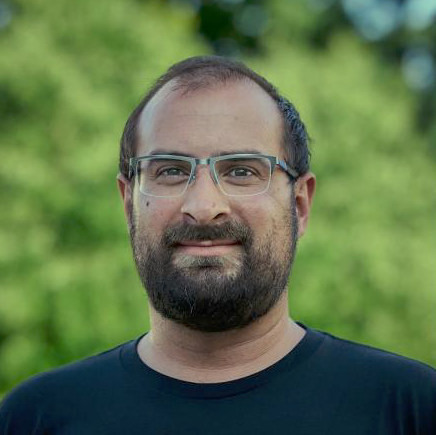
Joey D'Anna
Joey is an in demand colorist and technologist. When he’s not in the color suite you’ll usually find him with a wrench in hand working on one of his classic cars or bikes
Stella Yrigoyen
Stella Yrigoyen is an Austin, TX-based video editor specializing in documentary filmmaking. With a B.S. in Radio-Television-Film from UT Austin and over 7 years of editing experience, Stella possesses an in-depth understanding of the post-production pipeline. In the past year, she worked on Austin PBS series like 'Taco Mafia' and 'Chasing the Tide,' served as a Production Assistant on 'Austin City Limits,' and contributed to various post-production roles on other creatively and technically demanding project