EP066: Reverse Engineering In The Age Of A.I.
‘Inspired By’ Is One Thing. Wholesale Copying Is Something Very Different
Recently, news came out about a group that had reversed engineered applications in the Adobe Creative Suite and from other developers like Autodesk & Microsoft. While there have been countless ‘inspired by’, open source and derivative efforts for this kind of thing in the past, this news was notable for how accurate the efforts are to the original pieces of software.
In this episode of The Offset Podcast we’re digging into this legal and ethical enigma and discussing things like:
- Compiling and decompiling
- What decompiling provides and doesn’t provide
- The difference between ‘inspired by’ and outright copying
- High-level overview of possible legal & ethical ramifications
- The moral & business arguments against using ‘copied’ software as professional
- End user impact as this practice potentially becomes more common place
- And more!
If you enjoy the topics and discussion of The Offset Podcast you can join in the conversation with our new Discord community
Check out offsetpodcast.com for our entire library of episodes. You can also follow us on Instagram & Facebook – just search for The Offset Podcast.
Be sure to like and subscribe to the podcast wherever you found it and be sure to check out our growing library of episodes.
If you like the podcast it’d mean the world to us if you’d consider supporting the show by buying us a cup of virtual coffee –https://buymeacoffee.com/theoffsetpodcast
See you again in about two weeks for a new episode
Video
Transcript
00:00:00:00 - 00:00:15:02
Robbie
Hey everybody, welcome back to another episode of The Offset Podcast. And this week we're talking about reverse engineering in the age of AI. Stay tuned.
00:00:15:04 - 00:00:41:02
Joey
Support for this episode comes from Flanders Scientific and the XMP 270 C and XMP 310 C. Compact, affordable and color accurate HDR reference monitors designed for control room, production, and post-production monitoring, these lightweight and versatile displays bring dependable reference grade performance to a wider range of workflows and budgets. Learn more at FlandersScientific.com
00:00:41:04 - 00:00:48:06
Robbie
Hey everybody! Welcome back to another episode of The Offset Podcast. I'm one of your hosts, Robbie Carman. With me is Joey D’Anna. Hey, Joey, how are you?
00:00:48:07 - 00:00:49:12
Joey
Hey, everyone.
00:00:49:14 - 00:01:25:12
Robbie
Hey, Joey. So this week we are going to explore a topic that has been in the at least in the nerd news recently, and that is sort of the concept of reverse engineering software. If you haven't heard again, in the nerd news, there has been some big, big news about Adobe, Autodesk, Microsoft and others. Autodesk was one that I was like, wow, AutoCAD, big time software, big time software manufacturers getting these tools copied and reverse engineered, right.
00:01:25:12 - 00:01:46:18
Robbie
It's pretty pretty big news because some of these apps, you know, they're gigantic apps, but they're also 20 years old. They cost a ton of money. And so this week, I think we want to kind of explore that, what that means for our industry, what that means for sort of the ethics of this all, what this means for, you know, fledgling software designers like us.
00:01:46:19 - 00:02:04:21
Robbie
You know, so there's a lot of lot to unpack here. But before we begin, a couple of housekeeping things, as always, you can follow the show on Instagram or Facebook. Just search for The Offset Podcast. You can, of course, watch the video version of the show on YouTube. We are on all major podcasting platforms, including Spotify and Apple Podcasts.
00:02:04:22 - 00:02:22:19
Robbie
You can go to the offsetpodcast com to see our complete library. And last but not least, you can jump on our brand new Discord server. We have a Discord server for the show. Getting close to 100 people. There might be over 100 people now on the discord. Some good conversations I talk about pretty much anything you want.
00:02:22:21 - 00:02:42:14
Robbie
Post or, you know, industry related and join the community there. It's been a lot of fun. So, check it out. Those those things as well. Now, one more housekeeping thing before we dive into this today. Had a little bit of sad news this week, unfortunately. And it's something that kind of impacted us. You and I both personally a little bit.
00:02:42:16 - 00:03:09:22
Robbie
And that is on Monday of this week. We heard that MixingLight.com is ceasing operations after 14 or 15 years. For those of you who don't know, MixingLight.com is/was a training website. Subscription training website. And the reason it hits home a little personally is because, I was one of the founders of that website. Back in 2011...
00:03:09:22 - 00:03:34:22
Robbie
I think it was Dan Moran, who's now a senior colorist over at Company 3. Hey, Dan. He and I were at IBC in Amsterdam, and we got together for some warm Heinekens and a couple dry hamburgers, and we were talking about the industry and state of affairs, and we started talking about, man, it'd be great if we could teach people and, you know, Resolve and, you know, some of these behind the scenes things, you know, the dark arts that we were doing.
00:03:35:02 - 00:03:54:00
Robbie
And one thing led to another. And at the time, Patrick Inhofer was running a company called Tau Of Color. And he's well known, was well known at the time for his Tau Of Color newsletter. And we we approached Pat and said, hey, man, this is something we're thinking of. You got this audience, maybe we could join forces. And one thing led to another.
00:03:54:03 - 00:04:22:23
Robbie
And in April of 2012, at NAB, we launched Mixing Light with a 4 or 5, 10 Insights, something like that. And then eventually over the next decade, the site grew and grew and grew and grew to hundreds of members. Thousands of Insights, both audio written and video. And it was great. Joey, you came on board. I don't know, somewhere in the middle of all that to do some Insights and spread your knowledge.
00:04:22:23 - 00:04:47:11
Robbie
So some really well received insights. And it was it was an exciting time. And in 2020, going into 21, both Dan and I, we actually, we sold our shares of the company to, to Patrick. And for the past 6 or 7 years, Patrick has been running Mixing Light on his own. But like I said this week, announced that he was he was calling it quits.
00:04:47:11 - 00:05:03:09
Robbie
It just wasn't viable for him anymore. So, for me personally, it's a little bit of a, you know, a sad occasion. I thought, you know, Pat had been running the website for, you know, for so long by himself and, you know, had a stable of contributors. And I thought it was just going to go on forever.
00:05:03:13 - 00:05:24:04
Robbie
So it's a bit of a bummer, but I personally wish Pat the best. I want to thank all of the amazing members who I interacted with that my time at Mixing Light. Those those were awesome experiences. Yeah. So it's just a little bit of a bummer. And I think, you know, sort of an end of an era for, for training and for, for our industry a little bit.
00:05:24:06 - 00:05:31:03
Joey
Yeah. I mean, I think I came on as...correct me if I'm wrong here. I think I was the first outside contributor. Right?
00:05:31:04 - 00:05:32:20
Robbie
Yeah. You were you were the first guy. Yeah.
00:05:33:00 - 00:05:58:01
Joey
And, I did quite a few Insights, you know, that still get talked about today. Kind of established me in the the training and color grading world. And it's been such a boom to me, you know, both career wise and just the people I've met in this industry through that platform has completely transformed my, my world in the industry.
00:05:58:01 - 00:06:22:03
Joey
And it's something I am massively grateful for. It was there was never a bad time there, you know, it was fantastic. It was all well done. It was all professional, it was all great information. The community was amazing. And, yeah, I know these things are incredibly difficult to run, especially today. And the industry is changing and things are evolving.
00:06:22:03 - 00:06:39:15
Joey
And this is not going to be the end for that type of content or for, you know, Pat and the other current contributors, and I wish everybody involved the absolute best. You know, they they've been such a great resource since the beginning up until now.
00:06:39:17 - 00:06:59:10
Robbie
Yeah, man. Well said. And, you know, as you said, it's in the day and age of free training and influencers and all that kind of stuff. It is it is hard. And speaking from experience, having been on the other side of the curtain, you know, it is, you know, pumping out content and being consistent with it and, you know, coming up with ideas.
00:06:59:11 - 00:07:20:11
Robbie
I mean, yeah, we face that problem in a, in a micro way on this, on this little podcast, you know, coming up with ideas and concepts. So, it makes sense to a certain degree. But, you know, still bummed and I agree, I wish Pat and all the contributors, you know, the best of luck. I think that, I texted a little bit with Pat over this past weekend and he seems at peace with everything.
00:07:20:11 - 00:07:45:10
Robbie
And, you know, obviously a major change for him, but I wish him the best. And, you know, for those of you who I had the pleasure of interacting with over the years in my capacity at Mixing Light, and I'm sure I can speak for Dan as well in those early days. Yeah. We miss it. We appreciate everything that we've received on that side of things from both the, you know, personal promotion, the industry stuff, and just the relationships.
00:07:45:10 - 00:08:08:14
Robbie
So, yeah, a little bit of a bummer, but, this to will pass, as they say. All right, Joey, let's dive into the topic de jour. And I want to kind of set the scene here because, this is something that I have to tell you. Took me by a little bit of surprise. I think for those of you who like Joey especially, you can explain this in a second.
00:08:08:14 - 00:08:24:11
Robbie
Joey here, kind of a little bit more in the the backwoods of these kind of discussions. A lot of times it was not as much of a surprise. But I woke up one morning and, you know, checked my usual feeds, and the first thing I saw was, you know, the Adobe suite now for free.
00:08:24:17 - 00:08:25:13
Joey
Dead.
00:08:25:15 - 00:08:45:05
Robbie
Adobe's dead. Somebody reverse engineered Photoshop. Why pay for it anymore? And this was coming off the heels, actually, of a conversation that you and I had been having about. And maybe it's time to replace frame I o and you had been like, oh, look, I found this cool repo that's, you know, like an open source version of frame, IO, etc..
00:08:45:06 - 00:09:04:21
Robbie
So like, I have to say, like I sort of saw it coming. Maybe not as much as you, but like when somebody was like, bam, here's the whole creative suite. It did take me back a little bit and was like, whoa, what? Tell us a little bit about your reaction and kind of a little bit of the backstory that led up to kind of this type of thing happening.
00:09:04:22 - 00:09:40:22
Joey
Yeah. So, you know, we've seen open source alternatives, let's say, to things like Dropbox, frame, IO, things like next. And I'm not going to say any of these are clones per say, but alternatives, right. Oh, we've seen open source alternatives to most, you know, most commercial web services, whether that be a frame IO, whether that be a Dropbox, most things that you can pay for software as a service have a self-hosted open source alternative that might be somewhat inspired by or even very dramatically inspired by almost looking the same.
00:09:41:00 - 00:10:01:22
Joey
But those are essentially websites, right? It's a lot easier to be inspired by and clone the same functionality of a website, even a complicated, data driven website like a frame IO. It's a much simpler task than a massive, complicated desktop application, right?
00:10:02:00 - 00:10:21:13
Robbie
Is that because the the programing and the programing language and the sophistication of that, like it's like in a web, in a website or a SaaS service, you're not I mean, you can, but you're not really interacting with hardware and GPU and CPU other than the server that you're running that software on.
00:10:21:15 - 00:10:45:20
Joey
Exactly. They're almost entirely what's called scripting languages in some form or another, where you're not actually, you know, you're giving a set of instructions to the computer for how to render the website. And but the computer's interpreting that for you. There's another piece of software running on the web server called the interpreter that runs these scripting languages. And they're much simpler in terms of algorithmic complexity.
00:10:45:21 - 00:11:23:04
Joey
Right? You are not doing things like mixing images together, rendering noise reduction, doing dithering, doing complicated scaling algorithms, you know, doing real time performance of effects on GPUs. All of that stuff becomes massively more complicated than we're going to make a similar web service. So yeah, when people came out and said, well, here is a almost pixel for pixel copy of Photoshop, After Effects, AutoCAD, Microsoft Word, Microsoft Excel as an actual working compiled desktop application.
00:11:23:06 - 00:11:48:01
Joey
Even I was taken aback a little bit by like, wow, either a this is too good to be true in these things are just going to crash and be terrible, which partially is true. They are not anywhere near complete, and the people that are even making them have not said they are. They're saying their alpha level software, but how far they've come in this short time is still surprising.
00:11:48:03 - 00:11:51:11
Joey
And so I want to say impressive, but I'm not really sure.
00:11:51:11 - 00:12:15:05
Robbie
So I had a similar reaction when I saw it and I was like, wow. And the the first, I mean, that wow was like a little sarcastic wow. Because I didn't believe it at first. Then I started taking a look at it and I was like, what? The wow turned into a. Whoa. And then the whoa turned it into a holy s, you know, because I started looking at these things and, you know, just a little peek behind the curtain.
00:12:15:06 - 00:12:35:01
Robbie
You know, I think everybody knows that Joey and I have been both in working on little software endeavors and making our own tools and stuff like that. And from that experience, I am working. I have not graduated, but I've simultaneously with the scripting language type stuff. I've moved on to more sophisticated or not sophisticated, but you know what I'm saying?
00:12:35:01 - 00:13:00:21
Robbie
More involved in involved programing. Programing with with Swift and C++ and all that kind of stuff. And, you know, speaking from that experience, I told Joey when I started one of these projects like, this is going to take me a year. And Joey, like, yeah, if you're lucky, right? And so when I saw these tools and knowing the orders of sophistication, they are even from the tool that I'm working on, which I think is pretty complicated.
00:13:00:23 - 00:13:18:06
Robbie
It was like, how did they get this done with this, this fast, this much accuracy because it seemed like, you know, when something when something's inspired by you can sort of spot that pretty easily. Okay. Yeah. It does more or less the same thing. But this tool is called something different. Or, you know, this layout is a little different.
00:13:18:09 - 00:13:42:02
Robbie
This felt pretty spot on to me. And so when I started looking at it, I was like, how or thinking about it, I was like, how could this possibly be done? Because like the inspired by means actual work by the programmers or the builders, right? Like you're going to spend a lot of time looking, rebuilding, testing, rebuilding. This just looks like, nah, dude, we just slapped a we took off the Adobe badge and slapped another badge on it.
00:13:42:02 - 00:14:12:15
Robbie
And here it is. My first thought was, how is that done? And my second thought was, is this legal? Right. So let's talk about that first part, how it's done, because I think that this is a, a really complicated, slightly messy, not well understood part about app development, how these things are done. I want to kind of give you my understanding of it, and then you tell me where I'm wrong or I've deviated from the truth there.
00:14:12:16 - 00:14:43:14
Robbie
Okay. So you program something, you know, hey, push button, open window, do something. Right. Depending on the language that you're programing in scripting or, you know, real programing language like C++ or whatever, in either case, eventually that has to get built, right. You take that, that scripting or that programing, you build it into kind of machine language, machine code, that CPU, GPU, etc. understand and can process to show you something and to do something right.
00:14:43:16 - 00:15:15:12
Robbie
That binary code, that machine code is not the same thing as the human readable code, right? It is code that the machine understands. And so that process of going from your human readable stuff to the machine code compiling, right, building that machine code. And so the first thought to me was, did somebody figure out a way to decompile, that is, take the machine code and put it back into human readable code, clean it up a little bit, and then put out, you know, and begin the process anew.
00:15:15:14 - 00:15:27:12
Robbie
I'm not sure that's totally the case, but it seeming, it seems more and more like that might be the case rather than just, hey, we thought this was cool, so we rebuilt it.
00:15:27:14 - 00:15:59:03
Joey
Yeah. So essentially, like you said, at the end of the day, all software has to become binary instructions that tell a CPU or a GPU exactly what to do. Take this number, put it into memory, multiply it with this number. Go back to this instruction. Do this, do that. That code is not anywhere near human readable. When you compile your software that's written in like C or rust, it takes this really clear, human readable code.
00:15:59:03 - 00:16:24:01
Joey
And, you know, people might look at code and be like, wow, that's confusing, but it's not really if, you know, you're just kind of glancing at it. If this do that, this name equals this value. The machine has no concept of that, right. It just has a memory, addresses and instructions. All of this, you know, we are going to name this function the dialog box for the timeline.
00:16:24:01 - 00:16:54:06
Joey
For example we know that's called a timeline. All the code involved is for the timeline. The CPU has no idea. Right. So once you get to this binary, this executable file that the operating system reads and then puts through its process to to get it down to the CPU, the GPU, in the hardware, every little bit of human readable information is basically gone from it, but all the instructions are still there and they're accessible.
00:16:54:08 - 00:17:02:12
Robbie
Yeah. And the relationships. Right. Like this is a button. This button opens this. It's just in a weird sort of well.
00:17:02:14 - 00:17:25:08
Joey
Because they all point to the same address in a library to open a button or. Right. For example, if the same memory spaces use multiple times, that's going to be interpreted as a variable that you can go back and trace. But we don't know its name. So there are tools called D compilers that essentially analyze the entire logic tree of a binary starting from the beginning, start the program, then what happens, then what happens, then what happens?
00:17:25:08 - 00:17:45:01
Joey
Oh, it goes into a loop. Now we got to back up, trace out every part of that loop. Oh, it goes into an if statement or some kind of conditional. We got to back up, trace everything into that. And eventually it makes this whole big logic tree of everything that happens in that binary with just generic names like A, B, C, right.
00:17:45:06 - 00:18:16:04
Joey
And you wouldn't be able to open that up and immediately start adjusting it like I couldn't like, oh, let's make the timeline a little bit bigger because you wouldn't know which variable is the timeline. For example, even if you could decompile it to a working state. But what you can do is then feed that decompile output back into an Lem who, as I've said many times over, all they're really good at at their core is moving text around and guess what they're going to do with that decompile set of they call it pseudo code, right?
00:18:16:05 - 00:18:21:20
Joey
It's not, see, but it's everything that would be in the C. And they say, okay.
00:18:21:21 - 00:18:25:20
Robbie
It's gonna figure out, it's gonna figure out the relationships. And oh, here's.
00:18:25:20 - 00:18:29:21
Joey
A rewrite, all this and rust and hit go.
00:18:29:23 - 00:19:08:23
Robbie
Support for this episode comes from Conform.Tools. Conform.Tools converts timelines between Premiere, Media Composer, Resolve and other NLEs. Automatically handling what you'd normally fix by hand. Things like speed ramps, keyframes, repositions, and even Sapphire effects. And when it's time to move media - send massive projects to collaborators in minutes instead of hours. Conform.Tools only transfers the media your timeline actually uses without you even needing to trim or consolidate media. Built by post professionals, Conform.Tools helps editors, colorists and conform artists move faster and finish stronger.
00:19:09:01 - 00:19:18:00
Robbie
Let it handle tedious stuff so you can focus on the creative. Start a free seven day trial at Conform.Tools.
00:19:18:02 - 00:19:47:01
Joey
That has been a viable reverse engineering pipeline for a long time, and then the AI aspect of it has made it massively accelerated. The tools for doing the decompile are open source available and very, very, very advanced because security researchers do this right. Security researchers will take a piece of malware, decompile it, trace that instruction tree, and figure out exactly what it's doing so they can mitigate the threats.
00:19:47:03 - 00:20:07:00
Joey
Funny thing the most used decompile and reverse engineering software suite that is open source, free to everyone is called, and it is written by none other than the National Security Agency. And you might ask, why would they give that out? Because anybody who gets good with it is going to be a really, really good candidate for them to hire.
00:20:07:01 - 00:20:26:09
Robbie
It's like how you hear like, you know, the CIA post on weird dark web websites to play, like in real life games, and they see who takes it. And then, like, that guy is going to be our spy. Same idea, right? If you're good, if you can see it reading between the lines of the code and use tools like this effectively, it's a good recruitment tool for them.
00:20:26:11 - 00:20:48:08
Joey
So let's just talk about that possibility, because when I first saw these cloned Adobe apps, that's where I went to because the UI looked exactly the same, the interactivity looked exactly the same. The overall feature set was exactly the same. I swore up and down, you can go look at my like, resolve user group Facebook posts. Oh, they definitely decompile this.
00:20:48:08 - 00:21:11:04
Joey
And, you know, completely ripped it off that way. And I was pretty confident in that. I went before we did this episode and did some testing and research of my own, of course, assisted by the same friend Claude, that I would assume they had used to reverse engineer this software. And I will say this I was completely wrong.
00:21:11:09 - 00:21:38:12
Joey
They say it's a clean room implementation. I mean, from the ground up and from what I can tell from analyzing their copy of After Effects, it's it's true. So we'll get into, like, the next way of doing this after this. But just to give it a little bit of detail, one of the things that will stay if you decompile software, like I said, the function names, variable names, all of that stuff completely gone.
00:21:38:12 - 00:21:57:08
Joey
It's like baking a cake, right? Like you can't take a lot off of a clip once it's applied. Same thing with compiled software. You can't just go back to the original. It is not reversible, but there's something called a constant that is. For example, you take pi, right? You calculate pi out to the amount of digits you need.
00:21:57:13 - 00:22:21:14
Joey
Then you save that as a constant because you could just reuse it every time. You need to use pie in a formula in your program. That's a lot faster than just calculating pi every time you need it, especially if you're doing things like drawing geometry, right? So the decompile can easily find all the constants. And that's where you can really kind of fingerprint these things and say, did they copy it or did they not?
00:22:21:15 - 00:22:50:00
Joey
So what I did I fed after effects. Are plug ins like a couple, you know, common ones that we know would be implemented similarly fast noise, Gaussian blur, stuff like that. So I took those look at the constants, had Claude look at the constants. Let's be honest, did the same thing to fake after effects. Completely different set of constants, completely different set of overall algorithms for how those effects are done.
00:22:50:01 - 00:23:13:13
Joey
So the process was not copied, they just made a Gaussian blur that honestly more mirrors open source Gaussian blur algorithms that are already out there. Which points me to say they used an LLM to make this, but they did not reverse engineer the original software in a direct decompile way.
00:23:13:15 - 00:23:15:05
Robbie
Interesting. Okay.
00:23:15:07 - 00:23:31:12
Joey
I was completely wrong. I had assumed the complete opposite. And and again, I'm not looking directly. I can't talk to them directly, but I will say I believe them when they say it was what they're calling a clean room implementation. I don't think they decompile After Effects to do this.
00:23:31:15 - 00:24:04:14
Robbie
Well, I will say in my own experience, the l m analysis is of an app is shockingly good. I will say that the LLN analysis of being able to even dig into an existing app bundle that is sitting on live on your system right now, and to be able to tell you things about it is shockingly good. So it I, I tend to agree that that is a feasible way to do it.
00:24:04:15 - 00:24:39:10
Robbie
It would still require a tremendous amount of manual work that I'm surprised could be done as accurately and faithfully to the original as possible. But that doesn't mean like that's just me in my ignorance and my abilities. Thinking that right there could be somebody who is Mensa level behind the controls of this effort going, oh yeah, now I have all the information I need and I can figure, you know, running 47 agents at the same time on a huge cluster of machines, doing real heavy lifting that, you know, seems crazy to us at our, you know, $100 a month Claude plans.
00:24:39:10 - 00:24:42:00
Robbie
But it's possible, right? It's definitely possible. So that's kind.
00:24:42:00 - 00:25:00:10
Joey
Of what I was going to call the second method to do this. You know, whole hog copying of an application, which is really what we're talking about, right? It's not like they made something inspired by the Adobe apps or the Microsoft apps or the auto or AutoCAD. Right. They copied it. Exactly. And we'll get to the moral implications of that a little bit later on.
00:25:00:10 - 00:25:22:20
Robbie
One thing I want to interrupt before you start this, this this thread though is that, I was thinking about how you would also be prepared for that effort and something you said about what you're discovering, like the plugins or whatnot, is interesting because, in my experience, one of the things that all of the LMS do very well is planning and mocking.
00:25:23:02 - 00:25:44:20
Robbie
Right? And sort of the design brief before you, you push you push any code, right? So to me, it is feasible to say to an M, I want you to look at this app, and I want you to go out and find all of the open source libraries that can do all of these things and find me the nearest, best, most, you know, accurate equivalent.
00:25:44:22 - 00:26:06:06
Robbie
And so before you even push, you know, copy or decompile or whatever it is, you have already built up yourself a library, essentially a plug and play. And then at that point, if you have a shared framework that all of those things can plug into, it's not a crazy amount of work, right? Like if you're taking the like building FFM peg from scratch.
00:26:06:07 - 00:26:29:00
Robbie
Yeah, really hard plugging in ffmpeg to, you know, your your framework and your app. Not all that hard at all right. So like it just seems to me that there was some foresight and some planning along with the pull information, the constants, the decompile, whatever that went into this so they could be prepared to go, no no no no no no no, we're not compiling, we're inspired by.
00:26:29:06 - 00:26:39:11
Robbie
But we've already done all this because that's the only thing that makes sense to me. Be able to turn it around so fast or seemingly so fast, is that you spent months preparing for this.
00:26:39:12 - 00:27:04:05
Joey
Yeah. And, you know, we don't know if they didn't decompile parts or all of this software and then say, kind of make me a plan based on this architecture. Also possible none of the constants would show up in my little investigation. Wouldn't ever be able to show that. But the next step, I think, and this is where I think most of this copying happened, is kind of LLN driven automatic UI driving.
00:27:04:06 - 00:27:31:03
Joey
Right? The the the robot can drive your computer. They probably set up a laptop somewhere with the Adobe suite and just said go through, click and screenshot every single menu panel option drop down in this piece of software. If you asked a human to do that, it would take them forever. Because, I mean, you open up just the effects.
00:27:31:05 - 00:27:48:13
Joey
Timeline in After Effects. Oh, it looks pretty simple. Great. Then we drop one effect on it, drop down the little options, then all the other little options, then all the other little options and all the options within options, then everything in the properties and inspector for all those options. Then you do that for every effect that's available in the software.
00:27:48:15 - 00:28:10:07
Joey
Then you go through every other window and every other dialog and you literally click on every possible option. Again, it's almost a giant tree, right? It starts at the beginning. Program opens. What is everything you can click on from the program open. What happens there? What's everything under that? What happens there? That's when you can literally just, you know, send your your LLN if you have enough tokens.
00:28:10:07 - 00:28:23:05
Joey
I bet whoever did this has like a corporate plan that they got a lot of tokens on because and they might be I mean, I don't want to accuse anybody of anything. I'm just saying a lot of tokens were involved, no matter what. We can be confident in that.
00:28:23:06 - 00:28:40:19
Robbie
If that seems if that seems crazy to people, I want to just kind of give a little behind the scenes view of that, too, because I have seen this in a very small way. I'm working on an app right now that has a lot of parts to it that require, testing because of the way it interacts with hardware.
00:28:40:20 - 00:29:03:01
Robbie
Right. Test this format, test that format, see what it does on screen, whatever. Right. And it got to the point where I was like, this will take me for ever. If I have to sit here and go through a list of 500 tests and try them all manually. So I told the robot I was like, build a testing harness, that this can run completely unattended.
00:29:03:05 - 00:29:26:10
Robbie
Right? And so it asked me it's, you know, it's like, make sure you plug this in, make sure you set up that and then hit go. I mean, when I came when I sat down here this afternoon to record this with you, I paused a test that had been running since 1 a.m. last night because it's going through and testing 150,000 different, you know, situations or whatever and building, you know, data off of this test.
00:29:26:10 - 00:29:49:06
Robbie
So the idea that you can open something up and say, trace this button, take a screenshot or whatever and do it for the it seems like science fiction or insurmountable. It's really it's just a matter of time, like time and time and tokens and processing power because like, you could, you could if you had three weeks to just let it do its thing, it would do its thing.
00:29:49:08 - 00:30:13:20
Joey
And if you had a year to let a human go in and follow that and write everything down, it would be the same, you know, in result. But, you know, at the end of the day, you've got a pile of screenshots and essentially a tree structure that shows every control in this software. And then you set Claude to work just copying them whole hog the colors, the layouts, the way it draws lines and menus and everything.
00:30:13:20 - 00:30:36:21
Joey
And that, I think, is what they did. Again, some speculation here. I'm pretty sure that's what they did because everything's in the same place. But yeah, sometimes it might be a different font or the one thing I tried that was different is the pic whip in After Effects has a little bit of different animation on it, because that's not something that the robot's going to clearly record, you know, frame by frame.
00:30:36:21 - 00:30:47:01
Joey
It's probably going to take a before, you know, a start, a middle and an end of how that operation works. And, you know, I think that's what they did.
00:30:47:05 - 00:31:07:21
Robbie
So this this begs the question then, Joey. So like from an end user, it's like, I guess if I wasn't involved and you weren't involved, like we are in software development, I think we would take a slightly different view on this and that we'd be like, oh, cool, I can stop my subscription to Adobe and I can use this free stuff.
00:31:07:21 - 00:31:47:12
Robbie
And that's great, right? I think that there is there's both a legal and let's just I don't I hate to use this word in like like a religious, religious kind of sense, but there's like a, there's a right or wrong kind of moral argument to be had here to. Right. And let's start with the legal part, because my first thought was, oh man, whoever did this, they are one step away from walking into a courtroom with a bunch of big time, you know, fortune 500 fleet of lawyers who are just going to destroy them in paperwork and lawsuits, and it's going to be over.
00:31:47:18 - 00:32:06:13
Robbie
And I think that's still a possibility. Right. Because I think there's a couple of things that happened that a lot of people don't pay. The average consumer doesn't pay a lot of attention to, you know, when you install some software and those dialog boxes come up and it's like, you know, do you agree? Do you agree? Do you agree there's not a single person in the universe?
00:32:06:13 - 00:32:36:22
Robbie
Well, there might be like 1 or 2, but the average person does not read through those licenses, those end user license agreements at all. Right? Nor do they click the. For the full version, go to the website and read all the documentation. So they just click install and be done with it. Interpretation of those end user license agreements is well, it's complicated, it's involved, and it's well above either one of our legal EAS interpretations.
00:32:36:22 - 00:32:54:23
Robbie
Right. I'm just saying that I think the first line of defense for these big companies, if they choose to, is enforcement of Eula. Right. Like just to go. You violated our terms of service. Sorry. Like this is like it's cool, but you can't do this. And it says it here whether it says that or not for Adobe, Autodesk, whoever, I'm not quite sure.
00:32:54:23 - 00:33:02:10
Robbie
But there's got to be something in there that prevents reverse engineering compiling that kind of stuff.
00:33:02:12 - 00:33:28:16
Joey
Yeah. So to preface this, I am not a lawyer. I am a lawyer hobbyist. I'm kind of fascinated by this stuff. So I've done probably a little bit more reading than most. But you're right, nobody reads the user license agreements, which has been used as a defense in court to say, hey, this person couldn't have reasonably agreed to this because there's no way they read it.
00:33:28:17 - 00:33:50:22
Joey
And that works for some things. These Ulas have been found to be enforceable in some ways and not enforceable in others. One of the things that Adobe's going to have in their Eula across the board is you are not allowed to use these apps for the purpose of reverse engineering, which that's fine. But their only real recourse in that is not to sue you out of existence.
00:33:50:22 - 00:33:55:20
Joey
It's to say, you broke our rules. You're not allowed to use our software anymore. Your license is revoked.
00:33:55:23 - 00:34:07:22
Robbie
Or if it was a commercial product to be say, they'd have actually, they'd have a little bit more to stand on if because they could halt sales, they could ask for some damages, etc.. Right. It's like.
00:34:07:23 - 00:34:27:01
Joey
If they're asking for damages, they're going to get more into a, you know, a copyright case or a patent case. Right? That's kind of like the next level of this. The first level is you broke our Eula. We can stop you as a customer. We can do that arbitrarily if we want. You know, we don't we are not legally mandated to have you as a customer.
00:34:27:01 - 00:34:46:21
Joey
That's their first line of defense. The second line of defense is, yeah, you copied our intellectual property. We're going to use the legal system and copyright and patents to go after you get damages, cease and desist, have a judge put an injunction that says you're not allowed to release this software, the whole whole nine yards of that possibility.
00:34:47:00 - 00:35:11:09
Joey
The interesting thing about this is, I don't think and the lawyers in the audience, please correct me if I'm wrong. I don't think there's a massive amount of like, settled cases that went to court and actually had a judge, or in some cases, a jury, decide what something was patentable in terms of software, what something was copyrightable in terms of software.
00:35:11:11 - 00:35:35:18
Joey
When you get into the gray areas, right. If you actually named it Adobe After Effects and put it out with the same logo, it would get thrown out in court immediately for copyright violations. But if you made it just like it, well, there's a question and a lot of these cases in the past, not all, but a lot of them have been, oh, we're going to come after you with our lawyers, write you a cease and desist.
00:35:35:19 - 00:35:54:01
Joey
We're going to negotiate. Our lawyers are going to sit down and we're going to come up with a settlement. You pay us X number of dollars, you stop doing what you're doing. You change doing what you're doing, or we threaten to take you to court. I would speculate the vast majority of software patent and copyright cases stop at that settlement phase, right?
00:35:54:02 - 00:36:13:21
Joey
So we don't fully know what a court would do with this kind of copying thing. You know, how much teeth are they going to give the the shape of an After Effects dialog box versus if they had copied the actual algorithm for how they calculate a blur? That's a very different thing.
00:36:13:23 - 00:36:47:15
Robbie
Yeah it is. And I also think that there is some offensive defense that big companies like this already play. Right? Because it's certain that it is certain that it is a side business in software to patent troll and to trademark troll people. Right? So there are already people, I am sure, who have analyzed Dobie Software, Microsoft, Autodesk, whoever you know, any of these, targets of this reverse engineering who have analyzed the software, probably in a very similar fashion, actually.
00:36:47:16 - 00:36:49:04
Joey
Trying to find something they can get.
00:36:49:04 - 00:37:16:04
Robbie
Them, trying to find something that they can enforce from a patent or trademark point of view later on to get some money out of these big fortune 500 companies. So I from from that point of view, this is probably not new ground for a Microsoft or an Adobe or whatever, in the sense that they've probably had to fend off this kind of trolling and, you know, whatever from more nefarious actors for a long time, because it's just the way that the software business works.
00:37:16:04 - 00:37:24:07
Robbie
Somebody always I mean, look at Apple, right? How many times a year does Apple get sued for? Oh, you stole our, you know, heartbeat sensor or whatever, right? Like.
00:37:24:09 - 00:37:28:18
Joey
Hey, I remember when iPad OS came out as Windows 8, right?
00:37:28:19 - 00:37:55:05
Robbie
Exactly. So I'm sure that happens. But I also tend to agree with your, your your bigger picture here. Right. Is that and it's and it's this is you know, it's an argument that can be made with any sort of patent trademark or whatever. Like how unique like can I like your example is great. Like can I pattern like the curve on a dialog box, right.
00:37:55:07 - 00:38:03:16
Robbie
Probably. Probably not. Right. Probably not now. Could you patent the code that you know, happens when the button is clicked?
00:38:03:18 - 00:38:14:10
Joey
Maybe it depends on what it's doing. You know, it depends on the complexity of the idea. And nothing is the law until it's been adjudicated in court.
00:38:14:10 - 00:38:30:02
Robbie
But if you if you take this, if you take that logic and keep playing it out and playing it out and playing it out, right, I don't know what the Adobe tools are, for example, are written in, but let's just say they're written in C plus, right? C++ like you extrapolate that logic, back up, back up, back up, back up, back up.
00:38:30:08 - 00:38:36:02
Robbie
You're like, okay, who owns C++? Do they have any, you know, like, you know what I'm saying? Like at a certain at a certain.
00:38:36:03 - 00:38:39:19
Joey
Well, no, C++ was written by Bell Labs. It's open.
00:38:39:21 - 00:38:41:07
Robbie
But you understand my point is.
00:38:41:09 - 00:38:44:16
Joey
Yes, some programing languages have license agreements.
00:38:44:18 - 00:39:07:23
Robbie
At a certain point. Where does the back it up? One more step to see who, you know, invented it, owns it, you know, licenses it. How far back up does that go? Because it's certain that Adobe has, you know, or Microsoft or whoever has not invented 100% of the code that is used in their application. Right? Have they done unique things?
00:39:07:23 - 00:39:41:00
Robbie
Clever things have their engineered? Absolutely. Right. There is there is stuff that those engineers at those companies definitely came up with on their own. That's novel in the way that it works to me. Cool. That's that's enforceable, that's patentable, whatever you want to call it. Right. There's levels of this that build the complexity that these are why these type to your point, I think one of the reasons that this kind of case law is a little gray and fungible and hasn't really been pursued is because it would never end.
00:39:41:00 - 00:39:47:08
Robbie
And the mountains of the mountains of paperwork for it would be incomprehensible, you know, in terms of.
00:39:47:10 - 00:39:47:23
Joey
It's a.
00:39:47:23 - 00:39:48:16
Robbie
Huge.
00:39:48:18 - 00:40:20:00
Joey
Gray area from, hey, we both made paint programs, which in the early days that was litigated. Quantile Paintbox sued Adobe Photoshop because the concept of we're going to make an application that paints on a screen was claimed to be a kind of patentable. We invented that. You're not allowed to do that. Well, of course you can make your own paint app, and Adobe can't sue you, and quantal can't get a time machine and sue you.
00:40:20:02 - 00:40:41:12
Joey
But you know, you get down to. So that's kind of the the real white side of the gray area. You get down to the the darker into the gray area, you get these what they're calling the, the open source, whatever craft apps, it's obviously a whole hog copy of the Adobe. And there's probably something legally enforceable in there.
00:40:41:12 - 00:41:01:01
Joey
But let's leave all the the legal stuff up to the lawyers. Let's talk about just one, the actual professional application about these things. Would we use these in our work and why? And two, what's the moral implications of this? Is this right or wrong. Because there's been a massive amount of discussion about that online. And I certainly have opinions.
00:41:01:03 - 00:41:41:18
Robbie
All right. Well I'll start with the first part. I think that as a professional user, I would be extremely hesitant outside of the interest level to use one of these tools. Right. And for, for a lot of reasons. Right. I, I'm not not saying that I like Trust and Microsoft or Adobe or whoever. Right. But they have a financial and, you know, arguably, a business obligation to their pain audience to do things like security, check their software, make sure there's no malicious code running, etc..
00:41:41:19 - 00:41:42:05
Robbie
Right.
00:41:42:10 - 00:41:44:19
Joey
Make sure it just doesn't stop working on Tuesdays.
00:41:44:21 - 00:42:08:18
Robbie
Right. It is extremely possible that in a package with millions of lines of code, that in a actor who reverse engineered, inspired by, or whatever could put something in there that doesn't belong and the average user would never have any idea. Now some of those things could be really bad, you know, keystroke copying or, you know, whatever, right?
00:42:09:00 - 00:42:39:15
Robbie
But they could be benign. They could just be, yeah, yeah, we're going to capture your IP and sell it to advertisers or whatever. Like there's there's a million levels of that. But my first thinking is, no, I, I'm not going to just, you know, somebody who's just like, yeah, reverse engineered something. Trust them implicitly about it. Right. I think the other the I think the other part about that is that I feel as a professional user of creative software, I owe it to my clients to do things that are lack of a better term, stand up.
00:42:39:15 - 00:42:58:19
Robbie
Right. Like I'm like, yeah, they're cool. I could use Photoshop and pay for it, or I could use the, you know, this this inspired by version of Photoshop. I just feel like I would never want to put my clients in a situation either, where the tools that I use could compromise the quality or the legality of their work because, you know, play this out.
00:42:58:20 - 00:43:09:17
Robbie
It could be, hey. The judge's decision is any product made with this tool is now, you know, in violation too. I don't know, that's possible, but you see what I'm saying? Like, there's a lot of levels to that.
00:43:09:18 - 00:43:31:03
Joey
Yeah. And I would say, you know, I mirror your stance exactly. Maybe even stronger. I wouldn't touch these things with a ten foot pole. I installed them on a virtual machine to play around with them, to, to evaluate them. And that was the extent of it, because I wouldn't even put it on my actual computer, as is how little I trust it.
00:43:31:05 - 00:43:50:06
Robbie
I mean, the, the the paranoia is real and valid though, I mean, so like even if I said, let me backtrack a second because I said, oh, I believe, you know, companies are doing like even companies that are selling and paying for the things. Like there's a reason, for example, that I have in IoT network, you know, Internet of Things network in my house.
00:43:50:06 - 00:44:12:09
Robbie
Right? Because I go out and buy, you know, on Amazon a a light switch or some, you know, relay or something like that. Like in this day and age, you know, it is not beyond the realm to have, you know, a little small little piece of malware that exists on something like a light switch that's going to call home.
00:44:12:09 - 00:44:27:09
Joey
And or in the case of what we just saw last week, you could have a certificate authority who, instead of using a 384 bit encryption key, use the number four. And those certificates got embedded on millions of IoT devices. Right.
00:44:27:10 - 00:45:09:22
Robbie
Like it's not paranoia if it's if if it's true. Right. So yeah, I hear that on the second part of your question, sort of the idea of sort of, more of the the right or wrong part about this, I am of I think I lean wrong, lean wrong, not staunchly in wrong, because to me, there to be 100% novel is almost impossible, especially in, you know, when you're doing things in an industry that have standards and norms and all of that kind of stuff.
00:45:09:23 - 00:45:33:08
Robbie
Right? So like, you know, am I like so the argument is like, so let's just say I, I don't know, I build a piece of software that can, do HDMI or SDI instructions over the, over the wire. Right. I can send, you know, info frames or whatever. Right. Am I reverse engineering that? No. There's like there's some standards of it.
00:45:33:08 - 00:45:54:15
Robbie
How it how the communication protocol works like NDI. I for example, would be another one. Right. And I've just chosen to implement that because the company allows me to through the software development kit. They have rules about it. So like I'm not reverse engineering SDI or HDMI or NDI, I or whatever, I'm implementing it. Right. And so that's another kind of line here.
00:45:54:15 - 00:46:19:00
Robbie
But I think I tend to feel that if you're going to be that close of a carbon copy, your intent is to confuse people and to be a copy. And to me, that sort of bait and switch kind of thing makes it feel wrong. So like all the people that are creating like frame I o competitors that all kind of more or less do the same thing.
00:46:19:02 - 00:46:38:22
Robbie
I have no problem with that because you're not trying to represent yourself as frame I o or you know, any of these other tools. You're going, yeah, this is cool. We like this feature. And that's where like that's art, right? Everybody's inspired by things, you know. And like I like how I like how this company does this. I want to do something similar that happens every single day.
00:46:39:00 - 00:46:50:16
Robbie
But like down to the color scheme, the roundness of the buttons. What, like that level of sameness? It bothers me on some level.
00:46:50:18 - 00:47:12:12
Joey
Support for this episode comes from Flanders Scientific and their DM series HD monitors. From set to post to broadcast, these versatile HD monitors are equipped with an industry leading array of features and capabilities, making them indispensable to DITs, engineers, editors and colorists. Learn more at FlandersScientific.com.
00:47:12:14 - 00:47:34:15
Joey
I'm gonna again go go stronger here I think we the line to me is you're doing what I call the whole hog copy, which is you're not coming up with anything new, right? You're not reinterpreting a concept. You are. And, you know, for better or worse, I have my own issues with a lot of the Adobe software and how it works and some of its feature set.
00:47:34:18 - 00:48:01:01
Joey
If I don't like the way Adobe does it, you copy that. Exactly. I'm not going to like the way you do it either. But here's the thing. That arrangement of feature set is Adobe's intellectual property, and you are absolutely outright stealing it. And I think that's pretty abysmal. And here's the thing. Do I think, for example, that quantal could sue Adobe for Photoshop back in the day like they tried to?
00:48:01:04 - 00:48:29:19
Joey
No, I think that was invalid. They were both completely different pieces of software that had the same end goal. This, like you said, it's intent. They want to copy Adobe software. Exactly. So Adobe's customers can say, cool, we're not paying Adobe anymore. They didn't do anything. They didn't come up with the way these UIs work, the way these interfaces work, the feature sets they did, none of the hard thinking work that goes into how do I make an application for creative professional?
00:48:29:22 - 00:48:47:21
Joey
They whole hog copied it. And the idea now is, you know, you get on the internet, you see these Facebook groups, you see a lot of people. Oh, Adobe's so evil for doing subscriptions and charging me too much. I'm going to stick it to them. You know what? If you don't like what you get out of the cost of a product, no one's forcing you to buy it.
00:48:47:21 - 00:49:11:11
Joey
The reason why Adobe has customers, the reason why Blackmagic has customers is they offer a good product to professionals, that we are more than happy to pay their price for to use. Now here's the difference, right? If you didn't want to pay Adobe for something like Photoshop, there are plenty of who could call it inspired by. You could call it similar.
00:49:11:13 - 00:49:38:14
Joey
There are many alternatives, from commercial applications like Affinity Photo to completely open source applications like Gimp or in the 3D world, or the visual effects world. Blender, right? These are ground up new ideas with different interfaces that still get you to relatively the same in goal editing photos, editing videos, doing the creative work. If you don't like the commercial options, you have free open source options available as well.
00:49:38:14 - 00:50:01:01
Joey
There's a reason why most of us professionals still go to the commercial option now, making a free option that is just we straight copied you. That rubs me the wrong way and I think it's silly. I think using it is an exercise in futility because it's worst, you know? Best case, they copy all the downsides and none of the good sides.
00:50:01:03 - 00:50:07:04
Joey
And worst case, it completely breaks your computer and, you know, messes up your client work.
00:50:07:05 - 00:50:29:03
Robbie
I'm really interested in the mind set of the folks that are like, yeah, I want and need this to use it because, like, I've always felt that people and I feel the same way about, you know, any sort of copying of intellectual property like this, that it's a laziness thing. It's like, okay, fine. Why couldn't you spend that?
00:50:29:05 - 00:50:53:11
Robbie
You know, that effort in that time on developing something that is fine if it's an analog, if it's if it's inspired by if it's similar, like, oh, like you said, that's totally fine, but like expanding on the idea. So like, you know, if you don't like, I don't know, pick something you don't like. The way that the Guardian Blur works in premiere then great.
00:50:53:12 - 00:51:11:13
Robbie
Like design your own guys in blur. That works the way that you like it. Package it up, sell it, do it like it. Just seems like it to me. It's like, what is the point? Like is it is it is it is an intellectual or like technological flex because like, that's kind of the only thing that I can really come up with, like cool guys.
00:51:11:13 - 00:51:13:14
Robbie
You showed that this is possible and real.
00:51:13:16 - 00:51:37:00
Joey
Because that's the thing. If if the Facebook pundits that say Adobe is evil, which I think is an incredibly counterproductive discussion to start with, right? If if they get their wish and free copy Photoshop puts Adobe out of business tomorrow. Well then guess what? Photoshop is now frozen forever as to where it was in 2026, because these guys aren't coming up with anything new.
00:51:37:01 - 00:51:42:12
Joey
If there's not somebody there making new stuff for them to copy, we're done, right?
00:51:42:13 - 00:52:04:10
Robbie
There's no words. This is a it's an intellectual assault to me too, because like, it, it it makes it seem that, like, these companies are a monolith and all act together. It's not the case. Right? All of these big software companies, they have, you know, different ideas with engineers and product managers and salespeople and they're debating, should we do this?
00:52:04:10 - 00:52:30:02
Robbie
Should we do that? How should we implement this? How should we implement that? And there is a there is a dialog and a process that goes on to arrive at these points. And so like, you know, this person like it's fine. Like I'm getting back at Adobe for their subscription. Well, you know what you're also doing. You're invalidating the countless hours that an engineer spent coming up with an idea so he could earn he or she could earn a salary and pay, you know, and feed their family and all that kind of stuff.
00:52:30:02 - 00:52:36:04
Robbie
And you're just doing the double middle finger to them because you think it's like a cool flex, and that just doesn't sit right with me.
00:52:36:05 - 00:53:08:19
Joey
And the other argument people are going to say is, you know, oh yeah, competition though competition is good. It'll drive them to lower their prices and do this, I agree. Competition is great. I welcome any other competition of new ideas or open source alternatives. I think the I think the Adobe's of the world and the black magics of the world are better for things like blender and Gimp being in the ecosystem, and for the Adobe's and black magics of the world to be in the ecosystem and the avid, if you will, to compete with each other because they're actually competing on merits.
00:53:08:20 - 00:53:37:06
Joey
This, like you said, this is not competition. Do not ever confuse this kind of whole hog copying with competition. This is ripping off existing work. I think it's very clear cut, inspired by absolutely same general idea. Absolutely. That's competition that's healthy. We literally ripped you off 100%. It's never it's never right. It goes back to, you know, like you said, it's like art.
00:53:37:07 - 00:53:54:21
Joey
Everything has a lineage of inspiration. I think some of the software I've worked on, some of the cell phone working right now, is very heavily inspired by an existing service, but I really think I've taken a different tack on how it works on the user side and on the back end side, and I think there's value to that.
00:53:54:23 - 00:54:17:12
Joey
You know, yes, I was inspired by what this product does, but there was a lot I didn't like about it. So I built something from the ground up that does similar things, but nothing. The other software data is completely novel or new anyway. It's like, you know, so it's a different approach to solving the same problem, whereas what can't be copied is the next idea that you haven't come up with.
00:54:17:12 - 00:54:22:20
Joey
And like I said, if if only the copiers are left, there's going to be nothing new to copy.
00:54:22:21 - 00:54:51:17
Robbie
I agree with that man, and I will. I will say at the end of the day, that this kind of, this kind of thing is undoubtedly accelerated by the LMS and the AI and all that kind of stuff. Right? Like, I think one of the reasons that this feels like a new thing is because people just didn't have the time or effort to do it back, you know, really before the because it was like, you know, you're talking about an application with, you know, millions of lines of code.
00:54:51:17 - 00:54:56:05
Robbie
If you're doing that all manually, it's a different beast than throwing it into the robot and saying, go, right?
00:54:56:09 - 00:55:20:00
Joey
Yeah, absolutely. I'll just say, I think as, as we've said, there's a lot of gray area here, but it's like the old, old, old adage, I know it when I see it. And this these copy Adobe, Microsoft, Autodesk apps. I want nothing to do with them. I installed them on a VM as a curiosity to kind of get a pulse check on it.
00:55:20:00 - 00:55:25:17
Joey
And that is the extent of how I will be touching them in my professional life or my personal life.
00:55:25:18 - 00:55:36:08
Robbie
And those people, if there's those people out there that are like, all we're doing is being, you know, middle aged old guys going, get off my lawn. Like, sure. I think there might be something to that. But at the same time, I.
00:55:36:10 - 00:55:37:13
Joey
Get off my lawn.
00:55:37:15 - 00:55:44:21
Robbie
Yeah. I mean, exactly like it's just I, you know, I think it just is,
00:55:44:23 - 00:56:02:01
Robbie
I feel the same way about a lot of things these days. Right? Like, can I make music with, you know, a robot? You know, an AI? Sure. Is that the same thing as, you know, you know, blooding my knuckles, jamming on the guitar? It's not. It's not, and it's exactly. Yeah.
00:56:02:01 - 00:56:06:18
Joey
And you're never going to claim to have invented the chord progression, right?
00:56:06:19 - 00:56:23:15
Robbie
And it's not. And it's not the same as, like. And I will be the first person to say this in this day and age of programing, like what I, what I'm doing with the tools that I'm making is I'm essentially executive producing. Right? I know what I like, I know what I don't like. Do I have mastery of 100% of my code?
00:56:23:17 - 00:56:45:09
Robbie
I don't. And I actually have I've said to you that I've said this to you hundreds of times, like, like the next step for me would be like hiring somebody that actually does know every bit of code because like, I think once we if we if we divorce ourselves completely from the human element of this stuff, I think we're just it's it's the end of society.
00:56:45:10 - 00:57:03:12
Robbie
Right? I just think that like, it just sort of it's just like to me, it and this kind of copying it devalues the human effort of these things. And I don't think, I don't think that the human effort in any of this should ever be lost. And I just will.
00:57:03:14 - 00:57:38:17
Joey
Just that reminds me, we're going a little long here, but I just want to. One last thing. We've talked about generative AI, for example. And I feel the same way, even if generative AI, as in I write a prompt that says, make me a movie where this happens, right? Even if that ever gets to the point where it's realistic enough to to pass, which I don't think it will, as we've discussed, even if it did, all you're doing at that point is you're pinning all human creativity to end at the year 2026, the year 2027, right?
00:57:38:18 - 00:58:10:22
Joey
Because all of these are just derived from the amalgamation of human output up to today, the Lem cannot ever come up with a new idea. It gets a set of inputs, it does a bunch of matrix math, and it gives you a set of outputs of those inputs rearranged in some way or another. Right? If we're happy with pinning the complete state of human artistic and technical development in the year 2027, then yeah, let's just copy everything if we're not and still room for new ideas.
00:58:11:02 - 00:58:33:23
Robbie
And you're right and that and that like arguably that happens with humans too, right? We get we get stagnated. We get we get to a point where it feels like a plateau. But through the course of human history, we tend to break through those plateaus in novel ways. Right. Whereas the machine is until, you know, one day when it's sentiment or whatever.
00:58:34:00 - 00:58:52:08
Robbie
Right. You know, that's not that's not possible. So I agree with you. So good stuff, man. And I would just say I would, I would want to hedge your bets before anybody else that is about this kind of stuff is that, you know, this is just our opinions on this matter. I think there is some nuance here, obviously, especially on the legal side of things like we're not lawyers.
00:58:52:09 - 00:59:15:17
Robbie
Like there's I mean, we should do a follow up one of these days with, you know, an IP or a patent attorney or whatever, because, yeah, like this stuff, this stuff is complicated. And I think that more so than anything, these big picture things are, they're societal issues that are very much in flux. Right. And two guys talking about a podcast are not going to solve those problems.
00:59:15:20 - 00:59:33:23
Robbie
And I think the next decade is going to be really interesting about a lot of things about IP and copyright and patenting and all kinds of stuff like what happens, you know, when, if and when. You know, an AI, you know, becomes sentient and it's creating things on its own. Who knows what? Oh.
00:59:34:04 - 00:59:35:07
Joey
That doesn't happen.
00:59:35:08 - 00:59:51:21
Robbie
Come on. I mean, I know, but I, you know, maybe one of these days Skynet is going to be real. Who knows? Anyhow, so good stuff. I enjoyed this conversation. And it is. It's crazy times in which we live, man. But, just as a reminder, you guys can always follow the show on Facebook and Instagram. Just search for The Offset Podcast.
00:59:51:22 - 01:00:09:16
Robbie
We would love it if you would appreciate supporting the show by following this link here and here on screen to buy us a cup of virtual coffee. Every dollar or pledge goes directly to supporting the show. On that note, big thanks as always to our sponsors, Flanders Scientific and Conform.Tools. Please visit them at Flanders Scientific and Conform.Tools
01:00:09:22 - 01:00:27:13
Robbie
The Conform.Tools guys have been doing some really cool stuff recently, so be sure to be sure to check that out. Also, if you want, you can join our new Discord community. It's an open Discord. We got about 100 plus or so people on there now join for free. The only thing we ask is just use your real name and join the conversation.
01:00:27:13 - 01:00:52:10
Robbie
We're talking about all sorts of things, from this kind of stuff to grading stuff to technology, whatever. And then you can always visit the offset podcast for our complete library of episodes, and you can follow us on YouTube as well, where you see the video version of the show. So good stuff. Joey. This is a developing area and we'll I'm sure we'll do some follow ups on this at a later date, but for now, let's wrap it up and thanks for joining us.
01:00:52:10 - 01:00:54:02
Robbie
I'm Robbie Carman.
01:00:54:03 - 01:00:56:03
Joey
And I'm Joey D’Anna, thanks for listening.

Robbie Carman
Robbie is the managing colorist and Founder of DC Color. A guitar aficionado who’s never met a piece of gear he didn’t like.
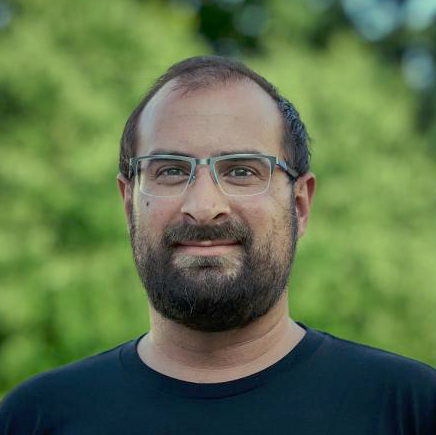
Joey D'Anna
Joey is an in demand colorist and technologist. When he’s not in the color suite you’ll usually find him with a wrench in hand working on one of his classic cars or bikes